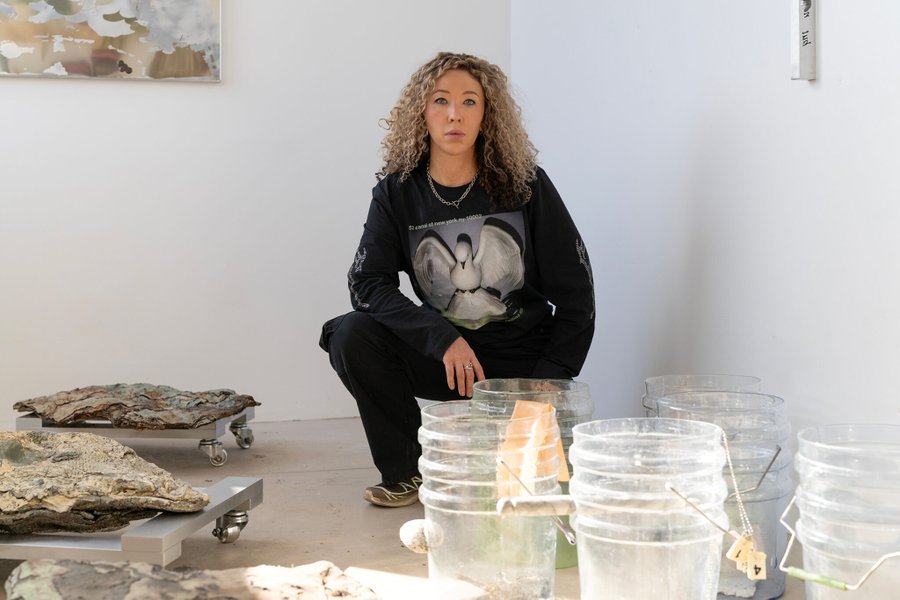
Credit: Guggenheim Museum / X
The Solomon R. Guggenheim Museum has introduced a new headline-making prize in the contemporary art calendar — and it’s starting with a clear signal about the kind of practice it wants to champion. This week, the museum named Catherine Telford Keogh as the inaugural recipient of the Jack Galef Visual Arts Award, a new biennial honor that comes with a $50,000 unrestricted prize.
The award is designed to recognize “exceptional achievement in visual art,” with a particular emphasis on artists whose work shows innovation, depth, and vision. Crucially, it’s not framed as a commission or a project grant with a long list of deliverables. It’s support — clean, direct, and flexible — intended to back an artist’s practice on their own terms.
In the museum’s announcement, the prize is described as open in spirit to two kinds of recipients: a younger artist with significant promise, or an older artist whose contributions remain under-recognized. Selection is made by a jury drawn from the Guggenheim’s curatorial department, and the prize begins in 2025 as a recurring, every-two-years award. (Official release: Guggenheim press statement.)
Who is Catherine Telford Keogh?
Keogh is Canadian-born and New York–based, known for an interdisciplinary practice that moves through sculpture and installation with an intense attention to how materials behave — how they age, hold residue, and accumulate meaning through use. If painting often gets described in metaphors of gesture and surface, Keogh’s work leans into the physical realities of objects: the things we buy, discard, store, ingest, replace — and the systems that keep those cycles moving.
Her work frequently draws from the language of commercial goods, infrastructure, and everyday industrial materials, treating them as both evidence and metaphor: evidence of consumer desire, and metaphor for the hidden networks that shape modern life — from logistics and packaging to sanitation, storage, and waste. In other words, the work doesn’t merely “use found materials.” It asks why those materials exist in the first place — and what it means that they’re everywhere.
What the new Guggenheim award is trying to do
Major museum prizes can sometimes feel like victory laps for already-established market stars. This award appears aimed at something more specific: a bridge between institutional recognition and real-world support for making art, especially at a moment when the cost of space, materials, fabrication, and time can quietly determine which ideas ever become visible.
The Jack Galef Visual Arts Award is made possible by a gift from the Jack Galef Estate. In statements accompanying the launch, the estate’s co-executors described Galef as deeply rooted in New York City and committed to investing in artists and the wider arts ecosystem — a philosophy that aligns with the award’s “unrestricted” structure.
Arts reporting around the announcement also notes how the Guggenheim’s new prize arrives after the museum’s earlier, high-profile biennial award program (the Hugo Boss Prize) concluded in the early 2020s — making this new biennial award a fresh statement of intent about long-term support and visibility. (More reporting: Artsy (Maxwell Rabb).)
Why this matters beyond the art world
Even if you don’t follow contemporary art closely, awards like this can shape what the public ends up seeing — in museums, in galleries, and eventually in the wider cultural imagination. When a major institution like the Guggenheim backs an artist whose practice deals with consumption, waste, and the infrastructures that quietly govern daily life, it’s also elevating those questions as urgent cultural material — not just studio research.
You May Also Like
Jim Gaffigan’s Bourbon Set Reflects a Shift Toward Mindful Drinking and Wellness

Make Swikblog your go-to source on Google for reliable updates, smart insights, and daily trends.