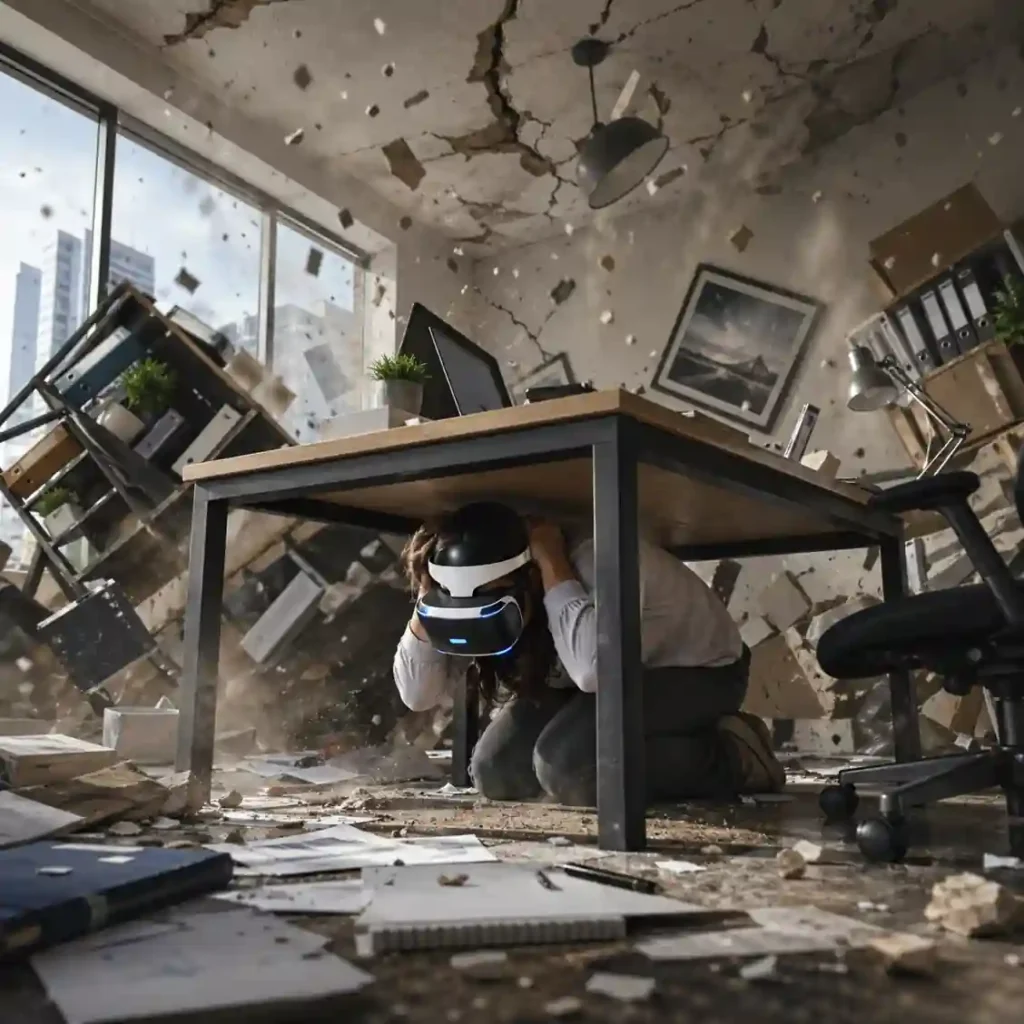

The International Earthquake Virtual Safety Drill Day 2026 brings fresh attention to one of the world’s most urgent safety challenges: how people should react when the ground starts shaking. Observed on April 29, 2026, the event highlights a new direction in disaster preparedness, where virtual reality is being used to make earthquake safety training more realistic, practical, and memorable.
This year’s focus is closely linked to a live earthquake safety drill hosted at the United Nations Headquarters in New York. The session is being organized by the United Nations Office for Disaster Risk Reduction (UNDRR) along with the United Nations Department of Safety and Security (UNDSS). The drill is also part of the inaugural observance of the International Day for the Memory of the Victims of Earthquakes, giving the event both a commemorative and educational purpose.
Unlike ordinary awareness programs, this drill is designed to place participants inside a realistic emergency scenario. The key attraction is an immersive virtual reality earthquake simulation developed and provided by the International Committee of the Red Cross (ICRC). Through this experience, participants can better understand what happens during an earthquake, what risks appear indoors, and how fast decisions must be made.
Why the 2026 earthquake VR drill matters
Earthquake safety training has often depended on posters, classroom instructions, short videos, or basic evacuation exercises. These tools are useful, but they cannot fully recreate the stress and uncertainty people face during a real seismic emergency. A person may know the correct safety steps in theory, but panic, noise, falling objects, and confusion can lead to unsafe choices.
That is why virtual reality has become an important tool in modern disaster preparedness. It allows people to experience the pressure of an earthquake without being placed in actual danger. In a simulated environment, users can practice identifying safe spaces, avoiding unstable furniture, staying away from glass, and understanding why immediate protective action is essential.
The UN’s 2026 drill is scheduled from 10:00 AM to 11:00 AM at UN Headquarters. Because the session takes place in a small room and uses limited VR-based participation, space is restricted and attendance is available on a first-come, first-served basis. Participants are required to register in advance and select the drill session in their RSVP.
The safety drill is one part of a wider day of programming. A panel discussion is scheduled from 1:15 PM to 2:30 PM in Conference Room 8, followed by an evening commemorative gathering and reception from 6:00 PM to 7:30 PM at the Permanent Mission of Indonesia.
For official disaster risk reduction resources and global preparedness guidance, readers can visit the United Nations Office for Disaster Risk Reduction. You can also explore related safety updates on Swikblog.
5 key lessons from UN’s VR training theme
1. Earthquake response must be practiced, not just remembered
During an earthquake, people often have only seconds to act. Reading instructions once is not enough. The VR drill helps participants practice real-time response, making safety actions easier to remember under pressure. This includes staying calm, protecting the head and neck, and moving away from hazards when it is safe to do so.
2. Indoor spaces can become dangerous very quickly
A major part of earthquake safety is understanding how ordinary surroundings can turn risky. Bookshelves, ceiling fixtures, glass windows, cabinets, and loose furniture may become hazards. A virtual simulation makes these risks easier to recognize because participants can see how objects behave during shaking.
3. VR can make preparedness more engaging
Many people ignore traditional safety training because it feels routine. Virtual reality changes that by making the experience interactive. Instead of passively listening, participants are placed inside the situation. This can make the lesson more memorable, especially for workplaces, schools, and public institutions that want stronger safety awareness.
4. Panic is reduced when people know what to expect
One of the biggest dangers during any disaster is panic. People may run toward exits, freeze in place, or make risky decisions. A realistic drill can help reduce fear by giving participants a controlled preview of what an earthquake may feel like. The more familiar the situation becomes, the more likely people are to respond with confidence.
5. Preparedness is a community responsibility
The 2026 event also shows that earthquake safety is not only about individual survival. Offices, schools, hospitals, apartment buildings, and public agencies need shared plans. People must know how to communicate, assist others, follow safety instructions, and evacuate in an organized way once shaking stops.
The broader message of the International Earthquake Virtual Safety Drill Day 2026 is clear: remembrance should lead to readiness. Honoring earthquake victims is important, but preventing future loss of life requires practical training, better awareness, and stronger safety systems.
As technology becomes more accessible, VR-based earthquake drills could become common in classrooms, government offices, corporate buildings, and community centers. For earthquake-prone regions, this type of training can help people understand risk before disaster strikes.
The UN’s April 29 event is more than a one-hour safety session. It reflects a global move toward smarter disaster education, where people learn through experience rather than instruction alone. By combining expert-led preparedness with immersive technology, the International Earthquake Virtual Safety Drill Day 2026 sets a strong example for future emergency training worldwide.
You may also like: Auckland Sabotage Scare: Diesel Leak Panic Near Petrol Station Triggers Emergency Response

Make Swikblog your go-to source on Google for reliable updates, smart insights, and daily trends.