
MLB • Transfers • Mets
By James Carter • Updated: January 2026
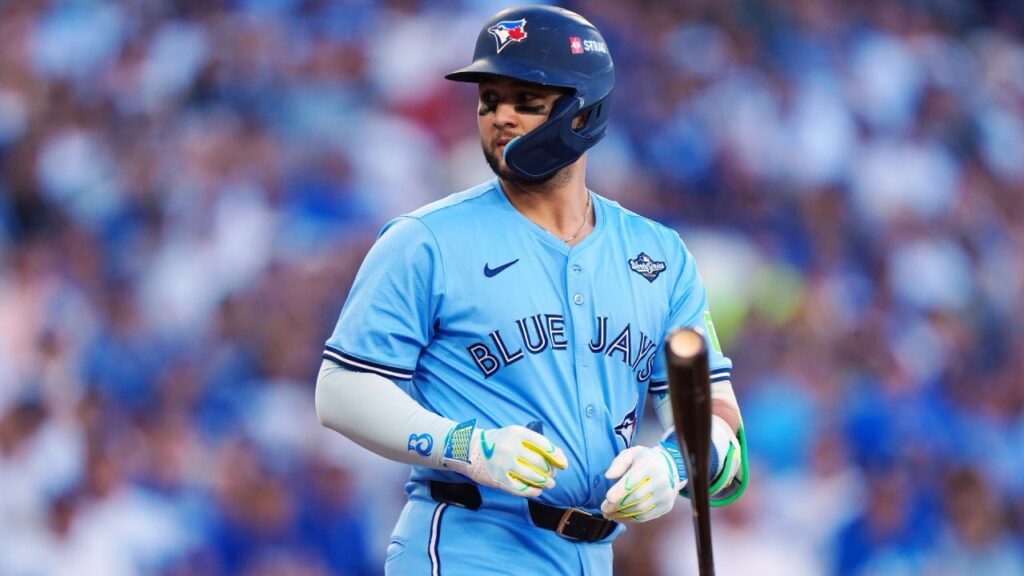
The New York Mets are reportedly adding one of baseball’s most reliable contact bats, agreeing to a three-year, $126 million deal with infielder Bo Bichette. The move doesn’t just change the Mets’ lineup — it could reshape their infield, with reporting indicating New York plans to start Bichette at third base.
Deal at a glance
- Reported terms: 3 years, $126 million (club not yet confirmed publicly)
- Projected role: Third base (per reporting)
- Former team: Toronto Blue Jays
A big-money bet on bat-to-ball skill
The headline number is massive, but the logic is straightforward: Bichette is widely viewed as a tough out when healthy — a hitter who can put the ball in play, drive gaps, and keep rallies alive against premium pitching. According to MLB.com, the agreement was reported by MLB.com’s Mark Feinsand, while additional reporting suggested the Mets’ plan involves shifting Bichette’s defensive home.
For New York, it’s also a signal that the organization is prioritizing proven production in the middle of its order rather than waiting on internal variance. A consistent right-handed bat can be especially valuable over a long season, where “good at-bats” add up into extra baserunners, deeper counts, and more pressure on opposing bullpens.
The position switch that changes everything
The most intriguing part isn’t just the contract — it’s the fit. MLB.com’s Jon Paul Morosi reported the Mets plan to start Bichette at third base. If that holds, it’s a real domino: a new alignment can clarify roster priorities, impact offseason targets, and define which players are best suited for utility roles. (Morosi shares updates through MLB.com and his public reporting on FOX Sports platforms.)
Third base can be a demanding transition — reaction time, arm angles, and positioning differ from shortstop — but the payoff is obvious: if Bichette’s bat plays as expected, the Mets gain lineup certainty without needing a perfect one-to-one replacement at short.
Why Toronto letting him walk is complicated
From Toronto’s perspective, the story has multiple layers. Bichette’s recent season was framed as a return to form after a prior year affected by injuries and inconsistency. But even with strong production, roster-building decisions can hinge on payroll structure, positional depth, and long-term flexibility — especially when a player declines a qualifying offer.
If the reported agreement is finalized, the Blue Jays’ offseason calculus shifts toward “what’s next” — both in terms of replacing a premium bat and balancing the infield going forward. If you’re following that angle closely, here’s our deeper read on the Toronto side: Why Bo Bichette’s Turf Concerns Matter — and What It Means for the Blue Jays’ Next Move .
What Mets fans should watch next
- Confirmation and details: once the club confirms, watch for contract structure (bonuses, opt-outs, and any deferrals).
- Defensive deployment: spring reps at third base will be the first real signal of how firm the plan is.
- Health and workload: any lingering lower-body concerns matter for range, base running, and durability across 162 games.
- Lineup ripple effects: where he hits — and who moves around him — will hint at the Mets’ broader offensive identity.
Until the Mets confirm, treat the move as reported — but if it’s finalized as described, New York will have landed a marquee bat and a roster-defining puzzle piece, with the position switch set to be one of the most discussed storylines of camp.

Make Swikblog your go-to source on Google for reliable updates, smart insights, and daily trends.