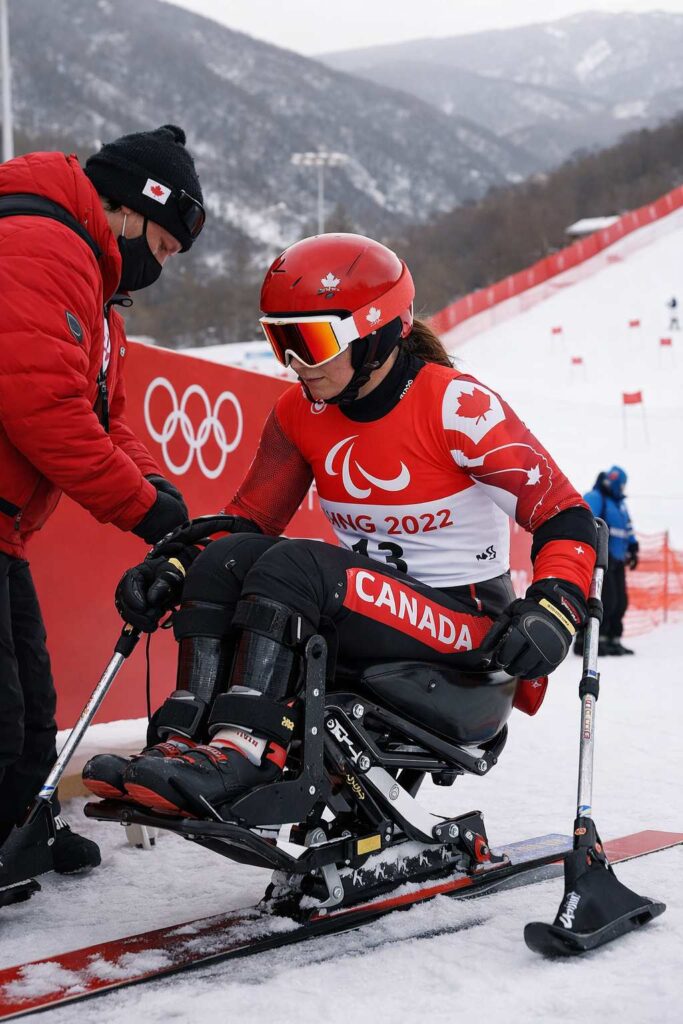

Canada’s Paralympians are showing the world what modern prosthetic technology can do, but for many people living with limb loss, that same innovation remains painfully out of reach. The contrast is becoming harder to ignore. Elite athletes now compete with lighter, more responsive devices built for precision, shock absorption and stability, while many Canadians outside high-performance sport still face steep out-of-pocket costs just to regain mobility, independence or access to the activities they love.
That gap is at the heart of a growing debate over disability access in Canada. Prosthetic technology has advanced dramatically in recent years, from improved carbon-fibre designs to digitally tailored fittings and more responsive knees, ankles and hands. Yet access has not kept pace with innovation. In much of the country, support is limited, inconsistent or focused only on basic everyday function, leaving families to absorb thousands of dollars in additional costs for devices that can transform physical health, mental well-being and quality of life.
Why this matters: In Canada, a prosthetic can cost anywhere from around $5,000 to more than $100,000, depending on the limb, components and purpose. For active-use or sport-specific prosthetics, the price can quickly move beyond what many households can realistically afford.
Modern prosthetics are changing what is possible
For athletes competing on the Paralympic stage, prosthetic design has become a critical part of performance. Newer limbs are lighter, more energy efficient and better able to mimic natural movement. Carbon fibre has helped reduce weight while improving responsiveness, and digital scanning now allows prosthetists to create a more exact fit based on a person’s body rather than relying only on older moulding methods.
That improved fit can make a major difference. Better stability, more natural control and greater comfort can affect everything from walking confidence to high-speed athletic performance. Some advanced prosthetic knees and upper-limb devices also use sensors that respond in real time, helping users recover balance or perform more refined motions. As prosthetists explain it, the leap from older devices to what is available now is not incremental. It is transformative.
Canadian Paralympic snowboarder Tyler Turner, a double-leg amputee and gold medallist, has spoken about just how fast the technology is evolving, particularly in prosthetic feet built to absorb shock and pressure. In a sport as aggressive as snowboarding, that kind of support is not cosmetic. It is essential. The result is equipment that can feel far more natural and allow athletes to move with confidence at elite speed.
The promise of 3D printing is real, but access is still early
One of the most closely watched developments in prosthetics is 3D printing. Canadian specialists working with children and families are already testing how digital scanning, digital design and 3D printing can create more personalized devices. The promise is significant: more customization, lighter components, quicker iteration and potentially lower costs over time.
Researchers say this technology could eventually help rethink how prosthetics are built from the ground up. Instead of relying on more rigid legacy methods, clinics may be able to design limbs and components that better reflect a user’s anatomy, daily needs and activity level. For children in particular, comfort and flexibility can be the difference between participating fully in life and sitting out.
Still, the technology is not yet a universal cost solution. The long-term economics are still being studied, and the near-term reality is that many advanced prosthetics remain expensive. Innovation may be accelerating, but affordability is not improving quickly enough for the people who need these devices now.
The biggest barrier is not invention. It is coverage
Across Canada, prosthetic coverage remains uneven. Some provinces offer support for basic function, while others provide little or no meaningful assistance beyond narrow categories. That patchwork leaves many amputees depending on private insurance, fundraising, personal savings or simply going without. It also creates a system where access can depend more on postal code than medical or rehabilitative need.
The issue becomes even sharper when the prosthetic is intended for exercise, recreation or sport. Those devices are often treated as optional rather than essential, even though clinicians and users argue the opposite. Movement is not a luxury. Physical activity supports cardiovascular health, strength, balance, rehabilitation progress and mental health. For someone living with limb loss, the ability to ski, run, ride or simply return to meaningful activity can be central to recovery.
Ontario amputee Sam Paulos paid roughly $12,000 for a prosthetic leg that would allow him to ski again. His story captures a wider truth: returning to activity after limb loss can be deeply connected to identity, confidence and emotional recovery. When health systems support only minimal function, they may help someone stand, but still leave them shut out from a fuller life.
A growing push says sport prosthetics should count as medically necessary
Advocates are increasingly pointing to reforms outside Canada, including the So EveryBODY Can Move campaign, which is pushing for broader insurance coverage of prosthetics used for physical activity and sport. The argument is straightforward: devices that enable exercise should be seen as preventive and rehabilitative tools, not extras reserved for elite athletes or those with deep pockets.
That framing could resonate in Canada, where health professionals regularly prescribe activity as part of rehabilitation. If exercise is treated as medicine, the equipment needed to make that exercise possible deserves a more serious place in coverage policy. This is especially true when the alternative is reduced mobility, declining health and greater long-term strain on both individuals and the health-care system.
The irony is difficult to miss. Canadians proudly celebrate Paralympic success and admire the technology that helps athletes perform at the highest level. But many of the same types of innovations remain inaccessible to ordinary people who could benefit from them in daily life. The country is capable of producing world-class prosthetic expertise and showcasing world-class athletes. The unresolved question is whether it is willing to match that pride with broader access.
For now, prosthetic innovation in Canada tells two stories at once. One is about extraordinary progress, where advanced design is reshaping mobility and athletic performance. The other is about a system that still leaves too many people behind. Until affordability and coverage improve, cutting-edge prosthetics will continue to symbolize both possibility and exclusion.

Make Swikblog your go-to source on Google for reliable updates, smart insights, and daily trends.