
Sierra Independence Day 2026 will be observed on Monday, April 27, marking 65 years since Sierra Leone became an independent nation. The occasion is one of the country’s most meaningful national holidays, remembering the moment in 1961 when Sierra Leone formally ended British colonial rule and began its journey as a self-governing state.
For Sierra Leoneans, April 27 is not only a public holiday. It is a day of memory, pride and reflection. It connects the country’s colonial past, its peaceful path to independence, and its continuing effort to build a united and democratic future. In 2026, the 65th anniversary gives the day even greater national importance.
Why April 27 is important for Sierra Leone
Sierra Leone’s independence story is rooted in a long and complex history. The area that later became Sierra Leone had been home to communities for centuries before European contact. In the 15th century, Portuguese explorer Pedro de Sintra mapped the hills near Freetown Harbour and the name “Serra Leoa,” often translated as Lion Mountains, became associated with the region.
The modern history of Sierra Leone became closely linked with the abolitionist movement. In 1787, Freetown was established as a settlement for freed and repatriated Africans. The city later became an important centre in the British campaign against the transatlantic slave trade. By 1808, the coastal area had become a British Crown Colony, while the inland region was later declared a Protectorate in 1896.
This colonial structure shaped politics, identity and governance for many decades. After World War II, the demand for self-rule grew stronger across Africa. In Sierra Leone, the Sierra Leone People’s Party became a major political force, and Sir Milton Margai emerged as one of the most important leaders of the independence movement.
Unlike some independence struggles on the continent, Sierra Leone’s transition came through constitutional talks and political negotiation. Discussions in London helped prepare the way for full sovereignty. At midnight on April 27, 1961, Sierra Leone officially became independent. The national flag was raised in Freetown, and Sir Milton Margai became the country’s first Prime Minister.
Readers looking for a broader historical overview can refer to Britannica’s profile of Sierra Leone, which outlines the country’s colonial background, political development and modern national identity.
65 years of freedom, identity and national pride
The 2026 anniversary carries special meaning because it marks 65 years of independence. For many Sierra Leoneans, the day represents freedom from colonial rule, but it also represents the responsibility of building a nation after independence.
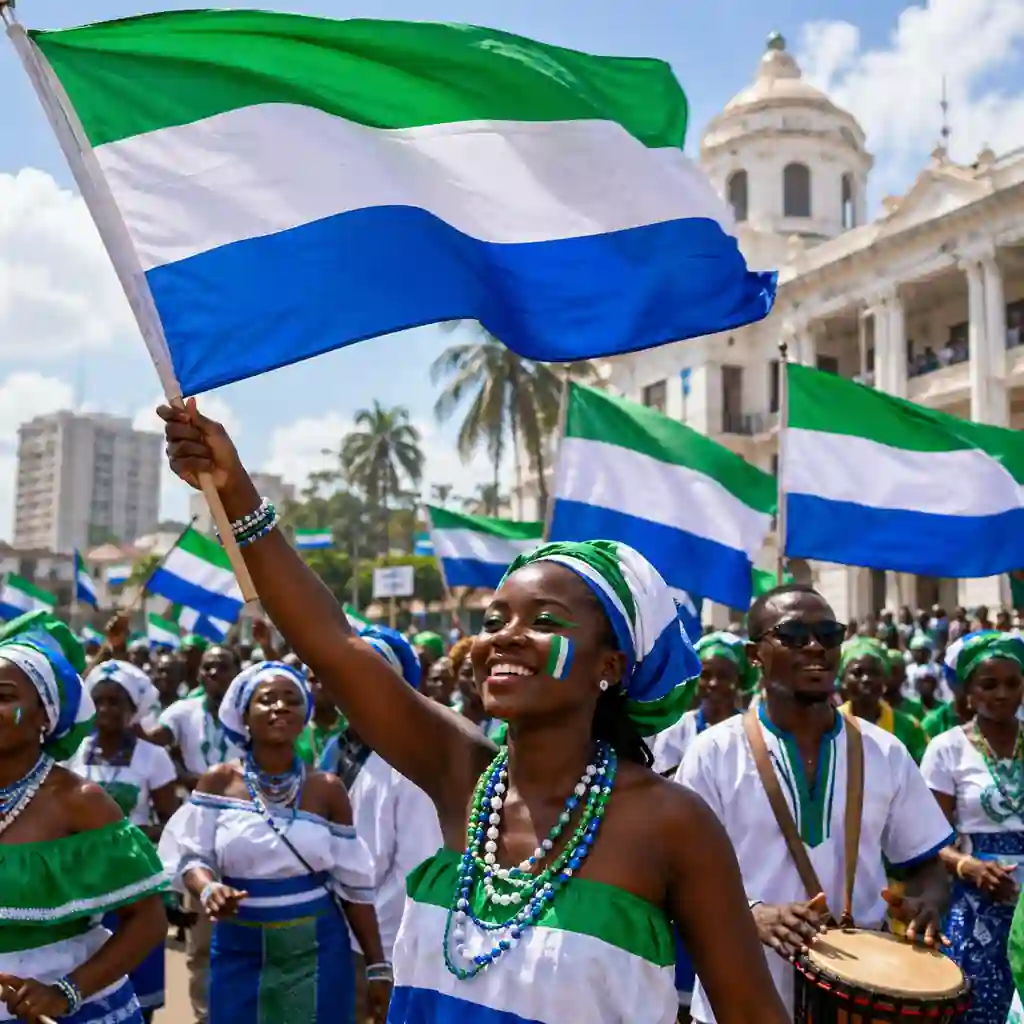
Sierra Leone’s national flag, with its green, white and blue colors, remains a powerful symbol during the holiday. Green is often associated with the country’s land and agriculture, white with unity and justice, and blue with the sea and natural harbour. During Independence Day events, these colors appear on clothing, decorations, flags, public buildings and social media posts shared by Sierra Leoneans around the world.
The day also honors the people who helped shape the country’s political future. Sir Milton Margai is remembered for his role in guiding Sierra Leone toward independence through dialogue and constitutional progress. The holiday also recognizes the wider contribution of citizens, community leaders and national figures who supported the idea of a united country.
At the same time, Independence Day is a moment to remember the country’s challenges. Since 1961, Sierra Leone has faced political tension, economic hardship and the impact of a civil war that lasted through the 1990s into the early 2000s. The country’s continued commitment to peace and rebuilding gives April 27 a deeper meaning. It is a celebration of independence, but also of endurance.
How Sierra Independence Day 2026 may be celebrated
Independence Day celebrations usually begin with official national events. These often include a presidential address, flag-raising ceremonies, parades and public gatherings. In Freetown, the capital, the day is commonly marked with formal ceremonies that highlight national unity and respect for the country’s history.
Across towns and communities, the celebration becomes more cultural and personal. Families gather, traditional meals are prepared, and people wear outfits inspired by the national colors. Popular dishes such as jollof rice, cassava leaves, potato leaves and groundnut soup are often part of the day’s meals. Food plays an important role because it brings families together and reflects Sierra Leone’s everyday culture.
Music and dance are also central to the holiday. Traditional drumming, community performances, Highlife, Afrobeats and local music help create a festive atmosphere. Schools, cultural groups and community organizations may use the occasion to teach younger people about the country’s history and the meaning of April 27.
Religious reflection is another important part of the day. Many citizens attend mosque or church services, offering prayers for peace, stability and national progress. This reflects Sierra Leone’s strong tradition of interfaith coexistence, where different communities often share national moments together.
For Sierra Leoneans living outside the country, the 2026 celebration will likely be marked through diaspora events, online tributes, cultural programs and family gatherings. Social media will also play a major role, with messages of national pride, historic photos, flag images and personal reflections shared across platforms.
What the 2026 anniversary means today
Sierra Independence Day 2026 is not only about looking back to 1961. It is also about asking what independence means for the current generation. For young Sierra Leoneans, the holiday can serve as a reminder that national progress depends on education, civic participation, accountability and unity.
The story of Sierra Leone’s independence shows that political change can be achieved through leadership, negotiation and public commitment. That message remains relevant today as the country continues to work toward stronger institutions, economic opportunity and social development.
As Sierra Leone marks 65 years of freedom on April 27, 2026, the day will bring together history, culture and national hope. From official ceremonies in Freetown to family gatherings and diaspora celebrations abroad, Sierra Independence Day remains a powerful symbol of identity, resilience and the unfinished work of nation-building.
You may like: £12,500 State Pension Across 7 Countries: Where UK Retirees Stand in 2026

Make Swikblog your go-to source on Google for reliable updates, smart insights, and daily trends.