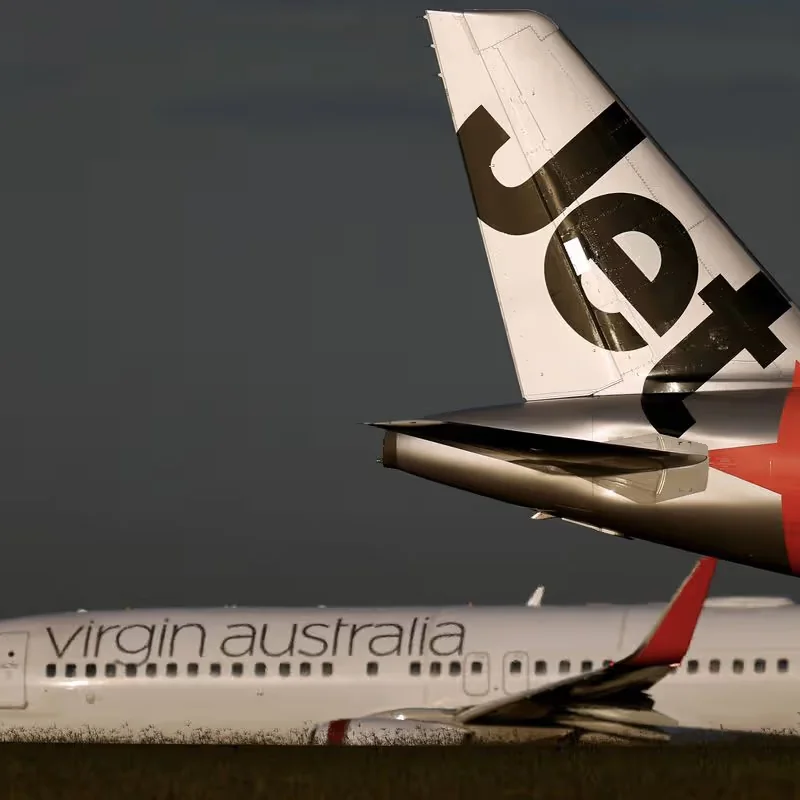

Passengers travelling through some of the busiest airports in Australia and New Zealand faced a difficult end to the weekend after more than 300 flights were disrupted across the region on Sunday, April 26.
A total of 34 flights were cancelled and 272 more were delayed, creating long waits at airport terminals and leaving hundreds of travellers dealing with missed connections, rebooking problems and uncertainty over when they would be able to continue their journeys.
The disruption was felt across several major aviation hubs, including Sydney, Melbourne, Brisbane, Auckland, Wellington and Christchurch. Domestic routes were heavily affected, but the impact also reached passengers connecting to longer international services, particularly in New Zealand.
Sydney Airport saw the highest number of cancellations, with 10 flights grounded during the day. Another 69 flights were delayed at the airport, adding pressure to terminals at Australia’s busiest air travel hub. For many passengers, the cancellations meant scrambling for new seats on later services while airlines worked through a backlog of affected travellers.
Melbourne Airport, also known as Tullamarine, recorded the largest number of delays. Around 84 flights failed to arrive or depart on schedule, while seven services were cancelled. The cancelled flights from Melbourne were linked to Virgin Australia and Jetstar, two carriers with a strong presence on domestic routes.
Brisbane Airport also faced a difficult day, with 62 delayed flights reported. The delays added to congestion across Australia’s eastern aviation network, where aircraft movements are closely connected between major cities. When one airport falls behind schedule, aircraft and crew rotations can quickly affect other routes later in the day.
In New Zealand, Auckland Airport recorded eight cancellations and 44 delays. The disruption was especially disruptive for passengers using Auckland as a connecting point for long-haul travel. Wellington saw a smaller but still noticeable impact, with four flights cancelled, while Christchurch was also affected by delays linked to broader network disruption.
Qantas, Jetstar and Virgin Australia were among the airlines most affected by the cancellations. While the disruption was concentrated across specific services, the wider effect was felt by passengers across multiple carriers as aircraft schedules, gate availability and crew planning became harder to manage.
Airline disruption often becomes more complicated as the day progresses. A delayed aircraft may be scheduled to operate several more flights before the end of the day. If that aircraft arrives late, every later service using the same plane can also be pushed back. Crew duty limits can add another layer of pressure, as airlines must ensure pilots and cabin crew remain within regulated working hours.
No single official cause has been confirmed for the full scale of Sunday’s disruption. However, the incident comes at a time when airlines across the region are already dealing with higher operating costs, tighter schedules and global uncertainty affecting fuel prices.
Rising fuel costs have become a major concern for carriers, particularly as geopolitical tensions continue to affect energy markets. Although fuel prices were not identified as the direct cause of the April 26 disruption, airlines in New Zealand have warned that higher costs are already influencing capacity and ticket prices.
Air New Zealand has previously said it would reduce some flight services across May and June while increasing fares in response to cost pressures. The airline’s move reflects a wider industry challenge: when operating costs rise, airlines often have less flexibility to add spare capacity or recover quickly from unexpected disruption.
For passengers affected by cancellations or long delays, the first step is to check the airline’s official app, website or email alerts before travelling to the airport. Travellers should also keep all booking confirmations, receipts and written notices from airlines, as these may be needed when requesting refunds, alternative flights or other assistance.
The International Air Transport Association advises travellers to stay updated through airline communication channels and review carrier policies during disruption. Passenger rights and compensation rules can vary depending on the airline, route and reason for the cancellation or delay.
In many cases, airlines offer passengers a replacement flight, refund or travel credit when a service is cancelled. For delays, support may depend on the length of the wait and the circumstances behind the disruption. Travellers with onward connections should contact their airline as early as possible, especially if separate bookings are involved.
The April 26 disruption also highlights how vulnerable regional aviation networks can be when several major airports are affected at the same time. Sydney, Melbourne and Brisbane are central to domestic travel in Australia, while Auckland plays a key role in connecting New Zealand passengers to international destinations. Delays at these hubs can quickly spread across multiple routes.
For travellers planning flights in the coming weeks, flexibility may be important. Choosing longer connection times, booking direct flights where possible and monitoring airline alerts can reduce the risk of being caught out by sudden schedule changes. Passengers flying for important events may also want to avoid tight same-day connections.
Airlines are expected to continue working through the backlog by repositioning aircraft, rescheduling crews and moving affected passengers onto alternative services. However, when hundreds of flights are delayed in one day, disruption can continue beyond the original incident as carriers try to return aircraft and staff to their planned schedules.
Sunday’s disruption was a reminder that even well-established aviation networks can face sudden pressure. For hundreds of passengers across Australia and New Zealand, the result was a day of long waits, changed plans and uncertainty at some of the region’s busiest airports.
You may like: United Airlines Boeing 787 Emergency Landing

Make Swikblog your go-to source on Google for reliable updates, smart insights, and daily trends.