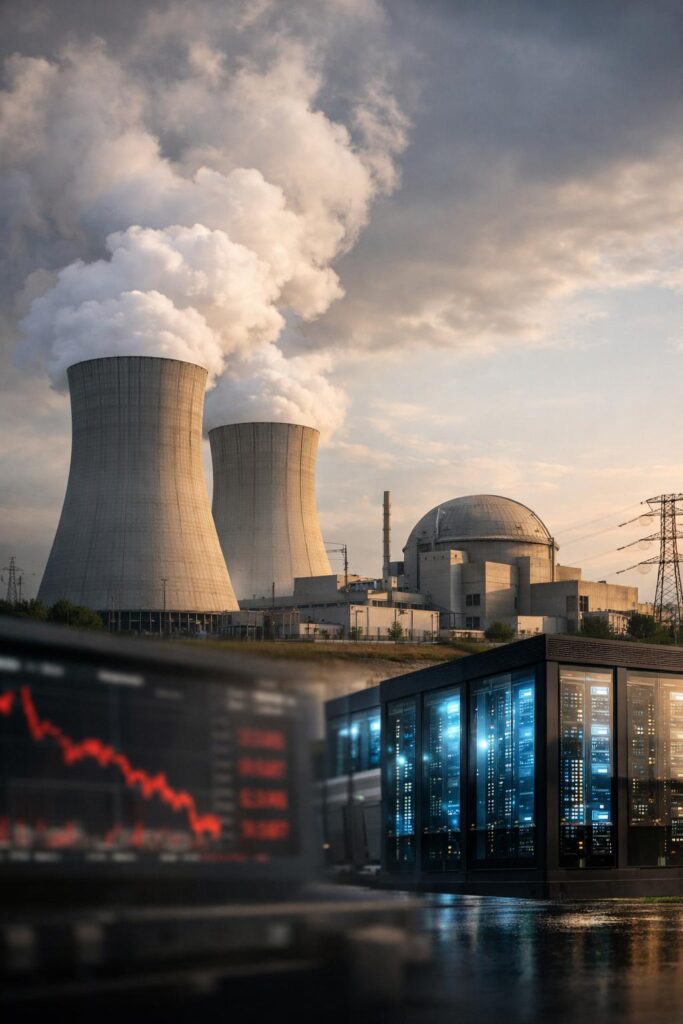

Constellation Energy (NASDAQ: CEG) shares fell sharply Thursday, dropping 5.17% to $300.69 as investors sold off utility stocks following fresh inflation data and rising Treasury yields. The decline comes amid broader pressure across the utility sector after a monthly drop in electricity prices was reported in the latest U.S. Consumer Price Index data.
Despite the selloff, the longer-term investment story around Constellation Energy remains closely tied to a powerful structural trend: the surge in electricity demand driven by artificial intelligence infrastructure and hyperscale data centers.
Utility Sector Faces Pressure From Inflation Data
The latest inflation report showed a decline in electricity prices on a monthly basis, a development that weighed on investor sentiment across power generation companies. When electricity prices soften, markets often assume lower near-term revenue growth for utilities and energy suppliers.
At the same time, rising long-term Treasury yields created another headwind for the sector. Utility stocks are often viewed as bond-like investments because they typically offer stable cash flows and dividend income. When bond yields rise, investors sometimes shift capital away from utilities toward fixed-income securities, triggering sector-wide selloffs.
This dynamic contributed to the sharp pullback in Constellation Energy shares, even though the company’s long-term demand outlook remains closely linked to major technology companies securing reliable electricity for artificial intelligence infrastructure.
AI Data Centers Are Reshaping Electricity Demand
Constellation Energy has increasingly become a key player in the growing intersection between clean energy and artificial intelligence infrastructure. The company operates the largest nuclear power fleet in the United States, giving it a strategic advantage as technology companies search for reliable sources of carbon-free electricity.
Artificial intelligence workloads require massive computing capacity, and the data centers supporting those systems consume enormous amounts of power. As a result, hyperscalers have begun locking in long-term electricity agreements to ensure consistent supply for their facilities.
Constellation has already secured several major nuclear energy supply agreements tied directly to this trend. The company recently signed long-duration contracts with technology giants including Microsoft and Meta, agreements that highlight the growing role of nuclear energy in supporting the AI economy.
20-Year Nuclear Contracts Provide Revenue Visibility
One of the most important developments for Constellation Energy has been its long-term nuclear power agreements with hyperscale technology companies. These deals typically span around 20 years and provide stable, contract-based revenue streams for the company.
The agreements are particularly significant because they allow technology companies to secure carbon-free electricity while giving Constellation long-term revenue visibility that is less exposed to short-term fluctuations in electricity prices.
For investors, these contracts represent a major catalyst for the company’s future growth. The combination of AI infrastructure expansion and nuclear power reliability is increasingly being viewed as a strategic advantage for Constellation compared with traditional utility peers.
Financial Outlook Points to Steady Growth
According to analyst projections, Constellation Energy’s long-term financial outlook remains stable despite short-term volatility in the stock price. The company is projected to generate approximately $26.7 billion in revenue by 2028 while delivering earnings of roughly $3.6 billion.
Those estimates imply annual revenue growth of around 2.5% from current levels and an earnings increase of roughly $600 million from today’s baseline of about $3 billion.
Some analysts remain even more optimistic about the company’s long-term potential. The most bullish projections suggest Constellation could generate as much as $5.4 billion in earnings by 2028 if AI-driven electricity demand accelerates and long-term contracts continue to expand.
Valuation Debate Remains Active
Despite the recent decline in share price, valuation estimates for Constellation Energy vary significantly across analysts. One model suggests a fair value of approximately $399.93 per share, implying potential upside of roughly 33% from the current price.
However, alternative valuation models suggest the stock could be closer to fair value or even slightly overvalued depending on assumptions around electricity pricing, nuclear operating costs, and long-term power demand.
This divergence highlights the ongoing debate among investors about how to value nuclear energy companies in an era increasingly shaped by artificial intelligence infrastructure.
Nuclear Compliance and Maintenance Costs Remain a Key Risk
While the AI-driven demand story has strengthened Constellation’s long-term outlook, investors are also monitoring the costs associated with operating and maintaining nuclear power plants.
Nuclear fleets require significant ongoing spending on regulatory compliance, safety upgrades, and long-term maintenance. Decommissioning costs for aging reactors can also be substantial, potentially affecting long-term profitability.
If these expenses rise faster than expected, they could offset some of the benefits from new data center power contracts.
Investors Watching the Next Phase of the AI Energy Boom
For now, Constellation Energy’s share price decline appears largely tied to macroeconomic pressure rather than a shift in the company’s fundamental outlook. As artificial intelligence infrastructure continues expanding globally, demand for reliable carbon-free electricity is expected to grow significantly.
Companies like Constellation that operate large nuclear fleets could play a critical role in meeting that demand, particularly as hyperscale technology firms race to secure long-term energy supply agreements.
Investors seeking deeper context on inflation trends and electricity price data can review the latest figures from the U.S. Bureau of Labor Statistics. Additional information about Constellation Energy’s nuclear fleet and clean energy strategy is available on the company’s official website.
Whether the recent pullback represents a temporary reaction to macroeconomic conditions or a broader reset in utility sector valuations may become clearer as new AI energy contracts and demand forecasts emerge in the months ahead.

Make Swikblog your go-to source on Google for reliable updates, smart insights, and daily trends.