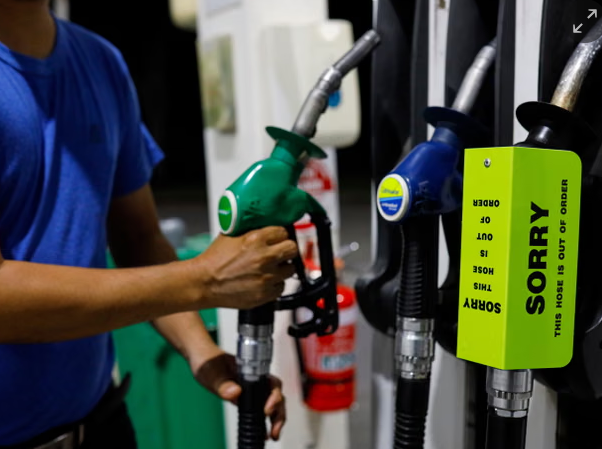

Petrol prices across Australia have surged by nearly 50 cents per litre in recent weeks as global oil markets react to a major supply disruption triggered by the escalating Middle East conflict. In response to rising shortages and panic buying, the Australian government has announced it will release part of the nation’s emergency fuel reserves for the first time since the 2022 Ukraine crisis.
The move allows fuel companies to access roughly six days’ worth of petrol and five days’ worth of diesel from their reserve stockpiles. Authorities say the decision will help fuel suppliers manage supply chains and prioritise deliveries to regional areas that have already begun experiencing shortages.
Australia taps fuel reserves for the first time since 2022
Energy Minister Chris Bowen confirmed the government would temporarily reduce fuel companies’ minimum stockholding requirements to free up additional supply. The minimum diesel reserve requirement will drop from about 2.7 billion litres to 2.2 billion litres, while petrol reserves will fall from roughly 1 billion litres to 700 million litres.
This adjustment releases about 500 million litres of diesel and 300 million litres of petrol into the market. Even after the change, the country still maintains substantial reserves, with approximately 36 days of petrol supply, 32 days of diesel and 29 days of jet fuel currently available.
Bowen said the reserve release was exactly why Australia introduced minimum stock obligations in 2023.
“There is a war. I think war ticks the boxes of a crisis,” Bowen said, adding that the reserves were designed for situations where global supply shocks could threaten domestic fuel availability.
Iran conflict and Strait of Hormuz disruption driving global oil shock
The fuel crisis is closely linked to the escalating conflict between Iran, the United States and Israel. Air strikes and military action have targeted oil facilities across the region, while Iran has attempted to block the Strait of Hormuz — one of the most critical oil shipping routes in the world.
Roughly 20 million barrels of oil pass through the strait every day, representing nearly a quarter of global seaborne oil trade. Any disruption to this route can send shockwaves through global energy markets.
Iran has reportedly attacked oil tankers and attempted to lay mines in the shipping corridor, causing significant shipping delays and pushing crude oil prices above $100 per barrel. Economists warn prices could climb even higher if the conflict continues.
Former International Monetary Fund economist Olivier Blanchard warned oil prices could potentially surge toward $150–$200 per barrel if shipping risks remain high for an extended period.
Petrol prices spike across Australian cities
The surge in global oil prices has already translated into higher fuel costs for Australian drivers. According to the Australian Competition and Consumer Commission (ACCC), petrol prices across the country’s largest cities have risen by about 50 cents per litre since late February.
Perth experienced one of the largest increases, with petrol prices climbing nearly 60 cents per litre. Diesel prices have also jumped sharply, particularly in Sydney where increases have reached around 68 cents per litre.
Average petrol prices across major cities are now approaching 220 cents per litre, adding significant pressure to household budgets already facing rising living costs.
Panic buying and supply chain pressure
Government officials say panic buying has played a major role in recent shortages. Bowen explained that although actual fuel usage has not dramatically increased, demand at service stations has doubled as consumers rush to fill tanks or store extra fuel.
In some cases, individuals have been seen filling jerry cans and attempting to resell fuel online at inflated prices. Authorities have warned this practice is dangerous and irresponsible, with some petrol stations banning jerry cans to prevent hoarding.
The surge in demand has strained fuel distribution networks, especially in rural and regional areas where deliveries take longer and supply chains are more complex.
Regional Australia prioritised for fuel supply
The government has made it clear that regional communities will be the priority when the additional fuel supply becomes available. Fuel companies accessing the reduced stockholding requirements must provide undertakings that they will direct supply to areas experiencing the most severe shortages.
Bowen acknowledged that fuel would not reach every affected region immediately because of the size of the country and the complexity of distribution networks.
“It’s a big country and every town is different,” he said when pressed about timelines for relief.
International response and record oil reserve release
Australia’s decision is part of a coordinated global response led by the International Energy Agency (IEA). Member countries have agreed to release a combined 400 million barrels of oil reserves to help stabilise global supply and reduce price volatility.
The IEA has described the current disruption linked to the Strait of Hormuz as potentially the largest oil supply shock in modern history.
Meanwhile, China has reportedly restricted exports of refined fuel in order to secure domestic supplies, which could further tighten global markets. China normally provides nearly one-fifth of Australia’s jet fuel imports.
Government rules out fuel rationing or tax cuts
Despite the supply concerns and rising prices, the federal government says it is not considering fuel rationing or cuts to the fuel excise tax.
Treasurer Jim Chalmers said the government is instead focusing on improving supply chains and monitoring potential price gouging in the fuel market.
The ACCC has already sent “please explain” notices to major fuel retailers including BP, Ampol, Chevron and 7-Eleven after detecting unusually large and rapid price increases across different cities.
The watchdog will also begin monitoring fuel availability in around 190 regional locations to track shortages and supply disruptions.
Relaxed fuel standards to boost supply
In a separate move aimed at boosting supply, the government has temporarily relaxed fuel quality standards to allow petrol with higher sulfur content to be sold. The change could bring an additional 100 million litres of petrol per month into the market over the next two months.
Officials say the measure could add roughly two days’ worth of extra fuel supply while global markets remain unstable.
For more details about Australia’s fuel security policies, readers can visit the Department of Climate Change, Energy, the Environment and Water. Updates on fuel pricing and market monitoring are also available through the Australian Competition and Consumer Commission.
Outlook for fuel prices and the economy
Experts warn the crisis could continue to impact Australia if the Middle East conflict drags on. Higher oil prices would likely keep petrol and diesel costs elevated while also increasing transport costs across the economy.
That could feed into broader inflation, potentially influencing interest rate decisions and economic growth in the months ahead.
For now, the release of emergency fuel reserves is intended to stabilise supply and calm markets. But with global oil flows still under threat, the coming weeks may prove critical for Australia’s fuel security and the wider economy.

Make Swikblog your go-to source on Google for reliable updates, smart insights, and daily trends.