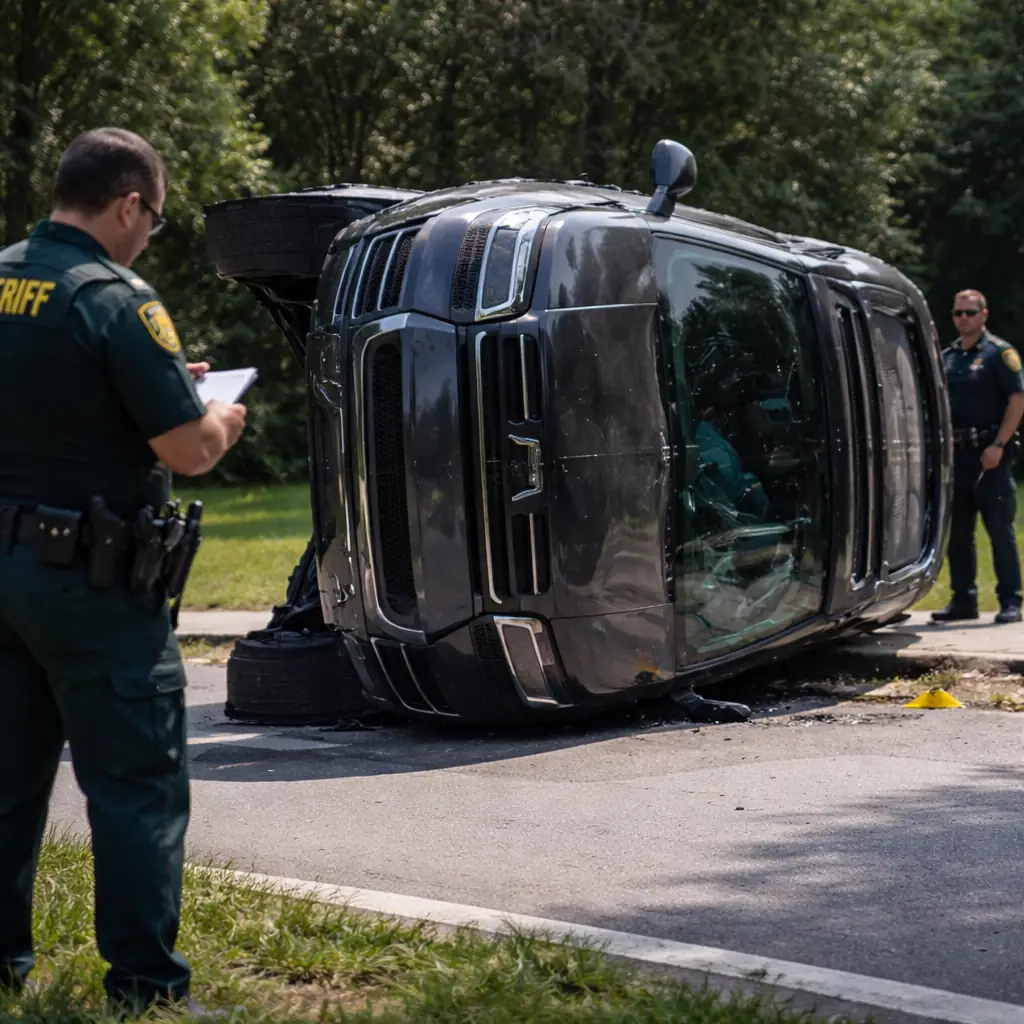

Tiger Woods is once again facing legal scrutiny after a rollover crash in Palm Beach County, Florida, led to his arrest on misdemeanor charges linked to alleged impaired driving. While a breath test administered at the scene registered 0.000 blood alcohol content, investigators said other evidence—including prescription medication, field sobriety observations, and Woods’ own statements—prompted deputies to arrest the 15-time major champion.
According to the Palm Beach County Sheriff’s Office arrest affidavit, Woods told deputies he was looking at his phone while changing the radio station shortly before the collision. He said he failed to notice a pickup truck slowing to turn into a driveway, causing his SUV to strike a trailer before overturning.
The incident has drawn widespread attention because it highlights that, under Florida law, a DUI charge can involve alleged impairment from prescription medication as well as alcohol. Authorities have not alleged that Woods had been drinking.
Deputies reported signs of impairment despite no alcohol detected
Court records state that responding deputies observed Woods sweating heavily and moving slowly after the crash. Once he removed his sunglasses, officers reported his eyes appeared bloodshot and glassy, while his pupils were described as unusually dilated.
Woods told deputies he had not consumed alcohol that day. A roadside breath test later confirmed a 0.000 alcohol reading.
When asked about medication, Woods reportedly acknowledged taking prescription medication earlier that morning. The affidavit notes that the specific medications he identified were redacted from the publicly released report.
Following his arrest, deputies said they discovered two hydrocodone tablets in his pants pocket. Hydrocodone is a prescription opioid commonly prescribed for moderate to severe pain.
Investigators also reported that Woods declined to provide a urine sample, a decision that may become part of the legal proceedings as prosecutors and defense attorneys examine the evidence.
Field sobriety exercises became part of the investigation
The arrest report says Woods agreed to perform several field sobriety exercises, although deputies concluded that his performance showed signs of impairment.
According to investigators, Woods repeatedly moved his head during an eye-tracking test after being instructed to keep it still. During another coordination exercise, deputies said he failed to complete the required hand movements correctly.
Officers also noted that Woods appeared to limp and lean to one side. Woods explained that he has undergone multiple back surgeries and more than 20 procedures on his right leg, leaving him with lasting mobility limitations.
Because of those medical issues, portions of the evaluation were conducted while Woods remained seated on the bumper of a patrol vehicle rather than standing throughout the tests.
The deputy ultimately concluded that Woods’ normal faculties appeared impaired and that he was unable to safely operate a motor vehicle at the time of the crash.
The latest legal case also comes at a time when conversations about athlete health and recovery remain in focus. Similar issues surrounding long-term rehabilitation have recently been highlighted in Lamar Odom’s ongoing recovery journey, where years of injuries and medical treatment continue to shape life after professional sports.
Charges remain misdemeanors as the legal process begins
Authorities arrested Woods on misdemeanor allegations that include:
- Driving under the influence
- Property damage
- Refusal to submit to a lawful chemical test
Following the crash, Woods was transported to a nearby hospital but declined medical treatment, according to the affidavit. He was later booked into the Palm Beach County jail before being released after posting a $1,000 bond.
The charges have not been resolved in court, and Woods is presumed innocent unless proven guilty. Additional court hearings are expected in the coming weeks.
Why prescription medication can still result in a DUI charge
Many drivers associate DUI cases solely with alcohol, but Florida law allows impaired-driving charges when prescription drugs or other controlled substances affect a person’s ability to operate a vehicle safely.
Hydrocodone is known to cause drowsiness, slowed reaction times and reduced concentration in some patients, particularly if taken shortly before driving. Prosecutors must still demonstrate that any alleged impairment affected the driver’s normal faculties.
The National Highway Traffic Safety Administration has repeatedly warned that certain prescription pain medications can impair driving even when taken legally under a doctor’s supervision.
Another difficult chapter for one of golf’s biggest names
The latest case inevitably draws comparisons with Woods’ widely publicized 2017 DUI arrest, when toxicology reports showed several prescription medications in his system. Woods later completed treatment related to prescription medication and sleep issues.
Since surviving his serious 2021 vehicle crash in California, Woods has continued to undergo surgeries while attempting to extend his professional golf career despite chronic injuries.
Woods’ arrest has once again placed one of golf’s biggest names under intense public scrutiny. It follows another high-profile sports story this year involving Rachel Uchitel’s New Year’s Eve wedding, which renewed public interest in one of the most widely discussed chapters of Woods’ personal life.
This latest legal case shifts attention away from his comeback efforts and toward questions about road safety, prescription medication, and driver responsibility. As the court process moves forward, further details are expected to emerge through official filings and public hearings.
For official case updates and court records, authorities are expected to release additional information as proceedings continue. More information about impaired-driving laws and prescription medication is available from the National Highway Traffic Safety Administration (NHTSA).
Read More:
- Virgin Media fined £28 million by Ofcom
- Australian restaurant fined $24,000 over illegal seafood deal
- Visit the Swikblog homepage for more latest news

Make Swikblog your go-to source on Google for reliable updates, smart insights, and daily trends.