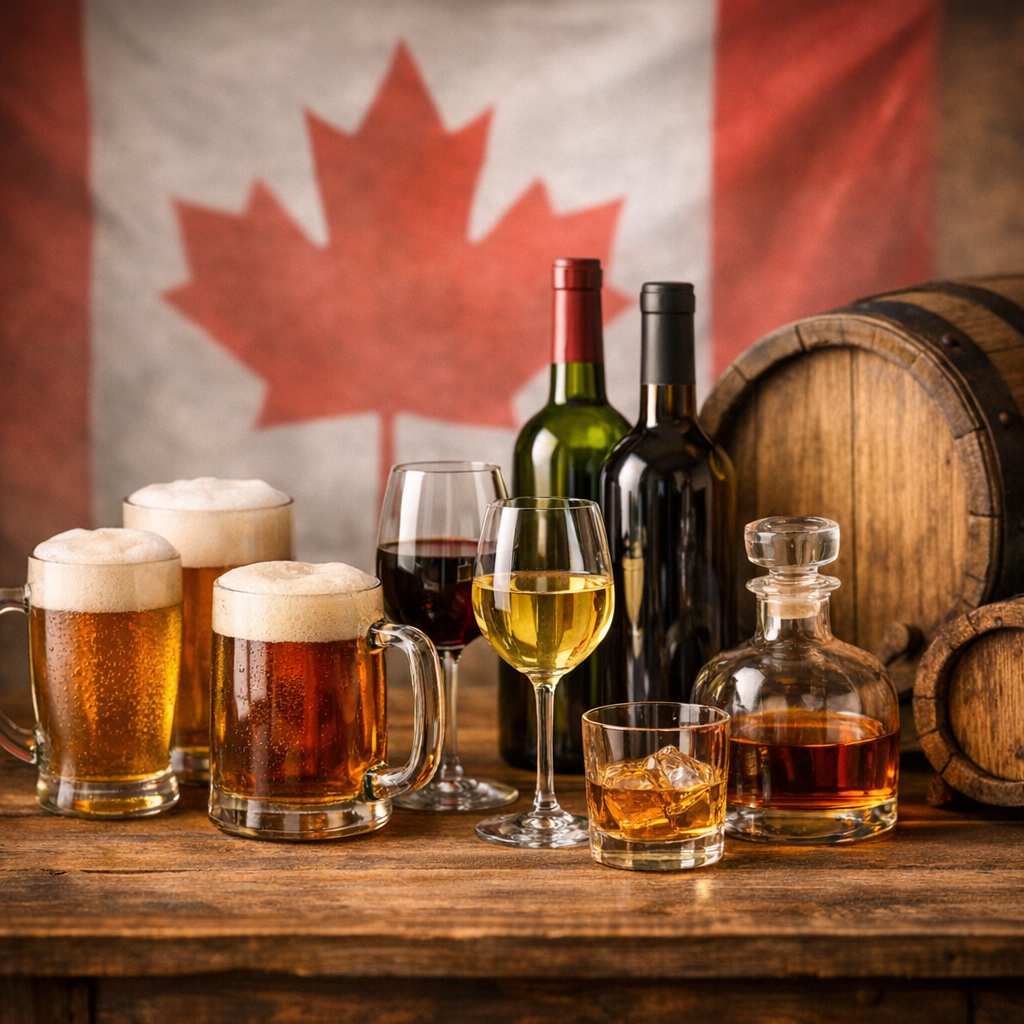

Canada’s federal government is preparing to extend its 2% cap on annual alcohol tax increases for another two years, offering a much-needed cushion to brewers, wineries, and distilleries just ahead of the April 1 deadline.
The move, confirmed by a government official familiar with the plan, will keep excise tax hikes on alcohol limited to 2% annually through 2028. The cap was initially introduced in 2023 as a temporary measure to soften the impact of inflation-linked tax increases that had been putting growing pressure on the industry.
At the time, producers had warned that automatic tax hikes tied to inflation were hitting at a particularly difficult moment, with businesses already grappling with higher input costs, supply chain disruptions, and post-pandemic recovery challenges. This year was expected to be the final year of the cap, but Ottawa is now stepping in again to extend the relief.
Relief extended as industry faces ongoing cost pressure
For Canada’s alcohol producers, the extension is less about avoiding taxes altogether and more about predictability. Excise duties on alcohol have traditionally been adjusted every April 1 in line with inflation, meaning businesses often faced uncertain cost increases year after year.
By limiting that rise to 2%, the government is effectively smoothing out what could otherwise have been a sharper jump. For brewers, wineries, and distillers operating on tight margins, even a few percentage points can significantly affect pricing strategies, hiring decisions, and expansion plans.
The government is also extending a key support measure for craft brewers. Under the program, excise taxes are cut in half for the first 15,000 hectolitres of beer produced in Canada. That measure, now set to continue for another two years, is aimed at helping smaller, independent brewers compete with larger players in the market.
Officials say the combined extensions are designed to give the sector stability during a period still marked by global trade uncertainty and supply chain challenges. Many producers continue to face elevated costs for raw materials such as grain, as well as packaging and transportation expenses.
The timing is also strategic. Canada is heading into what could be a particularly strong summer for alcohol sales, with the FIFA World Cup set to bring increased tourism and consumer activity. For businesses preparing for higher demand, having clarity on tax policy provides a clearer runway to plan production and inventory.
Political pressure ahead of April 1 deadline
The decision comes after mounting political pressure in the lead-up to the April 1 tax adjustment. The federal Conservative Party and the Canadian Taxpayers Federation had both called on the Liberal government to scrap the alcohol tax increase entirely, arguing that even a capped rise would add to the financial burden on both producers and consumers.
Instead of eliminating the increase, the government has opted for a middle-ground approach by extending the cap. This allows Ottawa to maintain its inflation-linked tax framework while still responding to concerns from the industry and opposition groups.
For consumers, the impact may not be immediately dramatic, but it is still meaningful. A capped tax increase reduces the likelihood of sharper price hikes being passed on at the retail level. While prices are influenced by multiple factors — including production costs, wages, and logistics — keeping tax growth in check helps prevent additional upward pressure.
Industry groups have long argued that Canada’s automatic excise system needs reform, particularly during periods of high inflation. According to details available from the Canada Revenue Agency, alcohol duties are adjusted annually, a structure that can lead to unpredictable cost increases when inflation spikes.
At the same time, organizations such as Beer Canada have consistently pushed for more stable and predictable tax policies, especially for smaller producers that have less flexibility to absorb rising costs.
For now, the extension signals that the federal government is prioritizing stability over sudden policy shifts. Brewers, wineries, and distilleries will still face challenges in a competitive and cost-sensitive market, but they now have a clearer outlook on one major expense line for the next two years.
The announcement, first reported by The Canadian Press on March 31, 2026, is expected to be formally confirmed shortly. As the April 1 deadline approaches, the extension is likely to be welcomed across the industry as a practical step that balances fiscal policy with economic reality.
Whether this temporary relief eventually leads to a broader overhaul of Canada’s alcohol tax system remains to be seen. For now, producers are getting what they have been asking for — more certainty, fewer surprises, and a bit more room to navigate an uncertain economic landscape.

Make Swikblog your go-to source on Google for reliable updates, smart insights, and daily trends.