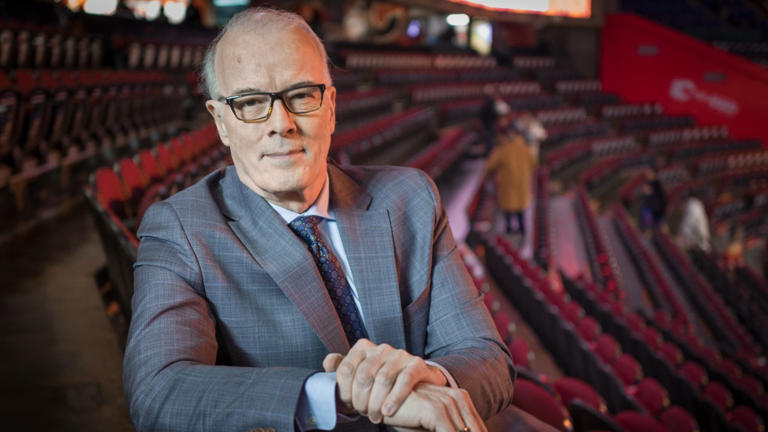

Veteran broadcaster Scott Oake has announced he will step away from television after the 2025–26 NHL season, bringing an end to one of the longest-running careers in Canadian sports media. The news, confirmed during Sportsnet’s After Hours segment on April 5, has triggered a sharp spike in online searches and fan reaction, as viewers process the departure of a familiar voice synonymous with Hockey Night in Canada.
Oake, who joined the iconic broadcast in 1989, said he plans to retire following the conclusion of the 2025–26 Stanley Cup Playoffs. His final appearance on Hockey Night in Canada and After Hours is scheduled for April 11, marking the beginning of his farewell stretch after more than three decades at the centre of NHL coverage.
For many fans, the announcement feels less like a routine retirement and more like the closing of a chapter in Canadian hockey culture. Oake has been a constant presence during some of the sport’s most memorable moments, bridging generations of players, coaches and audiences through his calm, conversational style.
A career that helped define hockey broadcasting
Oake’s journey into broadcasting began far from the bright lights of national television. Starting as a volunteer at a university radio station in Newfoundland, he steadily built his career through local reporting before joining CBC in St. John’s. A move to Winnipeg in 1979 positioned him closer to the country’s hockey heartbeat, and by 1989 he had secured his place on Hockey Night in Canada.
Over the decades, Oake became known not only for his professionalism but also for his ability to connect with players in a way that felt genuine rather than rehearsed. His post-game interviews often revealed a different side of athletes — relaxed, humorous and occasionally emotional — helping humanize stars in a league that can often feel guarded.
That skill reached its peak with After Hours, the late-night segment he helped shape into a fan-favourite format. The show’s mix of extended interviews and viewer-submitted questions created a rare space for deeper conversations in a fast-paced sports media landscape.
His contributions did not go unnoticed. Oake received major honours throughout his career, including the Order of Canada and the Order of Manitoba, along with a Gemini Award for his interview work. Yet his legacy extends beyond accolades, rooted instead in the trust he built with both viewers and the hockey community.
Why his exit matters now
The timing of Oake’s retirement is significant. Hockey broadcasting is already undergoing a generational shift, with networks experimenting with new formats, personalities and digital-first strategies to reach younger audiences. His departure removes one of the last links to an era when Hockey Night in Canada was not just a program, but a shared national ritual.
For Sportsnet and CBC, replacing Oake will not be a straightforward task. His role went beyond presenting highlights or asking questions — he was a steadying presence during live broadcasts, capable of adapting to both high-stakes playoff intensity and lighter moments in the studio.
The reaction online reflects that sense of loss. Within hours of the announcement, search interest surged, and social media filled with tributes from fans and former players. Many pointed to his consistency and understated humour as qualities increasingly rare in modern sports coverage.
At the same time, Oake’s decision appears carefully timed rather than abrupt. By announcing his plans more than a year in advance, he allows viewers and colleagues a gradual transition, while also giving networks time to rethink how their coverage evolves in a post-Oake landscape.
Beyond broadcasting, his influence extends into the community. Following the death of his son Bruce in 2011, Oake founded the Bruce Oake Recovery Centre in Winnipeg, a facility focused on addiction treatment. That work has become a defining part of his legacy, reflecting a commitment that reaches well beyond television. More information about the centre can be found through its official initiative supporting recovery efforts.
As the 2025–26 season approaches, Oake’s final broadcasts are likely to carry added weight. Every interview, every post-game exchange and every closing segment will serve as a reminder of a career that quietly shaped how hockey stories are told.
When he signs off after the Stanley Cup Playoffs, it will not just mark the end of a job, but the conclusion of a voice that helped narrate the modern history of the NHL for millions of viewers across Canada and beyond.
You may also like iPhone 18 Pro No Black Color in 2026? What the Latest Report Suggests.

Make Swikblog your go-to source on Google for reliable updates, smart insights, and daily trends.