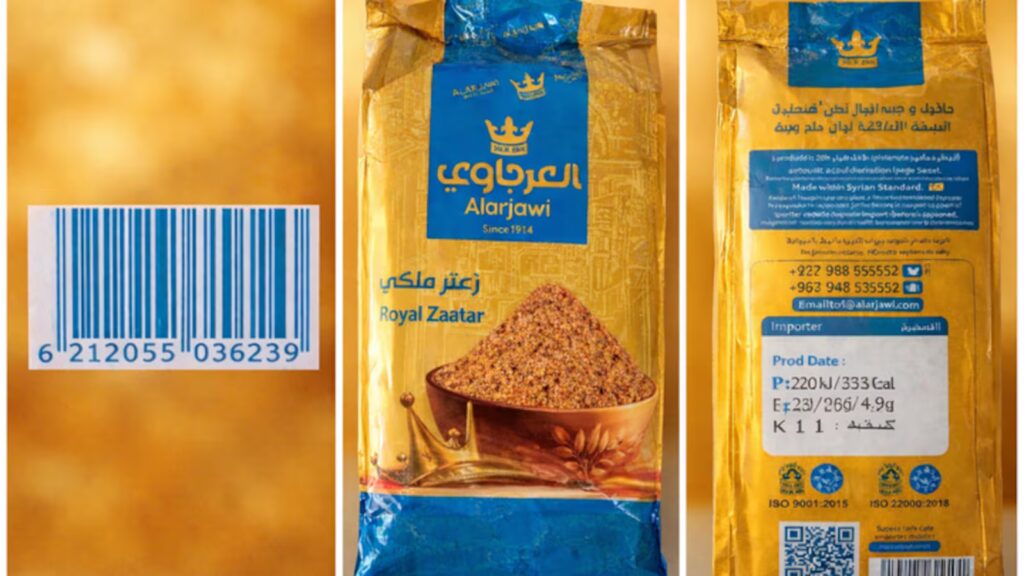

A nationwide food recall has been issued in Canada, putting a commonly used spice blend under scrutiny over possible salmonella contamination. The warning, released by the Canadian Food Inspection Agency (CFIA), is gaining traction as more consumers search for details about the affected product.
The recall involves Alarjawi brand Royal Zaatar, a widely used seasoning mix found in many Canadian kitchens. While the product may appear completely normal, officials warn it could still carry harmful bacteria that can lead to serious illness.
Exact product details and affected areas
The recall applies specifically to the Alarjawi Royal Zaatar, 450 g package. Consumers are being asked to check for the following identifiers:
UPC: 6 212055 036239
Code: P: 29/04/2025 E: 28/10/2026 K1
According to the CFIA, the product was sold across multiple provinces, including Alberta, Saskatchewan, Ontario, Quebec, and Nova Scotia. This wide distribution has raised concern, as the seasoning is commonly used in everyday cooking, from breads to marinades.
The recall was triggered after test results indicated possible contamination. At this stage, no illnesses have been reported in connection with the product, but officials stress that the risk remains real.
Health risks linked to salmonella contamination
Salmonella is a bacteria that can cause foodborne illness even when contaminated food looks or smells safe to eat. That’s what makes recalls like this particularly important — there are often no visible warning signs.
People who consume contaminated food may experience symptoms such as fever, headache, nausea, vomiting, abdominal cramps, and diarrhea. These symptoms can appear within hours or take a few days to develop.
While many healthy individuals recover without treatment, certain groups face a much higher risk. Young children, pregnant women, the elderly, and individuals with weakened immune systems are more vulnerable to severe or even life-threatening complications.
In some cases, salmonella infections can lead to long-term health issues, including severe arthritis or dehydration requiring medical care.
Consumers looking for official updates and safety advice can visit the Canadian Food Inspection Agency website.
What the CFIA is asking consumers to do
The CFIA has issued clear instructions: do not consume, serve, use, or sell the recalled product. If you have the affected Zaatar at home, it should either be thrown out safely or returned to the store where it was purchased.
Officials also recommend taking extra precautions in the kitchen. Any surfaces, containers, or utensils that may have come into contact with the seasoning should be cleaned thoroughly to prevent cross-contamination.
If you or someone in your household has already consumed the product and begins to feel unwell, especially with symptoms consistent with salmonella, it’s important to contact a healthcare provider promptly.
The agency confirmed that it is currently conducting a food safety investigation, which could potentially lead to additional recalls if other affected products are identified. At the same time, regulators are working with retailers to ensure that all recalled items are removed from store shelves.
This latest alert comes as part of a broader trend of food safety concerns across Canada. Earlier recalls involving tahini products and pistachios were also linked to salmonella risks, with some cases contributing to a larger ongoing public health investigation.
Since late 2025, there have been hundreds of recalled products tied to similar contamination concerns, along with reported illnesses across the country. While this Zaatar recall has not yet been linked to any confirmed cases, it adds to growing awareness around food safety and monitoring.
For consumers, the message is straightforward: always check product labels, stay updated on recalls, and act quickly when warnings are issued. A simple step like verifying a UPC code can make a critical difference.
As the CFIA continues its investigation, more updates may follow in the coming days. Until then, anyone who has recently purchased spice blends — especially Zaatar — should take a moment to double-check their pantry.
You may also like: Doc Rivers Out as Bucks Fall to 32-50 in 2026 Season Collapse

Make Swikblog your go-to source on Google for reliable updates, smart insights, and daily trends.