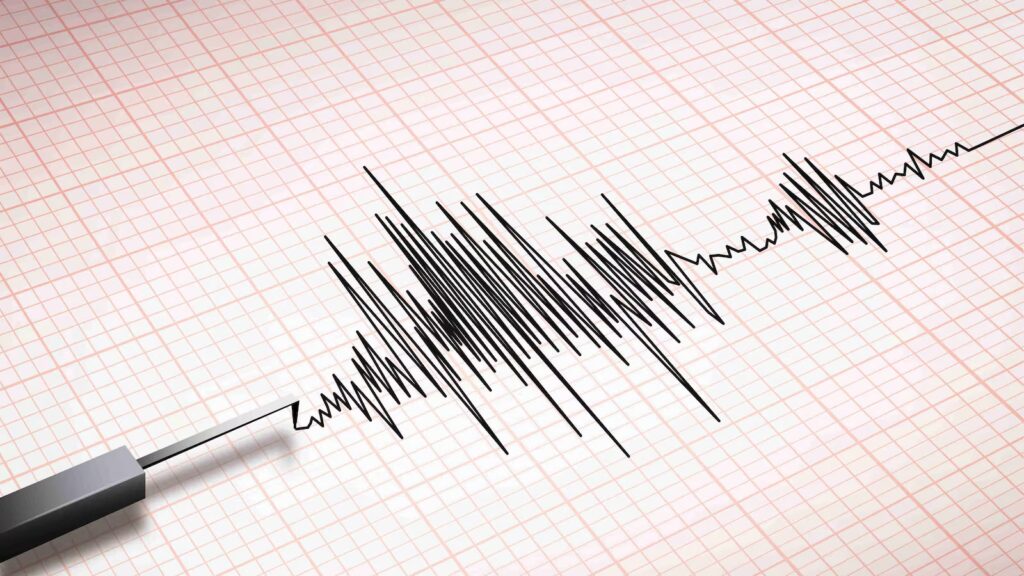

A 3.9 magnitude earthquake struck near Shawville, Quebec, at 12:36 p.m. Tuesday, rattling Ottawa and surrounding regions during the lunch hour and prompting widespread reports of shaking across eastern Ontario and western Quebec.
The tremor, confirmed by Earthquakes Canada, had its epicentre about 20 kilometres northeast of Shawville, roughly 77 kilometres west of downtown Ottawa. Residents in Ottawa, Kanata, Richmond, Constance Bay, Pembroke and as far as Otter Lake, Que., reported feeling vibrations, with some describing buildings swaying and a low rumbling noise similar to a passing truck.
While no major damage or injuries were immediately reported, several residents said the shaking was strong enough to unsettle homes. In some cases, pictures reportedly fell from walls, underscoring how even a moderate quake can have a tangible impact indoors.
The event quickly gained attention not only for its timing — midday when offices and homes were occupied — but also for the wide area over which it was felt. Earthquakes of this magnitude are considered minor, yet in eastern Canada they are often noticeable because seismic waves travel efficiently through older bedrock, allowing tremors to spread across long distances.
Preliminary data from other seismic monitoring agencies suggested the quake may have reached a magnitude closer to 4.6, though such variations are common in early readings and are typically refined as more data becomes available. Regardless of the final measurement, experts indicated the quake was unlikely to cause structural damage.
Why this quake was widely felt
Eastern Ontario and western Quebec sit within a region where small to moderate earthquakes are not uncommon, though they rarely result in serious consequences. Still, the experience can be unsettling. Many residents initially mistook the shaking for construction activity or heavy traffic before realising it was seismic.
Earthquakes Canada noted that tremors of this size are frequently felt in the region but seldom cause damage. Reports from across Ottawa-Gatineau and nearby communities aligned with expectations of “weak to light shaking,” yet the psychological impact often exceeds the physical effects.
That reaction is shaped by memory. A stronger magnitude 5.0 earthquake in 2010 remains a reference point for many in the region, while smaller events earlier this year — including magnitudes 2.8 and 3.0 recorded in western Quebec — have reinforced awareness that seismic activity is an ongoing, if infrequent, reality.
Context and what it means for residents
Historically, the region has not experienced extreme earthquakes, with government records indicating no local event exceeding magnitude 5.6 since 1944. That context helps explain why Tuesday’s quake, though modest, drew immediate attention: it sits within a range that is clearly felt but rarely dangerous.
For residents, the episode serves as a reminder of the importance of basic preparedness, even in areas not typically associated with earthquakes. Securing household items and understanding how to respond during shaking remain simple but effective precautions.
Authorities continue to monitor seismic data, and updates are expected as analysts refine measurements. For the latest information and safety guidance, residents can refer to Earthquakes Canada, which tracks activity across the country in real time.
Tuesday’s tremor may not leave lasting physical damage, but its reach across communities highlights how quickly a routine day can be disrupted — and how even minor earthquakes can resonate widely in a region unaccustomed to frequent seismic events.
You may also like: YouTube Ads Drop on Live Streams After New Update

Make Swikblog your go-to source on Google for reliable updates, smart insights, and daily trends.