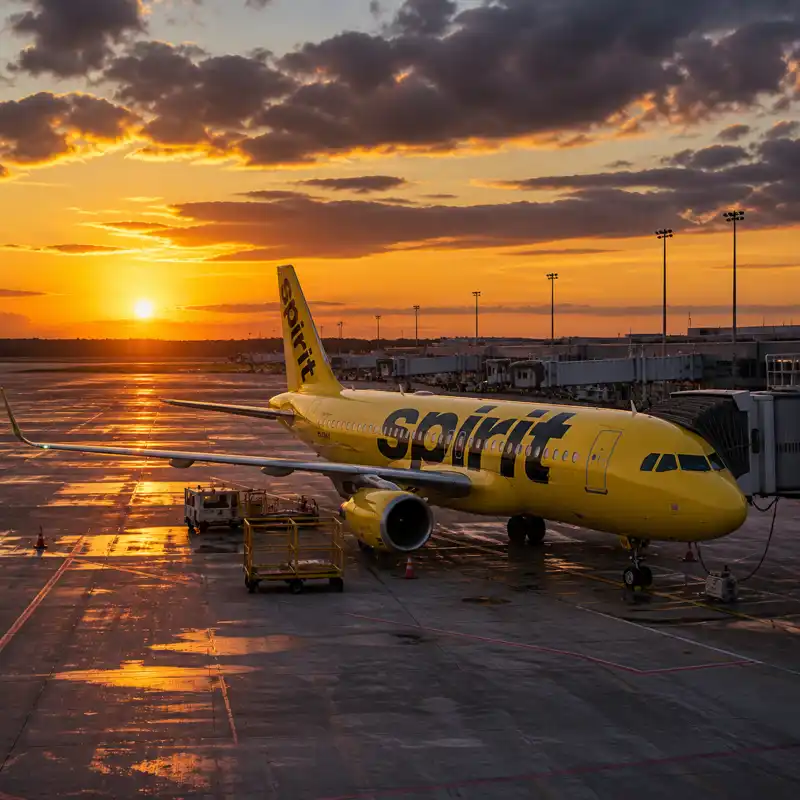

Spirit Airlines has ended operations after 34 years, closing one of the most recognizable chapters in U.S. budget air travel. The ultra-low-cost carrier confirmed that it has begun an immediate wind-down, with all scheduled flights canceled and no further customer service support available for affected passengers.
The closure marks a dramatic collapse for an airline once known for bright yellow planes, low base fares, and a disruptive pricing model that pressured larger carriers to compete on cost. Spirit’s exit now raises urgent questions for travelers, employees, airports, and the wider U.S. airline market.
Spirit Airlines Ends Flights With Immediate Effect
Spirit said its operations are being wound down immediately, meaning passengers with upcoming bookings should no longer expect flights to operate. The company has advised customers that refunds are expected, but it will not provide rebooking help on other airlines.
Read More
That creates a difficult situation for travelers already at airports or scheduled to fly in the coming days. Many will have to purchase replacement tickets at short notice, often when fares are higher and seat availability is limited.
The shutdown is especially disruptive in markets where Spirit had a strong presence, including Fort Lauderdale, Orlando, and Las Vegas. These cities depended heavily on the carrier’s low-cost routes, particularly for leisure and budget-conscious passengers.
Travelers affected by the cancellation should check payment records, monitor refund updates, and contact their card issuer if refund processing is delayed. You can also read our guide on what to do after a sudden flight cancellation for practical rebooking steps.
Why Spirit Airlines Collapsed
Spirit’s downfall was driven by years of financial pressure. The airline struggled after the pandemic as costs increased, demand patterns shifted, and debt continued to build. Since 2020, the company had lost more than $2.5 billion, making recovery increasingly difficult.
The airline first entered Chapter 11 bankruptcy protection in November 2024, hoping to restructure and continue operating. But the financial pressure returned, and Spirit sought bankruptcy protection again in August 2025. Court filings showed about $8.1 billion in debt and $8.6 billion in assets.
Fuel costs added another major burden. As jet fuel prices climbed during global instability linked to the Iran conflict, Spirit’s low-margin business model came under even more strain. Budget airlines rely on high aircraft utilization, tight cost controls, and steady passenger volume. When fuel prices jump and debt payments remain heavy, there is little room to absorb losses.
A potential government-backed rescue also failed to come together. President Donald Trump said his administration had offered a final proposal for a taxpayer-funded takeover, but no deal was reached before the deadline. Without a bailout or fresh restructuring path, Spirit moved to shut down.
For broader information on passenger rights and airline rules, the U.S. Department of Transportation’s aviation consumer protection page offers official guidance for air travelers.
17,000 Jobs and U.S. Airfares Now in Focus
The closure could affect about 17,000 workers, including pilots, flight attendants, ramp employees, maintenance teams, and corporate staff. Labor groups had warned that a Spirit collapse would hurt workers and weaken competition across the airline industry.
Spirit carried about 1.7 million domestic passengers in February, showing that it remained a meaningful player even after cutting capacity. However, that figure was roughly half a million fewer than the same month a year earlier, reflecting how sharply demand and operations had weakened.
The airline had also reduced available seats significantly, with May capacity reportedly down by about half compared with May 2024. Those cuts suggested Spirit was already shrinking before the final shutdown.
For passengers, the biggest long-term concern is pricing. Spirit’s low fares often forced bigger airlines to keep prices competitive on overlapping routes. Without Spirit, some markets may see fewer cheap seats, especially during holidays, weekends, and peak travel periods.
The impact may be felt most by families, students, and leisure travelers who relied on Spirit’s bare-bones fares to keep trips affordable. While other carriers may eventually add capacity, replacing Spirit’s scale and pricing pressure will not happen overnight.
The end of Spirit Airlines is more than a company failure. It is a turning point for U.S. budget travel, with immediate consequences for stranded passengers and longer-term effects for airline workers, airports, and ticket prices across major domestic routes.
Read More

Make Swikblog your go-to source on Google for reliable updates, smart insights, and daily trends.