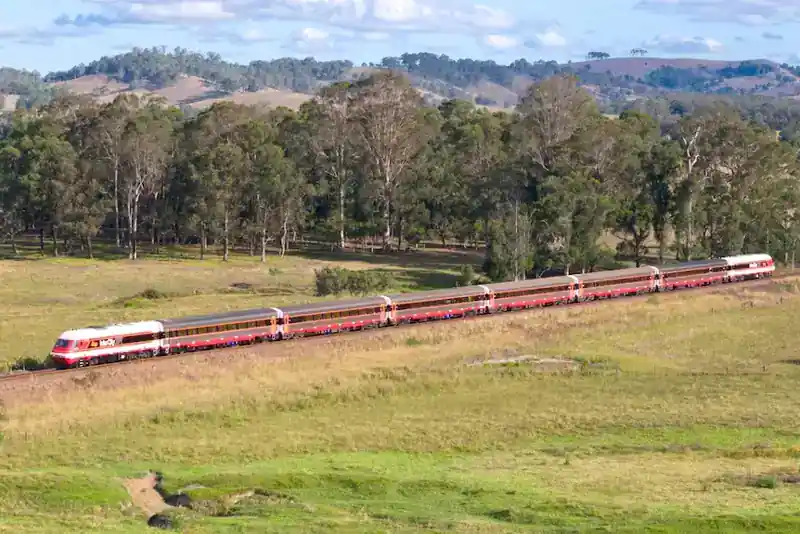

The refurbished XPT train has returned to regional service in New South Wales, giving one of Australia’s most recognisable long-distance rail fleets a fresh lease of life at a time when more passengers are weighing the cost of driving against the convenience of public transport.
The diesel-powered eXpress Passenger Train is back operating on the Sydney to Grafton route after a major life-extension upgrade valued at $40.3 million. The work is intended to keep the aging fleet reliable and passenger-ready while NSW waits for its next generation of regional trains to complete testing and enter service.
For many travellers, the comeback is practical. For rail fans, it is emotional. The relaunched train has been given a retro “candy stripe” look, reviving the red, orange and white colours associated with the XPT’s early years in the 1980s. The heritage styling has turned a routine return to service into a public moment, drawing passengers, photographers and train enthusiasts to regional stations along the route.
XPT returns as regional rail demand strengthens
The timing of the XPT’s return is important. Long-distance train travel across regional NSW and interstate routes has been showing renewed strength, helped by cost-of-living pressure and higher fuel prices. NSW TrainLink recorded about 113,500 journeys on its long-distance train network in March, around 3.6% higher than March 2025.
That increase may appear modest, but it points to a wider shift in passenger behaviour. More travellers are comparing the total cost of a road trip — fuel, parking, fatigue and vehicle wear — with the relative predictability of a train ticket. On longer journeys, the ability to move around, use onboard facilities and avoid hours behind the wheel gives rail a clear advantage for many passengers.
The Sydney to Grafton service is especially important for communities along the Mid North Coast. For regional passengers, the XPT is not just a nostalgic train; it is a connection to larger centres for medical appointments, family visits, work, education and tourism. Restoring the service helps maintain that link while replacement trains remain some distance from regular passenger operation.
The XPT has been part of the NSW rail story since 1982, when it first carried paying passengers from Sydney over the Blue Mountains to the state’s central west. Over four decades later, it still operates some of the country’s most demanding passenger routes, including the long Sydney to Brisbane service, which covers roughly 1,012 kilometres and can take about 15 hours.
That endurance explains why the latest refurbishment matters. Older rail fleets can remain useful for years if maintenance, safety and passenger comfort are managed properly. The life-extension program is designed to keep the XPT fit for service while avoiding a gap in regional rail capacity before new trains are ready.
The upcoming replacement fleet is expected to bring a major technology change. NSW’s new regional rail trains are planned as bi-mode trains, meaning they can use diesel power on non-electrified sections and overhead electric power where available. That flexibility is expected to help reduce emissions on parts of the network and modernise long-distance services. More information on regional transport planning is available through Transport for NSW.
However, new rolling stock cannot simply be placed into service overnight. Because the bi-mode fleet is new to Australia, testing and regulatory approval are extensive. Until that process is complete, the refurbished XPT remains essential to the network, especially on routes linking Sydney with regional NSW, Brisbane and Melbourne.
Read More
- Visit Swikblog Homepage
- Spirit Airlines Shutdown Risk as Rescue Talks Collapse
- Celtic Season Ticket Prices 2026/27 and Renewal Deadline
- Bayesian Superyacht Sinking: Crew Error, Not Storm, Linked to 7 Deaths
- China Offers Zero Tariffs to 53 African Nations as Trade Hits $348B
- Nathan’s Famous Grass-Fed Beef Franks Arrive at Walmart and Sam’s Club
Why the refurbished XPT still matters
The appeal of the XPT goes beyond timetable coverage. It offers a style of travel that many passengers still prefer over coaches or long-distance driving. A train journey gives people room to stretch, access to food service, and a calmer experience than spending hours on highways. For older travellers, families and people who do not want to drive long distances, these details are not small comforts — they are the reason rail remains relevant.
The retro livery also gives the return a cultural edge. Public transport systems often focus on speed, efficiency and cost, but identity matters too. The XPT’s original colours are strongly linked with memories of school trips, family travel and regional journeys. By bringing back that look, NSW TrainLink has tapped into public affection for a train that has remained visible across the state for more than 40 years.
For regional towns, the renewed service can also support local economies. Train travellers bring activity to stations, nearby shops, accommodation providers and tourism operators. While one refurbished train will not transform regional development by itself, reliable rail is part of the broader infrastructure mix that helps smaller communities stay connected.
The return also reflects a wider lesson for transport policy: maintaining existing assets is just as important as building new ones. Governments often receive attention for future fleets and major infrastructure projects, but passengers judge the system by whether services run, seats are available and journeys feel dependable. The XPT upgrade is a reminder that older transport assets can continue to deliver value when investment is targeted and timely.
For Australia, the renewed interest in rail comes as households remain sensitive to travel costs. When fuel prices rise, public transport can become more attractive almost immediately. But if services are unreliable or unavailable, passengers have little choice but to drive. Keeping long-distance rail options open gives travellers more flexibility and can reduce pressure on road networks over time.
The refurbished XPT is expected to appear beyond the Sydney to Grafton service, with plans for the retro-painted train to move around the wider NSW TrainLink network. That means passengers on routes to Brisbane, Melbourne and other regional destinations may also get a chance to travel on the upgraded train.
The XPT’s comeback is not simply a return of an old train. It shows how regional rail can remain valuable when demand is rising, fuel costs are reshaping choices, and new technology is still working its way through testing. More than 40 years after its first passenger run, the XPT is still carrying a message that feels current: reliable rail matters, especially when people need affordable ways to stay connected.

Make Swikblog your go-to source on Google for reliable updates, smart insights, and daily trends.