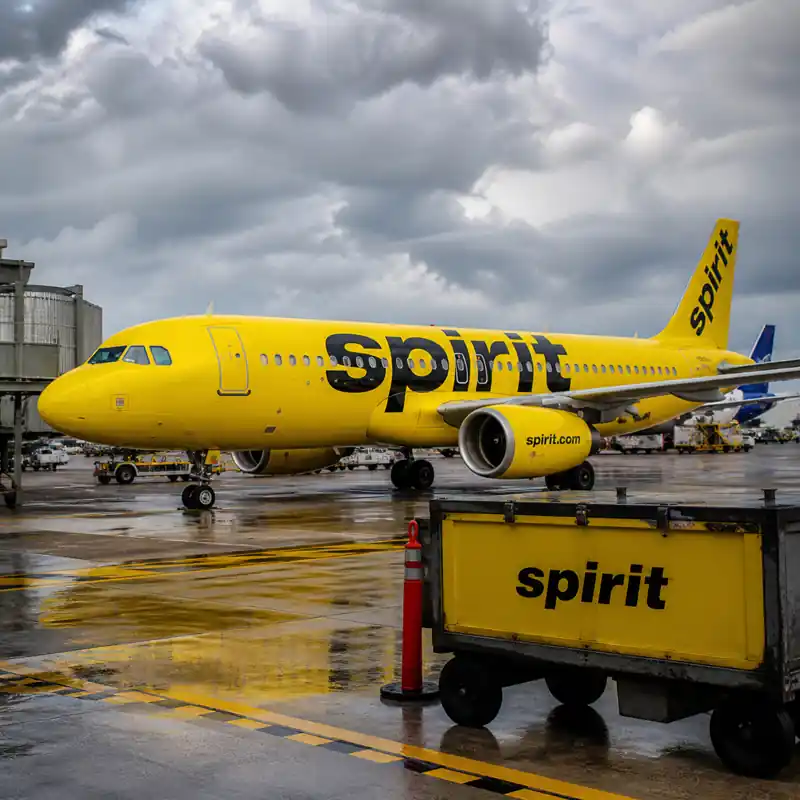

Spirit Airlines is moving deeper into a financial crisis as failed rescue talks, shrinking cash reserves and rising fuel costs place fresh pressure on one of America’s most recognizable budget carriers.
The airline, known for its ultra-low-cost model, is now facing mounting uncertainty over whether it can continue operations without fresh funding. Reports suggest that internal discussions have shifted from recovery planning toward contingency strategies, including the possibility of a shutdown.
While Spirit maintains that flights are continuing as scheduled, the broader situation has raised concerns across the airline industry. For travelers, employees and investors alike, the key question is no longer whether Spirit is under pressure—but how long it can sustain operations without external support.
Rescue Plan Breaks Down at a Critical Moment
The turning point appears to be the collapse of a proposed rescue package that could have provided the airline with critical breathing room. The plan, reportedly valued at around $500 million, was intended to stabilize operations and support Spirit through its restructuring phase.
However, negotiations failed to reach a breakthrough. Stakeholder disagreements, combined with concerns over long-term viability, stalled the process. According to The Wall Street Journal, the airline has begun preparing for the possibility that no agreement will materialize.
This breakdown comes at a time when Spirit’s financial flexibility is already limited. Without new funding, the company faces increasing difficulty in covering operational expenses, including aircraft leasing, fuel procurement and workforce costs.
The airline’s business model—built on offering the lowest possible fares—leaves little room to absorb cost shocks. As fuel prices surge globally, that vulnerability has become more visible.
Read More
Fuel Costs and Financial Pressure Collide
The recent spike in jet fuel prices has added a significant layer of pressure. Driven in part by geopolitical tensions and supply disruptions, higher fuel costs are hitting airlines across the board. But for Spirit, the impact is sharper due to its thin margins.
In recent months, oil prices crossing key thresholds have already begun reshaping the airline sector, with carriers facing higher input costs and tighter profit margins. As highlighted in broader aviation and market trends, rising energy prices tend to hit budget airlines harder than premium carriers.
Spirit had been attempting to stabilize its position following earlier financial setbacks, including its bankruptcy filing in 2024 and the collapse of its proposed merger with JetBlue in 2025. That merger had been seen as a potential turning point, offering scale, efficiency and stronger market positioning.
Without that deal, Spirit has been navigating a more difficult standalone recovery. The latest fuel-driven cost pressures have now accelerated the timeline of its challenges.
Why Spirit’s Situation Matters for Travelers
Spirit’s potential shutdown is not just a corporate story—it could reshape travel economics in the U.S. market.
The airline has played a key role in keeping fares competitive, especially on price-sensitive routes. Even passengers who do not fly Spirit often benefit from its presence, as larger airlines adjust pricing in response to low-cost competition.
If Spirit exits the market, that competitive pressure could weaken. In practical terms, this may lead to fewer ultra-cheap ticket options and gradually higher fares on certain routes.
Travelers with upcoming bookings should stay informed and take precautionary steps. Using credit cards for purchases may provide refund protection, while flexible tickets and travel insurance can reduce risk during uncertain periods.
For those planning essential travel, exploring alternative carriers may be a prudent step until more clarity emerges around Spirit’s future.
Industry Impact and What Comes Next
Spirit’s situation reflects a broader shift happening across industries where rising costs, high debt levels and changing consumer expectations are putting pressure on traditional business models.
Similar patterns have been seen in other sectors, where companies facing cost shocks and funding constraints have struggled to maintain operations. Recent business closures and restructuring trends covered on Swikblog highlight how quickly financial stress can escalate when liquidity tightens and external conditions worsen. :contentReference[oaicite:0]{index=0}
For the airline sector, the stakes are particularly high. Airlines operate in a capital-intensive environment where margins are sensitive to fuel prices, demand shifts and financing conditions. When multiple pressures hit at once, even established carriers can face severe strain.
Spirit’s future now depends on whether a last-minute solution emerges. A revised funding deal, new investor support or restructuring breakthrough could still change the trajectory. But without fresh capital, the window for recovery appears to be narrowing.
In the coming weeks, decisions made by creditors, policymakers and management will determine whether Spirit finds a path forward or becomes the latest example of how quickly conditions can turn in a high-cost, high-risk industry.
For now, the airline continues to operate—but the margin for error is shrinking, and the outcome remains uncertain.

Make Swikblog your go-to source on Google for reliable updates, smart insights, and daily trends.