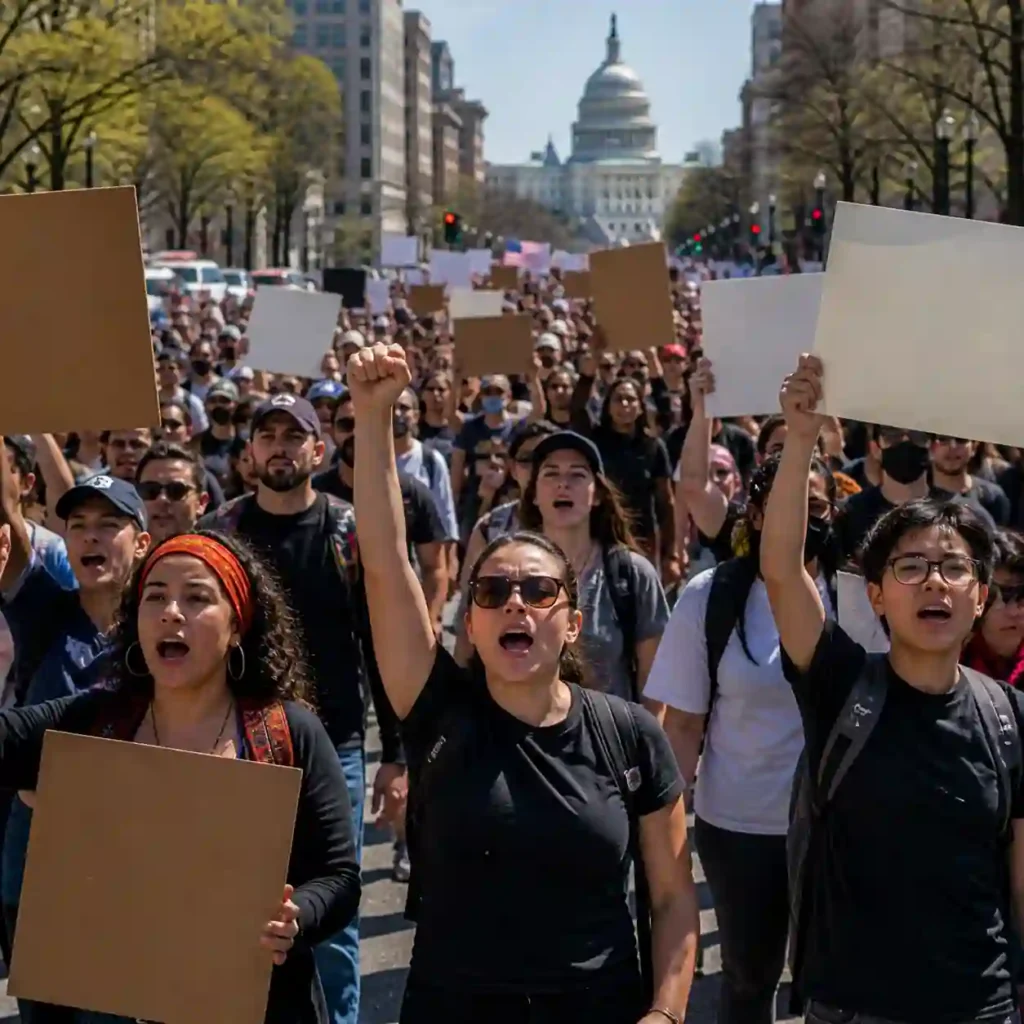

May Day 2026 has become a major talking point in the United States as workers, students, teachers and community groups take part in a nationwide day of action built around one message: no work, no school and no shopping.
The coordinated protest, organized under the “May Day Strong” banner, is being described by supporters as an economic blackout. Instead of only holding evening rallies, organizers are asking people to pause their normal routines during the day to show how much the economy depends on workers, students, families and everyday consumers.
Across the country, thousands of events are planned, including marches, walkouts, rallies, block parties and local gatherings. The movement brings together labor unions, immigrant-rights groups, education advocates, student organizers and political networks that say the current economy gives too much power to billionaires while leaving working families under pressure.
Why May Day 2026 Is Drawing National Attention
May Day, also known as International Workers’ Day, has long been connected to the labor movement. Its roots go back to the fight for the eight-hour workday in the 19th century, especially the labor demonstrations in Chicago during the 1880s. That history has made May 1 a global symbol of worker power, even though the United States officially celebrates Labor Day in September.
This year, however, May Day is receiving wider attention because the protest is not limited to one issue or one city. The 2026 demonstrations combine concerns about wages, public education, immigration enforcement, cost of living, corporate influence and wealth inequality.
The phrase “workers over billionaires” has become one of the main themes of the day. Supporters argue that schools, hospitals, public services and working families are being squeezed while wealthy individuals and large corporations continue to gain influence. For many participants, skipping work or shopping for a day is meant to send a visible message that ordinary people keep the system running.
Education workers and students are especially visible in this year’s actions. In some areas, teacher absences have led school districts to close or adjust schedules. In North Carolina, education advocates are connecting May Day to demands for stronger public-school funding. In Chicago, teachers have framed the day as a civic action focused on students, families and public institutions.
Student groups are also using May Day to organize walkouts on campuses and in local communities. Their message often connects labor rights with affordability, climate concerns and the future of work. For younger Americans, the protest is not only about today’s economy but also about what kind of job market and public services they will inherit.
What “No Work, No School, No Shopping” Means
The idea behind the economic blackout is simple. If people stop working, attending school and spending money at the same time, even briefly, it creates a public demonstration of collective power.
The “no work” call is aimed at showing the importance of labor. The “no school” message highlights the role of students, teachers and education workers. The “no shopping” push is designed to pressure businesses by asking consumers to avoid purchases for the day.
Organizers do not expect every person to be able to participate in the same way. Many hourly workers cannot afford to miss a shift, and many families depend on schools for childcare and meals. Because of that, some supporters are taking part through rallies after work, wearing protest colors, joining community events or sharing information online.
The immigration issue is another major part of the 2026 protests. Many groups involved in May Day Strong are calling for stronger protections for immigrant communities and an end to aggressive enforcement actions. Labor and immigrant-rights movements have often overlapped in U.S. history because immigrant workers make up a significant part of many industries, including food service, agriculture, construction, education support and care work.
Some organizers are also looking beyond 2026. Labor leaders have discussed building toward a broader general strike in the future, with May 1, 2028, mentioned by some union voices as a possible target date for coordinated action. That makes this year’s May Day not only a protest, but also a test of organizing strength.
There is also criticism. Some officials and parents argue that school closures can hurt students, especially near the end of the academic year. Small businesses may worry about losing customers, and workers without paid leave may be unable to join without financial risk. These concerns are part of the national debate around May Day 2026 and show why the protest is both symbolic and disruptive.
Still, the reason May Day is trending is clear. The movement touches daily life in a direct way. Work, school and shopping are ordinary routines. Asking people to pause all three turns a political protest into something that many Americans can immediately understand.
For readers trying to understand the history behind the day, the labor roots of May Day are closely linked to the Haymarket Affair and the campaign for shorter working hours. A detailed historical background is available from Britannica.
Whether May Day 2026 becomes a turning point will depend on what happens after the marches end. Large protests can bring attention, but lasting change usually requires continued organizing, policy pressure and public support. For now, the nationwide call to skip work, school and shopping has pushed International Workers’ Day back into the center of America’s political and economic conversation.
For more explainers on trending U.S. news, labor issues and public-interest stories, visit Swikblog.
You may like: Brisbane Weather Today: Marine Wind Warning

Make Swikblog your go-to source on Google for reliable updates, smart insights, and daily trends.