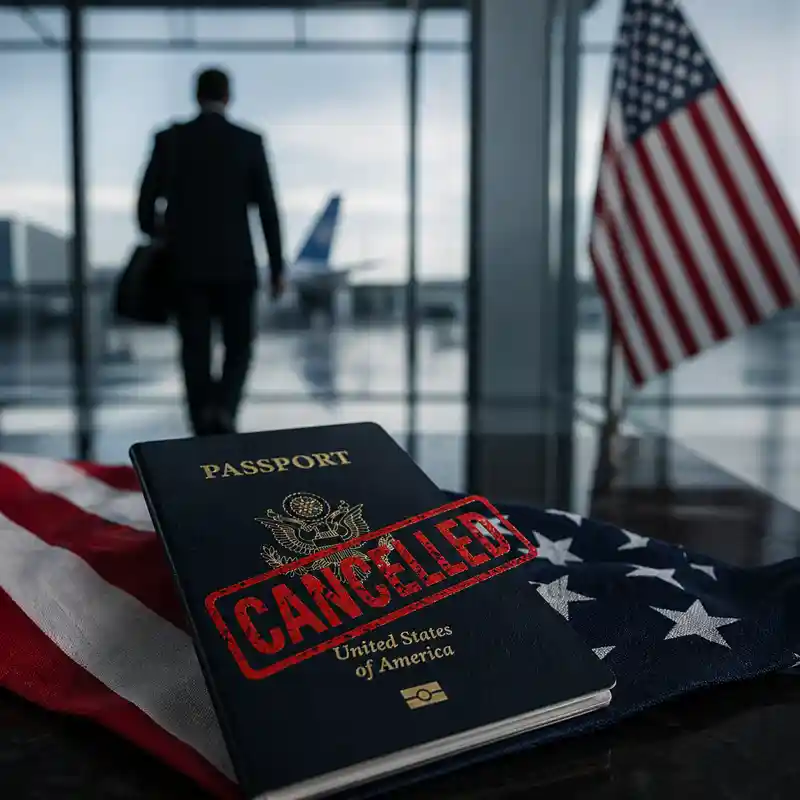

Americans living overseas are facing a decision that goes far beyond paperwork: whether keeping a U.S. passport still makes sense when the legal, tax and emotional costs continue to rise.
In 2026, interest in renouncing U.S. citizenship is gaining fresh attention as appointment backlogs stretch across major consulates and the official fee falls sharply from $2,350 to $450. The lower fee may sound like relief, but for many applicants the real cost is still far higher. Legal and tax preparation can push the total expense above $10,000, especially for people with pensions, property, investments or cross-border family finances.
The pressure is especially visible among Americans who have lived abroad for decades. Some have built full lives in Canada, Germany, Australia, Norway, Switzerland or New Zealand, yet remain tied to U.S. tax filing rules, foreign bank reporting requirements and political decisions made thousands of miles away. Similar global citizenship and policy shifts have been increasingly discussed across platforms like Swikblog, where cross-border financial and migration trends are being closely tracked.
Why more Americans abroad are considering renunciation
The United States has an unusual tax system. Unlike most countries, it taxes citizens even when they live permanently overseas. That means an American who has spent 30 years in Europe may still need to file U.S. tax returns, report foreign accounts and deal with compliance rules that do not apply to their neighbours, spouses or colleagues.
For some, this creates everyday financial problems. Foreign banks can be cautious about serving U.S. citizens because of reporting obligations under FATCA, the Foreign Account Tax Compliance Act. That can make opening accounts, accepting jobs, investing locally or managing family finances more difficult than it should be for people who no longer live in America. More details on FATCA compliance and global tax obligations can be found via the IRS official FATCA guidelines.
Read More
Tax is not the only reason. Political anxiety has become a larger part of the conversation. Some Americans abroad say they no longer feel comfortable being legally tied to the United States because of concerns over democratic stability, foreign policy, military escalation and the direction of federal institutions.
For older expats, the decision often follows years of frustration. For younger families, the question can be more urgent. Parents raising children outside the U.S. may worry about future obligations, including Selective Service registration for eligible citizens aged 18 to 25. Registration does not mean a draft is happening, but the connection alone can feel troubling for families whose children have little practical relationship with the United States.
There are also career concerns. Americans working in sensitive industries abroad, including data, defence-linked contracts or government-related roles, may feel exposed if U.S. foreign policy puts them at odds with the country where they live and work. In those cases, citizenship can become more than a personal identity. It can affect security clearance, employment risk and long-term stability.
The process is simple in form, but heavy in consequence
Renouncing U.S. citizenship usually requires an appointment at a U.S. embassy or consulate. Applicants must confirm under oath that they are acting voluntarily, understand the consequences and are not giving up citizenship for improper reasons. Their U.S. passport is then cancelled after approval, and they receive a Certificate of Loss of Nationality.
That formal process can be brief, but getting there is rarely easy. In some major cities, appointment waitlists have reportedly stretched beyond a year. Americans in places such as London, Sydney and parts of Canada have faced long delays, while some applicants travel to smaller consulates in other countries to move faster.
The wait is only one obstacle. Renunciation can trigger serious tax consequences if the person is treated as a “covered expatriate.” This classification may apply to people who exceed certain income, asset or compliance thresholds. It can create exit-tax issues and long-term complications involving gifts or inheritance to U.S. persons.
That is why many people hire lawyers and specialist tax advisers before booking an appointment. The official government fee may now be $450, but the practical cost often remains many times higher. For anyone with complex finances, renunciation is not a form to fill out casually. It is a permanent legal break that requires careful planning.
There is also an emotional cost. Giving up citizenship can mean losing the automatic right to return permanently to the U.S. Former citizens may still visit, but entry is no longer guaranteed in the same way. For people with ageing parents, siblings, children or close friends in America, that risk can weigh heavily.
Many who consider renunciation do not hate the country where they were born. They may still miss American landscapes, food, sports, humour, family traditions or the version of the country they grew up believing in. But nostalgia does not erase legal obligations. For some, the passport has become less a symbol of belonging and more a source of paperwork, cost and uncertainty.
What the 2026 surge says about citizenship
The rise in renunciations is not only about anger at one administration or one election. It reflects a longer shift in how global citizens think about nationality. Millions of people now live permanently outside their birth country, marry across borders, pay taxes elsewhere and raise children in societies where they feel more rooted than in the country printed on their passport.
For Americans abroad, that reality collides with a citizenship system that continues to follow them wherever they go. The result is a growing group of people asking whether legal nationality should match lived reality.
Renunciation remains a drastic step, and it is not right for everyone. A U.S. passport is still one of the world’s most powerful travel documents. It offers the right to live and work in the United States, access to consular support and a connection to a major global economy. Anyone with U.S. assets, family ties, business interests or children who may want to study or live there later should think carefully before making a final decision.
Still, the 2026 surge shows that more Americans abroad are reaching the same conclusion: citizenship has a cost, and for some, that cost has become too high.
The story is not simply that Americans are walking away from their country. It is that many have spent years trying to balance identity, family, taxes, politics and security — and now believe the balance has broken. For them, renouncing citizenship is not a dramatic protest. It is a final administrative act after a long personal calculation.
As waitlists grow and the lower fee brings more people into the process, the U.S. may face a sharper question: why are so many of its citizens abroad deciding that life is easier without the passport they once thought they would keep forever?

Make Swikblog your go-to source on Google for reliable updates, smart insights, and daily trends.