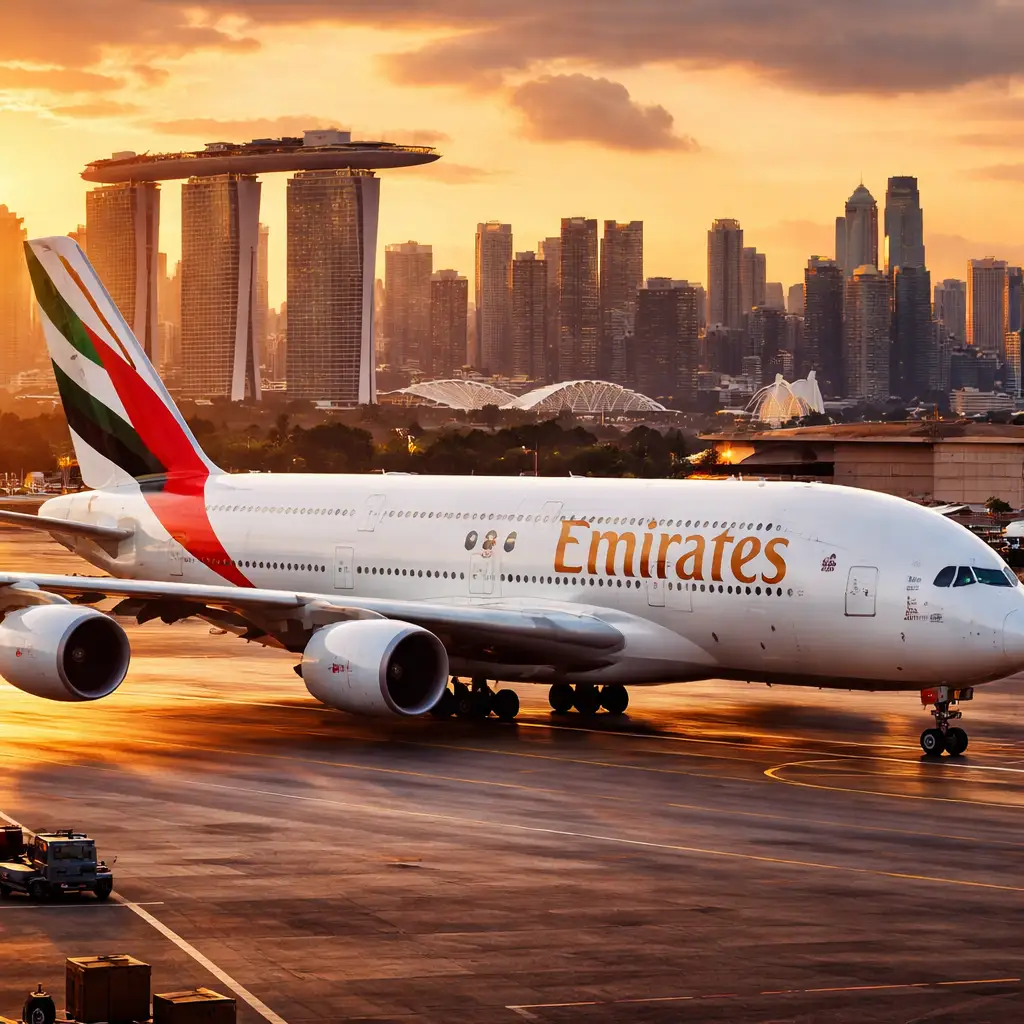

Emirates is moving into a fresh phase of its 2026 network recovery, with the airline preparing to bring back flights to 16 destinations during the first half of May while also adding more seats on some of its busiest international corridors.
The latest schedule update shows that the Dubai-based carrier is not simply restoring routes in bulk. It is rebuilding its network with a mix of resumed destinations, higher weekly frequencies and aircraft upgrades, including wider use of the Airbus A380 and Boeing 777-300ER on major long-haul services.
Between May 1 and May 15, 2026, Emirates is set to resume flights to Adelaide, Algiers, Antananarivo, Bahrain, Beirut, Bogota, Brisbane, Houston, Kuwait City, Los Angeles, Miami, Muscat, Orlando, Osaka Kansai, Phnom Penh and St. Petersburg.
The update takes Emirates to around 77% of its earlier planned capacity, reflecting a sizeable recovery in international flying. However, the airline’s schedule remains fluid, and passengers should continue checking their bookings before travel as further adjustments are still possible.
US, UK and Europe See the Biggest Capacity Push
Some of the most important changes are happening on Emirates’ routes to the United States. Houston, Los Angeles and Orlando are scheduled to return with three weekly flights from May 2. Miami is also coming back with four weekly Boeing 777-300ER services, continuing onward to Bogota.
Other US routes are also receiving more capacity. New York JFK rises to 14 weekly services with Airbus A380 and Boeing 777-300ER aircraft. Washington Dulles moves from three weekly flights to daily Boeing 777-300ER operations, while Boston increases to four weekly flights. Dallas/Fort Worth keeps daily service but gets a larger Boeing 777-300ER instead of the 777-200LR.
The UK and Ireland are also gaining more Emirates capacity. London Heathrow will move to six daily A380 flights, up from five. Manchester increases to 21 weekly services, with A380 operations expanding to two daily rotations. Newcastle becomes a daily Airbus A350-900 route, while Dublin grows to 14 weekly Boeing 777-300ER flights.
Across mainland Europe, Emirates is adding more flights and larger aircraft on several important city pairs. Paris Charles de Gaulle increases to 21 weekly flights, Madrid moves to 14 weekly services with the A380 returning, and Rome also climbs to 14 weekly flights. Frankfurt gets A380 service again on selected flights, while Munich doubles to two daily Boeing 777-300ER services.
Barcelona is moving to daily Boeing 777-300ER flights, Milan Malpensa is getting an A380 upgrade on its nonstop service, and Vienna will shift to daily A380 operations. Bologna and Venice are also receiving higher weekly frequencies, giving Emirates a broader recovery footprint across Southern Europe.
A380 Returns Signal Stronger Long-Haul Demand
The use of larger aircraft is one of the clearest signals in Emirates’ latest update. Instead of only adding more flights, the carrier is also increasing seat capacity by placing the Airbus A380 and Boeing 777-300ER on routes where demand appears strong enough to support more seats.
In the Asia-Pacific region, Melbourne is being increased to two daily A380 flights, while Auckland rises to four weekly A380 services. Sydney will see the return of nonstop A380 operations, and Taipei is being upgraded from Boeing 777-300ER to Airbus A380 service. Tokyo Haneda is also increasing to daily Boeing 777-300ER flights.
Osaka Kansai is among the destinations returning to the Emirates network, adding another important Japan route as demand across Asia continues to recover. Brisbane and Adelaide are also part of the resumed list, giving Australian travellers more options through Dubai.
India remains one of Emirates’ strongest markets. Mumbai continues with five daily flights using a mix of Boeing 777-300ER, Airbus A350-900 and Airbus A380 aircraft. Delhi operates four daily Boeing 777-300ER flights, while Bengaluru remains at three daily services with widebody aircraft including A380 operations.
In the Middle East, Dammam doubles to two daily Airbus A350-900 flights. Bahrain, Kuwait City, Muscat and Beirut are also among the destinations returning, improving regional connectivity from Dubai during the May schedule period.
Africa is seeing a capacity lift as well. Mauritius is being upgraded to two daily A380 flights, marking a major increase in seat availability. Cape Town is scheduled for 10 weekly Boeing 777-300ER flights, while the Lusaka-Harare service increases to daily operations.
Not every route is returning immediately. Emirates services to Baghdad, Basra and Tehran Imam Khomeini remain suspended. The Male-Colombo sector also stays cancelled, although Colombo continues to be served separately with three daily flights.
There are also several aircraft changes that do not involve frequency increases. Glasgow is switching from the Airbus A350-900 to the Boeing 777-300ER. Seattle is also moving to the Boeing 777-300ER on four weekly flights, while the Larnaca-Malta sector changes from Boeing 777-300ER to Airbus A350-900 operations.
For passengers, the update brings both opportunity and caution. More restored routes mean better connectivity through Dubai, especially for travellers heading to the United States, Europe, Australia and parts of Asia. At the same time, the schedule is still described as interim, so travellers should confirm flight timings, aircraft type and connection details before departure.
The most reliable place to verify operational changes remains Emirates’ official travel updates page. Passengers can also review airport and flight information through Dubai Airports for the latest details affecting departures, arrivals and connections.
Emirates’ May 2026 update shows a carrier rebuilding with caution but clear momentum. The return of 16 destinations, the wider deployment of the A380 and the increase in weekly frequencies across major global markets all point to a stronger international schedule. Still, with four services remaining cancelled and further changes possible, passengers should treat the coming weeks as a transition period rather than a full return to normal operations.
You may like: Electric Air Taxi Completes First Manhattan to JFK Test Flight, Could Cut Travel Time to 10 Minutes

Make Swikblog your go-to source on Google for reliable updates, smart insights, and daily trends.