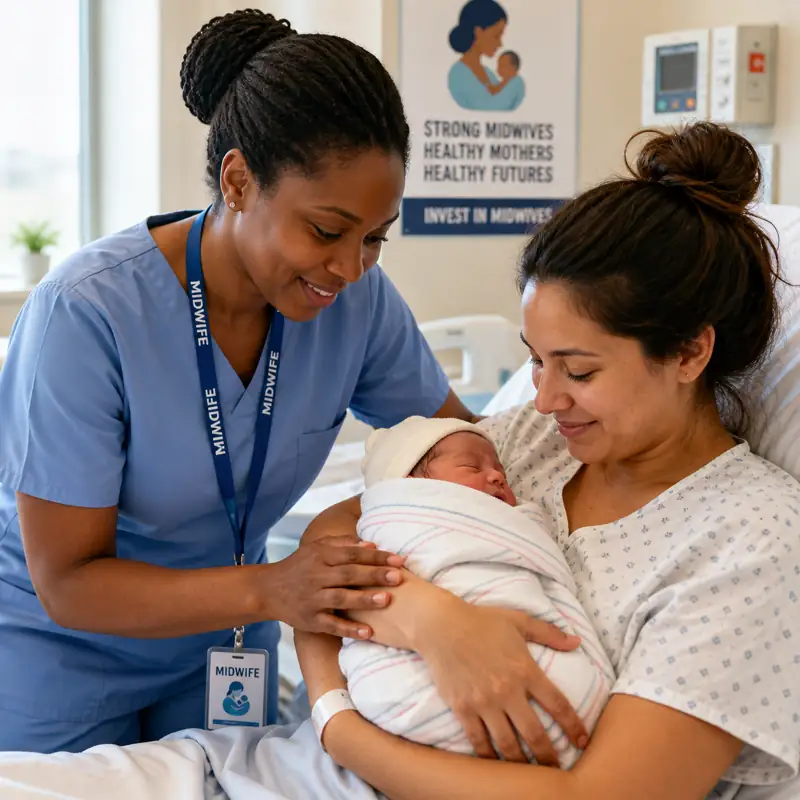

A shortage of nearly one million midwives is becoming one of the most urgent but underreported health workforce challenges in the world. As countries mark International Day of the Midwife on May 5, 2026, the global message is clear: more midwives are needed not as a symbolic demand, but as a practical solution to prevent avoidable deaths and improve care for women, newborns and families.
The 2026 theme, “One Million More Midwives,” puts attention on a gap that affects care long before childbirth begins and continues well after a baby is born. Midwives are often the first point of trusted support for pregnancy care, safe birth, newborn checks, breastfeeding guidance and reproductive health services. When they are missing, families feel the impact immediately.
One of the strongest reminders of that impact is linked to breastfeeding. Global health evidence has long shown that better breastfeeding support can save hundreds of thousands of young lives every year. Midwives are central to that support because they help mothers in the first hours and days after birth, when timely guidance can shape feeding, recovery and newborn health.
Why the midwife shortage is a global health warning
The International Confederation of Midwives has warned that the world needs around 980,000 additional midwives across 181 countries. This is not a small staffing issue. It covers countries representing most women of reproductive age and shows how widespread the gap has become.
The shortage is especially damaging because midwives do not provide only one service. Their role includes antenatal care, labour and birth support, postnatal care, newborn care, breastfeeding counselling, contraception advice and wider sexual and reproductive health support. In many rural and low-income communities, a midwife may be the only skilled professional a woman can access regularly.
When midwives are unavailable, care becomes delayed, fragmented or completely out of reach. Pregnant women may miss important health checks. Warning signs can go unnoticed. New mothers may struggle without breastfeeding support. Newborns may not receive timely postnatal care. These gaps can turn manageable health concerns into serious risks.
The crisis is not spread evenly. Africa carries a major share of the global shortage, while the Eastern Mediterranean region, the Americas and parts of Europe also face serious gaps. In some countries, the number of midwives would need to grow several times over to meet population needs. Even stronger health systems are not immune, with retention problems, ageing workforces and weak planning leaving maternity services under pressure.
What makes the issue more concerning is that the shortage is expected to continue unless governments act quickly. Current training rates alone are not enough. Population growth, underfunded health systems and poor workforce planning mean the world could still be short hundreds of thousands of midwives by 2030.
More midwives could change outcomes for mothers and babies
Health experts say the answer is not only to train more midwives, but to build systems where they can work properly. In many countries, trained midwives are not hired, deployed where they are needed, paid fairly or allowed to practise to their full scope. That means communities can still face shortages even when qualified professionals exist.
Midwifery models of care offer one path forward. These models place midwives at the centre of pregnancy, birth and postnatal care, supported by doctors, nurses and specialist services when complications arise. The goal is continuity: women are cared for by a known midwife or team rather than being passed between disconnected providers.
This matters because continuity of care can improve safety, trust and experience. A midwife who knows a woman’s history is better positioned to identify risks early, provide tailored advice and support informed decisions. For families, that can mean less confusion, more confidence and a stronger connection to the health system.
The wider benefits are also significant. With the right investment, midwives can help reduce maternal deaths, newborn deaths and stillbirths. They can also reduce unnecessary medical interventions, strengthen primary health care and make services more cost-effective. In overstretched systems, that makes midwifery not just a health priority but an economic one.
The 2026 campaign is urging governments to invest in midwifery education, employment, regulation and leadership. It also calls for safe working conditions, fair pay and policies that recognise midwives as essential health professionals. Without these changes, the pressure on existing midwives will continue, increasing burnout and pushing more workers out of the profession.
Supporters are also using a global petition to push the issue onto political agendas. The campaign aims to collect one million signatures calling for one million more midwives and stronger investment in the profession. People can learn more and support the campaign through the official One Million More Midwives petition.
International Day of the Midwife 2026 is therefore more than an annual awareness day. It is a chance to highlight a solvable crisis. The world does not lack evidence about what midwives can do. It lacks enough investment, planning and political will to make sure every woman and newborn can access one when care matters most.
The headline number is powerful: nearly one million midwives are missing. But behind that number are mothers travelling too far for care, newborns missing early support, families facing preventable risks and health workers carrying unsafe workloads. Investing in midwives would not solve every problem in global health, but it could be one of the clearest steps toward safer births, healthier babies and stronger communities.
You may like: Potato Chip Recall: Miss Vickie’s Spicy Dill Pickle Chips Pulled Over Allergy Risk

Make Swikblog your go-to source on Google for reliable updates, smart insights, and daily trends.