
On May 8 and 9, 2026, countries around the world will observe the Second World War International Day, a solemn period of remembrance dedicated to those who lost their lives during World War II. The official United Nations name for the observance is the Time of Remembrance and Reconciliation for Those Who Lost Their Lives during the Second World War.
The day is not meant to celebrate war. It is a global moment to remember the human cost of the conflict, honor victims across nations, and reflect on why peace, reconciliation and international cooperation remain essential today.
World War II changed the course of modern history. It claimed tens of millions of lives, destroyed cities, displaced families and exposed the world to some of the worst crimes ever committed against humanity. For many families, the war did not end with a treaty or surrender document. Its pain continued through grief, loss, migration and memory.
Why May 8 and May 9 Are Important
The dates are linked to the end of World War II in Europe. On May 8, 1945, Allied powers accepted the unconditional surrender of Nazi Germany. In many Western countries, this became known as Victory in Europe Day, or VE Day.
In Russia and several Eastern European countries, the surrender was marked on May 9 because of the time difference. That is why the United Nations recognizes both dates and invites countries, organizations and individuals to observe either one or both days.
The observance was formally established by the UN General Assembly through Resolution 59/26, adopted on November 22, 2004. The resolution called on member states, United Nations bodies, non-governmental organizations and individuals to pay tribute annually to all victims of the Second World War.
Later, the General Assembly again encouraged remembrance through Resolution 64/257 in 2010, when the world marked the 65th anniversary of the end of the war. The UN has also held special solemn meetings for major anniversaries, including the 80th anniversary in 2025.
According to the official United Nations observance page, the end of the Second World War helped create the conditions for the founding of the United Nations, whose central purpose was to save future generations from the devastation of war.
What the Day Remembers
The Second World War International Day honors every life lost in the conflict. This includes soldiers who died on battlefields, civilians killed in bombings, people who died under occupation, prisoners of war, resistance members, Holocaust victims and communities targeted by mass violence.
The scale of the tragedy remains difficult to grasp. The war affected Europe, Asia, Africa, the Pacific and many other regions. Homes, schools, hospitals, railways, factories and places of worship were destroyed. Millions of children grew up without parents. Millions of survivors carried trauma long after the fighting ended.
The Holocaust remains one of the clearest warnings from this period. Six million Jews were murdered by the Nazi regime, along with millions of others including Roma people, disabled persons, Slavs, political prisoners and other persecuted groups. Remembering these victims is central to preserving historical truth and resisting denial, hatred and extremism.
The war also brought the world into the nuclear age. The bombings of Hiroshima and Nagasaki caused immediate mass casualties and long-term suffering. Their legacy continues to influence global discussions on nuclear weapons, security and the responsibility of nations to prevent catastrophe.
That is why May 8 and 9 are not only about looking back. They are about asking what the world has learned from history and whether those lessons are being protected today.
How It Is Observed Around the World
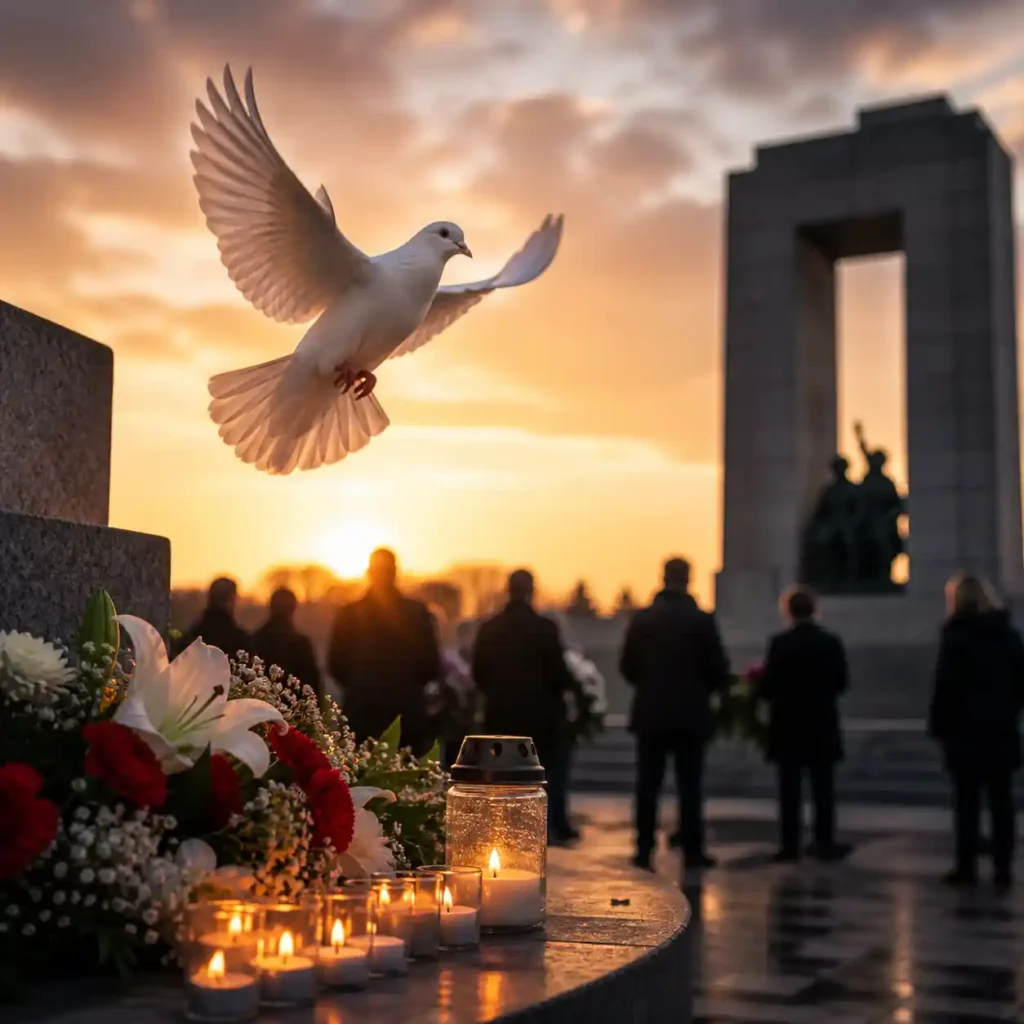
Commemorations vary from country to country. Some governments organize wreath-laying ceremonies at war memorials and military cemeteries. Others hold official speeches, moments of silence, exhibitions, interfaith prayers and educational events.
In France, the United Kingdom and other parts of Europe, ceremonies often focus on VE Day and the liberation of occupied countries. In Russia and several former Soviet republics, May 9 is observed with Victory Day events remembering the immense losses suffered during what is widely known there as the Great Patriotic War.
Museums also play an important role. Institutions such as Holocaust memorials, military museums and national archives use the day to present survivor stories, photographs, letters and historical records. These materials help younger generations understand the war through human experience, not just dates and statistics.
Schools and universities may organize lectures, essay competitions, film screenings and classroom discussions. For students, the observance can become a bridge between history lessons and present-day questions about peace, democracy, human rights and propaganda.
Individuals can also take part in simple but meaningful ways. Observing a minute of silence, visiting a memorial, reading survivor testimony, sharing verified historical information or speaking with older family members can all help preserve memory.
Why Reconciliation Matters in 2026
The word “reconciliation” gives this observance its deeper meaning. After World War II, the world had to rebuild not only cities and economies, but also trust between former enemies. That process was difficult, imperfect and painful, but it shaped many of the institutions and partnerships that exist today.
Reconciliation does not mean forgetting what happened. It means remembering honestly while choosing cooperation over revenge. It means accepting historical responsibility, honoring victims and building systems that reduce the chances of another global war.
In 2026, this message remains urgent. Conflicts, hate speech, antisemitism, racism, disinformation and political division continue to challenge societies. The memory of World War II warns that hatred can become policy, propaganda can normalize violence, and silence can allow injustice to grow.
The Second World War International Day therefore carries a message for governments, communities and individuals: peace must be defended before it is lost. International cooperation, human rights, dialogue and respect for truth are not abstract ideals. They are safeguards built from the lessons of the past.
May 8–9 is a time to honor the dead, support survivors, educate the young and renew a commitment to peace. The world remembers because forgetting would weaken the very lessons that emerged from the tragedy.
As Second World War International Day 2026 approaches, its message is clear and deeply human: remember every victim, reject hatred in all forms, and protect peace before history demands another painful lesson.
You may like: Queensland Flood Watch Issued as Tropical Low Triggers Heavy Rain Threat Across Brisbane

Make Swikblog your go-to source on Google for reliable updates, smart insights, and daily trends.