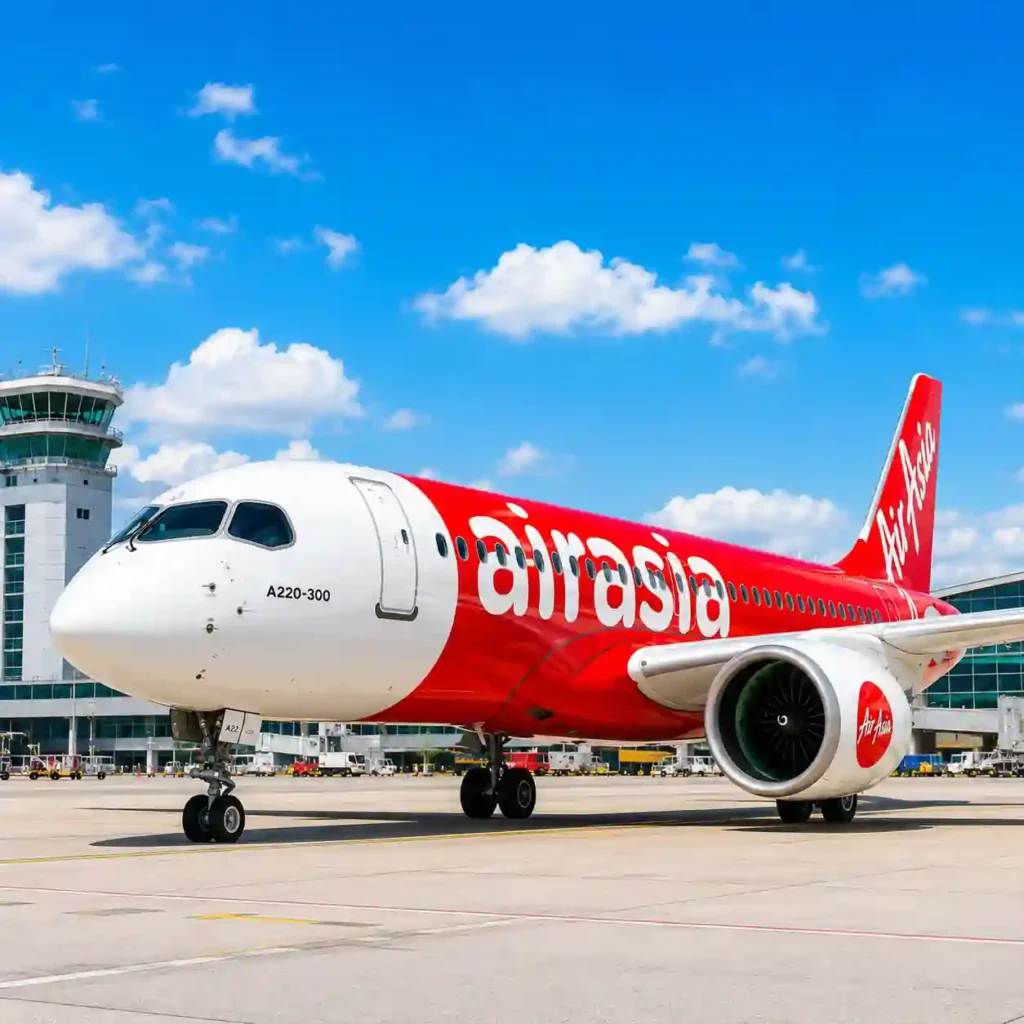

Airbus appears set to secure one of the most important commercial victories in the history of the Airbus A220 program, with AirAsia expected to order up to 150 aircraft in a multibillion-dollar agreement. The deal is drawing global attention not only because of its scale, but because it could reshape the future of Airbus’ smallest commercial jet at a critical moment for the aviation industry.
The expected announcement, which is linked to Airbus’ Mirabel assembly facility in Quebec, Canada, comes as airlines worldwide rethink fleet strategy amid rising fuel costs, changing passenger demand and pressure to improve efficiency. For AirAsia, the Airbus A220 could open new opportunities across Asia and the Middle East. For Airbus, the agreement could become the strongest sign yet that the once-troubled aircraft program is finally gaining long-term momentum.
The A220 has always occupied a unique position in commercial aviation. Originally launched by Bombardier as the CSeries, the aircraft was designed to serve routes that are too large for traditional regional jets but not always large enough for bigger narrowbody aircraft like the Airbus A320neo or Boeing 737 MAX. Airbus later took control of the program in 2018 after Bombardier struggled financially.
Today, the aircraft is increasingly viewed as one of the industry’s most efficient options for airlines looking to expand without taking unnecessary operating risk. According to the official Airbus A220 family page, the aircraft offers lower fuel burn, quieter engines and a modern cabin configuration aimed at both passenger comfort and airline economics.
Why AirAsia’s Airbus A220 Order Matters
AirAsia has spent more than two decades building one of Asia’s most recognizable low-cost airline brands. The company operates an all-Airbus fleet and already has hundreds of Airbus A320-family aircraft on order. Adding the Airbus A220 would give the airline group a new category of aircraft that can operate routes where larger jets may not be economically ideal.
That matters because the low-cost airline business has changed significantly since the pandemic. Airlines are no longer focused only on adding capacity. Instead, carriers are trying to improve route profitability, control fuel costs and increase flexibility across networks. The Airbus A220 is designed precisely for that environment.
The aircraft allows airlines to launch thinner regional routes, connect secondary cities and increase flight frequency without depending on larger aircraft that may leave too many seats unsold. In Asia, where air travel demand continues to expand rapidly, that flexibility can create a major competitive advantage.
AirAsia has also been exploring wider expansion opportunities beyond Southeast Asia, including ambitions linked to the Middle East. Smaller fuel-efficient aircraft make that strategy easier because they reduce operational risk while still offering strong range performance.
The aviation industry has been moving toward more efficient narrowbody fleets for years, but pressure from fuel prices and operating costs has accelerated that shift. Many airlines now prioritize aircraft that can reduce trip costs rather than simply maximize seat count. The Airbus A220 fits directly into that trend.
Airbus Still Faces Major Challenges
Even with strong airline interest, Airbus has not yet fully solved the A220’s production and profitability issues. The aircraft has faced years of supply-chain disruptions, manufacturing bottlenecks and engine-related complications.
The biggest problem has involved Pratt & Whitney geared turbofan engines used on the aircraft. Manufacturing defects tied to powdered metal contamination forced inspections and repairs across multiple airline fleets, creating delivery delays and operational frustration. Some airlines temporarily grounded aircraft while others reconsidered fleet planning decisions.
Airbus has continued working with suppliers to stabilize production, but the company still needs significantly higher manufacturing output before the A220 program reaches comfortable profitability levels. The aircraft remains popular with airlines, yet commercial success in aviation depends not only on orders but also on production efficiency and delivery reliability.
That is one reason the AirAsia deal matters so much. Large orders provide confidence to suppliers, improve production visibility and help manufacturers spread development costs across a larger number of aircraft. Analysts believe the expected agreement could move the A220 program closer to sustainable profitability after years of uncertainty.
The deal also arrives as Airbus faces stronger competition from Brazil’s Embraer, whose E2 jets compete in a similar market segment. Embraer recently secured important airline wins, increasing pressure on Airbus to maintain momentum in the smaller narrowbody category.
A major AirAsia commitment would immediately strengthen Airbus’ position in Asia’s fast-growing aviation market and reinforce confidence in the A220’s long-term commercial future.
A Major Win for Canada’s Aerospace Industry
The expected order is also significant for Canada. The Airbus A220 is assembled primarily in Mirabel, Quebec, making the aircraft one of Canada’s most important advanced manufacturing exports.
Quebec invested heavily in the aircraft during the Bombardier era, helping keep the program alive during its most difficult years. Although the province later wrote down parts of that investment, the aircraft has continued gaining international customers under Airbus ownership.
The AirAsia order would support Canada’s aerospace supply chain, which includes thousands of skilled workers tied directly and indirectly to the A220 program. It also strengthens Canada’s role as a global aerospace manufacturing hub at a time when governments are increasingly focused on strategic industrial sectors.
The political timing is notable as well. Canada has been trying to diversify trade relationships and reduce reliance on the United States for exports. A major aircraft agreement involving an Asian airline aligns closely with that strategy and highlights the importance of aerospace exports to the Canadian economy.
Unlike sectors such as automotive manufacturing, aerospace has remained relatively protected from recent tariff tensions because aircraft imports are often exempt from broader trade restrictions. That stability gives aerospace companies more room to pursue long-term international growth.
For Airbus, the message behind the AirAsia agreement is clear. The company’s smallest commercial aircraft program is no longer simply fighting for survival. Instead, the Airbus A220 is increasingly becoming a strategic product for airlines searching for efficiency, flexibility and growth potential in a changing aviation market.
If the deal is finalized as expected, it may ultimately be remembered as the moment the Airbus A220 shifted from a promising aircraft with operational challenges into a mature global program with real commercial momentum.

Make Swikblog your go-to source on Google for reliable updates, smart insights, and daily trends.