
Germany’s renewed push to buy US Tomahawk cruise missiles is no longer just another weapons procurement story. It is a signal that Berlin is preparing for a more uncertain NATO era, where American military support may be less predictable and Europe may have to build deterrence faster than planned.
The latest move comes after Germany’s hopes for a US long-range missile deployment were thrown into doubt. Berlin had expected an American long-range fires battalion to be stationed on German soil as part of NATO’s response to Russia’s missile threat in Europe. Instead, the Pentagon’s change of plan has left German officials looking for a direct purchase route: buy the weapons, buy the launchers, and close the capability gap themselves.
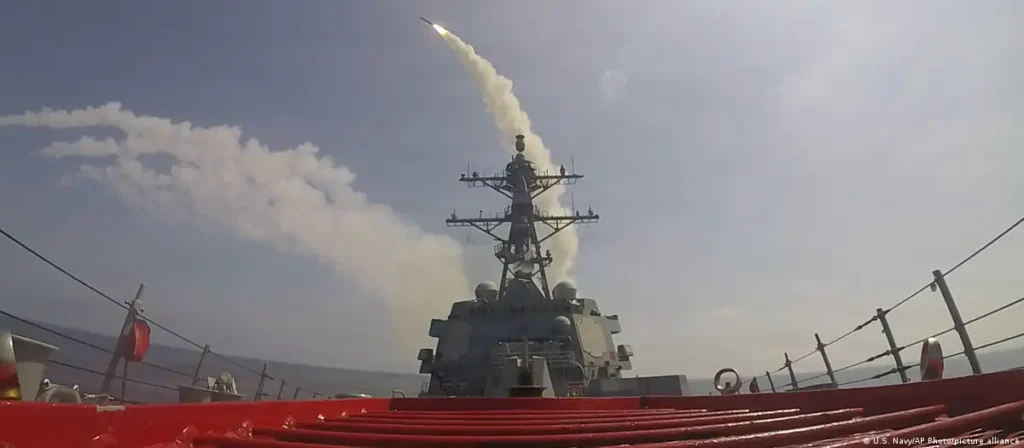
At the center of the request are Tomahawk cruise missiles and Typhon ground-launch systems. The Tomahawk is not a symbolic weapon. The US Navy describes it as a long-range, all-weather, subsonic cruise missile used for deep land attack warfare, with Block IV and Block V variants listed at around 1,600 km of range. That gives commanders the ability to hold distant military targets at risk, including command centers, air bases, missile sites and logistics nodes.
For Germany, that range matters because Europe has a deep-strike problem. The UK has submarine-launched Tomahawks, and France has its own submarine-launched cruise missile capability, but there is no immediately available European land-based system that can quickly replace what the US was expected to deploy. That is why Berlin’s request is being treated with urgency inside Germany’s defense establishment.
Defense Minister Boris Pistorius is reportedly preparing a Washington trip to revive Germany’s earlier request, first submitted in July 2025. The goal is to secure approval from the Trump administration for both the missiles and the Typhon launchers. The visit, however, depends on whether Pistorius can secure serious talks with US Defense Secretary Pete Hegseth at a time when relations between Chancellor Friedrich Merz and President Donald Trump have deteriorated sharply.
The political backdrop is just as important as the military hardware. Merz has clashed with Trump over the Iran war, and Washington has already moved to withdraw about 5,000 US troops from Germany. For Berlin, the message is hard to ignore: even a close NATO ally can no longer assume that American deployments will remain untouched by political disputes.
That is why Germany’s Tomahawk push feels different from past defense debates. This is not only about buying a missile. It is about reducing exposure to US policy swings while still depending on US technology in the near term.
The problem is availability. The United States is facing its own missile stockpile pressure after heavy use during the Iran conflict. Merz himself acknowledged that Washington may not have enough Tomahawks for its own needs at the moment. Japan and the Netherlands are also waiting for Tomahawk deliveries, meaning Germany would be joining a queue at a time when demand is rising and production capacity remains a strategic bottleneck.
Berlin may try to solve that problem the way governments often do in an emergency: by paying more. People familiar with the strategy have suggested Germany could offer extra money to speed up or secure the sale. But money alone may not be enough if the Pentagon sees its own stockpiles as too thin or if the White House decides to use approvals as political leverage.
Germany’s interest in the Typhon launcher is also crucial. Built by Lockheed Martin, Typhon is a mobile ground-based system designed to fire long-range weapons, including Tomahawks. For the Bundeswehr, such a system would mark a major shift. It would give Germany the ability to threaten targets far beyond the front line in a crisis, which is exactly the kind of deterrent capability European defense planners say is missing.
Earlier reports suggested Berlin had explored buying three Typhon launcher systems and as many as 400 Tomahawk Block VB missiles. If completed, such a purchase would represent one of Germany’s most serious long-range strike investments since the Cold War.
The urgency is tied directly to Russia. Moscow’s deployment of nuclear-capable Iskander missiles in Kaliningrad has long worried NATO planners because it puts major European cities, including Berlin, within range. The original US deployment plan was designed to answer that threat. With that plan now uncertain, Germany is trying to create its own answer.
The shift also comes after a dramatic change in German defense policy. Merz has pledged more than €750 billion for the armed forces and promised to meet new NATO spending goals ahead of schedule. NATO’s 2025 Hague declaration called for stronger investment in forces, readiness, infrastructure and resilience, including a new 5% defense investment framework by 2035. Germany’s missile push fits directly into that wider European spending cycle.
Read More
- Visit Swikblog Homepage
- CSL Hit by $7 Billion Blow After Cutting Earnings Forecasts
- Spring & Mulberry Chocolate Bars Recall Over Salmonella Risk
- Victoria Offers Free Meningococcal B Vaccines for Year 10 Students
- Stephen Perofeta Set for Japan Move
- Food Allergy Awareness Week 2026 Highlights Rising Cases
Still, Berlin knows Tomahawks cannot be the only answer. Germany is also working with France, Poland, the UK, Italy and Sweden through the Elsa program to develop European long-range strike capabilities. The difficulty is timing. European-built alternatives may be strategically important, but they are not ready for immediate use.
Ukraine is another part of the calculation. After years of war, Kyiv has built and adapted long-range strike capabilities under battlefield pressure. German officials are now looking at whether Ukraine’s experience can help Europe move faster. That does not mean Ukraine can replace US systems, but it does show how the war has changed Europe’s understanding of missile warfare.
Berlin is also expanding its wider defense industrial strategy. Germany has been pushing submarine cooperation with Norway and has encouraged Canada to join the Type 212CD submarine program. Swikblog has also tracked the growing momentum in Europe’s defense sector, including TKMS’ record $22 billion order backlog, Stark Defence’s €1 billion valuation amid Germany’s drone push, and Rheinmetall’s role in Europe’s defense rally.
For investors, the message is clear: Europe’s defense cycle is becoming broader and longer-lasting. Missiles, launchers, submarines, drones, ammunition and air defense systems are all moving higher on government priority lists. The old assumption that European defense spending would rise briefly and then fade looks increasingly weak.
For NATO, however, the picture is more complicated. Germany is trying to strengthen deterrence, but it is doing so because confidence in Washington has weakened. That creates a paradox: Europe still needs US weapons to become less dependent on US deployments.
The Tomahawk talks may therefore become a test case for the next phase of the alliance. If Washington approves the sale, Germany gains a powerful near-term capability. If the request stalls again, Berlin’s argument for faster European weapons development will become even stronger.
Either way, Germany’s defense posture has changed. The country that once moved cautiously on offensive military capabilities is now trying to secure long-range missiles capable of reshaping deterrence in Europe. That shift says more about the new security reality than any speech from Berlin or Washington.
Germany is not simply buying missiles. It is buying time, leverage and a measure of protection against a world where NATO politics can change faster than Europe’s weapons factories can deliver.
Authoritative source: US Navy Tomahawk Cruise Missile Fact File

Make Swikblog your go-to source on Google for reliable updates, smart insights, and daily trends.