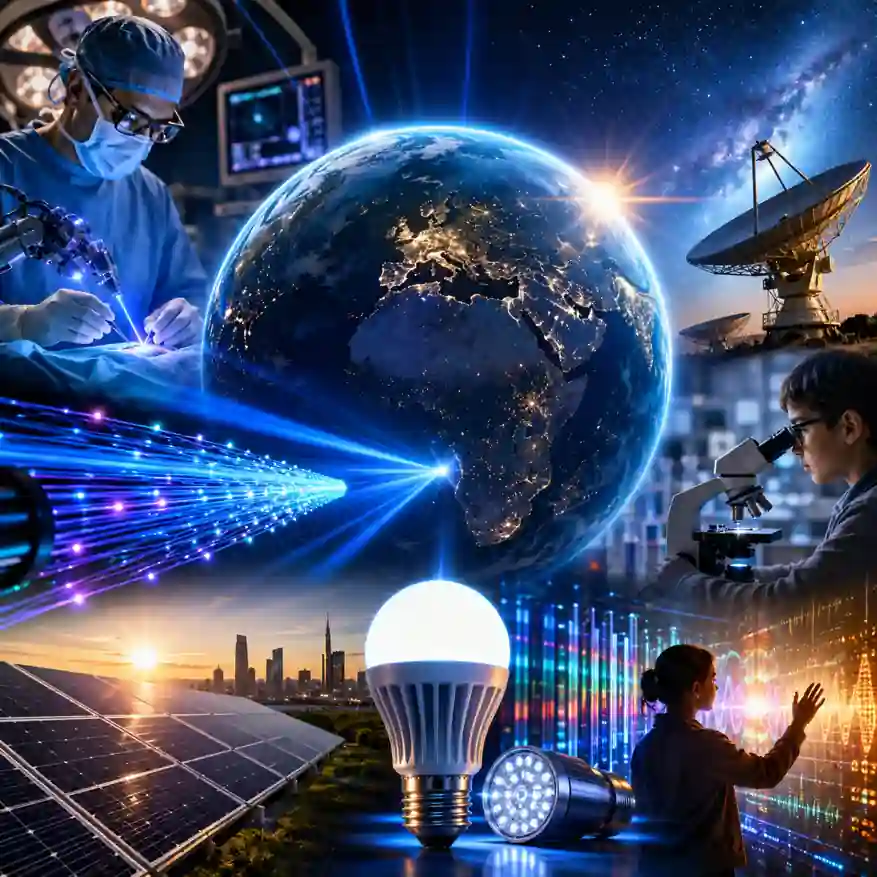

International Day of Light Day 2026 will be celebrated worldwide on May 16, 2026, highlighting the importance of light and light-based technologies in science, education, medicine, communication, culture and sustainable development. Organized annually by UNESCO, the global observance marks the anniversary of physicist and engineer Theodore Maiman’s first successful laser operation in 1960 — a breakthrough that transformed modern technology and scientific research.
From solar power and LED lighting to fiber-optic internet, X-ray imaging and laser surgery, light-based innovations continue to influence nearly every part of daily life. The observance also focuses on scientific cooperation, energy efficiency, environmental awareness and equal access to technology.
According to UNESCO, the International Day of Light aims to strengthen international scientific collaboration and use science as a tool for peace and sustainable development. The annual celebration brings together scientists, educators, students, governments, businesses and cultural organizations across the world.
Why International Day of Light is Celebrated on May 16
The date commemorates Theodore Maiman’s successful demonstration of the first working laser on May 16, 1960. What began as a scientific experiment later changed industries including healthcare, telecommunications, manufacturing and space science.
The laser remains one of the clearest examples of how a scientific discovery can create long-term benefits for society. Today, lasers are used in hospitals for surgeries, in factories for precision manufacturing, in communication systems for high-speed internet and in everyday products such as barcode scanners and optical devices.
The International Day of Light was officially approved by UNESCO during its General Conference in November 2017. The first global celebration took place in 2018 following the success of the International Year of Light in 2015. Countries including Ghana, Mexico, New Zealand and the Russian Federation supported the proposal for the annual observance.
The broad theme allows participation from many sectors of society, including science, engineering, medicine, education, photography, architecture, energy and the arts. UNESCO describes the event as a global initiative connecting people through the universal importance of light.
Readers interested in major awareness events this year can also explore Swikblog’s coverage of important international days in May 2026, which includes major global observances celebrated throughout the month.
Read More
How Light-Based Technologies Changed the Modern World
The history of artificial light stretches back thousands of years, from primitive oil lamps and candles to gas lamps and eventually electric lighting. The modern lighting era accelerated in the 19th century when scientists and inventors developed practical electric lamps.
Humphry Davy created one of the earliest electric arc lamps in 1802 using charcoal electrodes and electric current. While the technology was too bright and impractical for homes, it paved the way for future inventions. Joseph Swan later improved electric lamp designs by using carbonized paper filaments, and Thomas Edison refined the system further in the late 1870s with better vacuum technology and commercial production methods.
The development of LED technology became another major turning point. Nick Holonyak accidentally invented the red LED in the early 1960s while working at General Electric. Decades later, scientists Hiroshi Amano, Shuji Nakamura and Isamu Akasaki developed blue LEDs, a breakthrough that eventually made white LED lighting possible and earned them the 2014 Nobel Prize in Physics.
Today, LED and OLED lighting systems are widely used because they consume significantly less electricity and last far longer than traditional incandescent bulbs. Smart lighting systems controlled through smartphones and voice assistants are now common in homes, offices and public infrastructure.
Light science is equally important in healthcare. Light-based medical tools are used in imaging, diagnostics, genome sequencing, sterilization and cancer treatment. Laser-assisted surgeries allow doctors to operate with greater precision while reducing recovery time and minimizing damage to surrounding tissue.
Communication technology also depends heavily on light. Fiber-optic networks use pulses of light to transfer enormous amounts of data across long distances at high speed. These systems power video calls, online learning, cloud computing, digital banking and modern internet services.
Light remains essential for environmental sustainability as well. Solar power continues to grow as countries search for cleaner alternatives to fossil fuels. Sunlight is an inexhaustible energy source, and improvements in solar technology are making renewable energy more accessible and efficient worldwide.
UNESCO and scientific organizations also use the day to raise awareness about light pollution and responsible energy use. Excessive artificial lighting wastes electricity, affects wildlife ecosystems and reduces visibility of the night sky. Experts continue to promote efficient lighting systems and sustainable urban planning to reduce environmental impact.
The observance also highlights the role of light in education and culture. Microscopes and telescopes have transformed scientific understanding, while photography, cinema, architecture and visual arts all depend on the creative use of light. Public exhibitions, lectures, science fairs and cultural festivals organized during the celebration often combine scientific learning with artistic expression.
The International Day of Light 2026 is expected to include global webinars, educational campaigns, exhibitions and public events focusing on innovation, inclusive scientific development and the socio-economic impact of light-based research infrastructures.
Beyond technology and science, light remains fundamental to life itself. Photosynthesis, which supports every food chain on Earth, depends entirely on sunlight. Light also contributes to oxygen production and vitamin D synthesis, making it essential for both ecosystems and human health.
As countries continue investing in clean energy, digital communication, scientific research and healthcare innovation, International Day of Light Day 2026 serves as a reminder of how one scientific discovery can reshape society for generations. The annual observance celebrates not only technological progress, but also the idea that science and education can improve lives and create a more sustainable future for everyone.

Make Swikblog your go-to source on Google for reliable updates, smart insights, and daily trends.