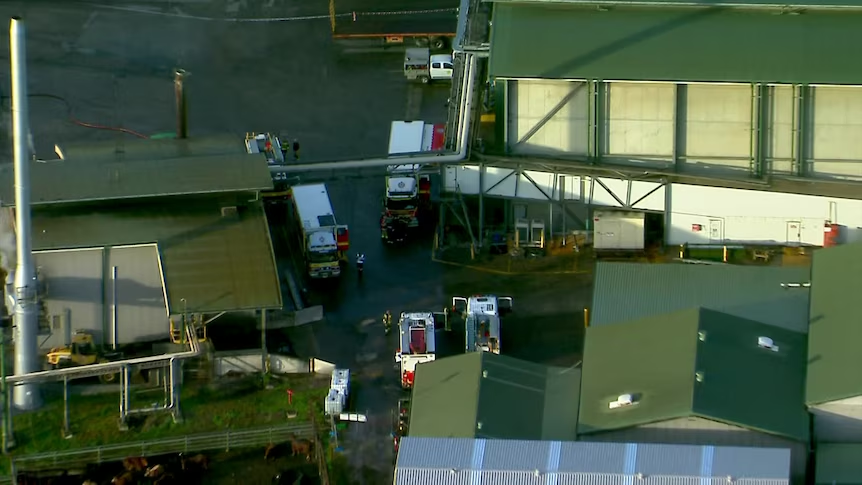

A large overnight ammonia leak at the JBS Dinmore meat processing facility near Brisbane has placed industrial safety back under scrutiny after hundreds of workers were forced out of the plant and five people were taken to hospital.
The incident happened shortly after 12:30am on Thursday at the Dinmore Meatworks site in Riverview, Ipswich, about 30 kilometres south-west of Brisbane. Emergency services were called after liquid ammonia escaped inside the facility, triggering a major hazardous materials response and the evacuation of almost 900 workers.
Paramedics assessed 17 people at the scene for respiratory symptoms after possible exposure to ammonia. Five workers were transported to hospital in stable condition, with three taken to Ipswich Hospital and two taken to Queen Elizabeth II Hospital.
Queensland Fire Department crews remained at the plant for several hours as specialist officers worked to control the release. Six fire crews, including scientific officers, were involved in the response. Authorities said the leak was eventually stopped and neutralised with citric acid after an operation that lasted about six hours.
The size of the evacuation shows how quickly a chemical incident can escalate inside a large industrial workplace. JBS Dinmore is one of the biggest beef processing plants in the Southern Hemisphere and a major employer in the Ipswich region. With hundreds of workers on site during overnight operations, emergency crews had to move quickly to prevent further exposure.
Why ammonia leaks are dangerous in food processing plants
Ammonia is widely used in industrial refrigeration systems, especially in meat processing plants, cold storage facilities and large food production sites. It is effective for cooling, but it can become hazardous when released into enclosed work areas.
According to WorkSafe Queensland, anhydrous ammonia is a hazardous chemical that can cause serious harm if workers are exposed to high concentrations. Symptoms can include coughing, breathing difficulty, eye irritation, throat pain and chest discomfort. In severe cases, exposure can damage the lungs.
This is why industrial ammonia systems require strict maintenance, monitoring and emergency planning. A failure in pipework, valves, compressors or refrigeration equipment can create immediate risks, particularly in facilities where workers operate close to production and cooling systems.
In the Dinmore incident, emergency crews were able to stop the leak, but the response required a large-scale evacuation, specialist equipment and chemical neutralisation. The use of citric acid suggests responders were dealing with a significant ammonia release that needed controlled treatment before the area could be made safe.
Authorities have not yet confirmed what caused the leak. Workplace Health and Safety Queensland is expected to examine the plant’s systems, maintenance history and emergency procedures as part of any investigation.
Safety questions after the JBS Dinmore evacuation
The JBS Dinmore plant is not a small workplace. It is one of the most important meat processing facilities in Queensland and supports a large workforce across production, logistics, refrigeration, cleaning and maintenance. Any incident at a site of this size raises serious questions about risk controls and worker protection.
For employees on the overnight shift, the emergency would have unfolded suddenly. Ammonia leaks can spread fast, especially in enclosed spaces, and workers may experience symptoms before they fully understand what has happened. The fact that 17 people needed medical assessment shows the health risk was not limited to a small area.
Read More
Five hospitalisations also make the event more than a routine workplace disruption. Although all five patients were reported to be stable, hospital treatment after chemical exposure usually indicates that symptoms required further monitoring beyond first aid at the scene.
The incident also comes at a time when safety standards across Australia’s industrial sector are under close attention. Swikblog recently covered the fatal workplace incident at South32’s Worsley Alumina refinery in Western Australia, another case that highlighted the risks faced by employees in heavy industrial environments.
Large industrial employers are expected to have clear evacuation plans, chemical detection systems, trained response teams and regular equipment inspections. When hazardous substances are used daily, even a short delay in identifying or containing a leak can increase the number of workers exposed.
JBS and Workplace Health and Safety Queensland were contacted for comment after the incident. Further details are expected to clarify whether the leak came from refrigeration infrastructure, storage equipment or another part of the plant’s chemical handling system.
The immediate priority is the recovery of the workers who were taken to hospital and the safe reopening of affected areas. But the broader issue is whether lessons from the Dinmore leak will lead to stronger safeguards across similar facilities.
For Queensland’s meat processing industry, the incident is a reminder that production scale and worker safety must move together. A plant that can employ hundreds of people on a single shift must also maintain safety systems capable of responding to chemical emergencies within minutes.
The ammonia leak at JBS Dinmore has now been contained, but the questions it raises will continue. Investigators will need to determine how the chemical escaped, whether alarms and response procedures worked properly, and what changes may be needed to prevent another large-scale evacuation at one of Australia’s key food processing sites.

Make Swikblog your go-to source on Google for reliable updates, smart insights, and daily trends.