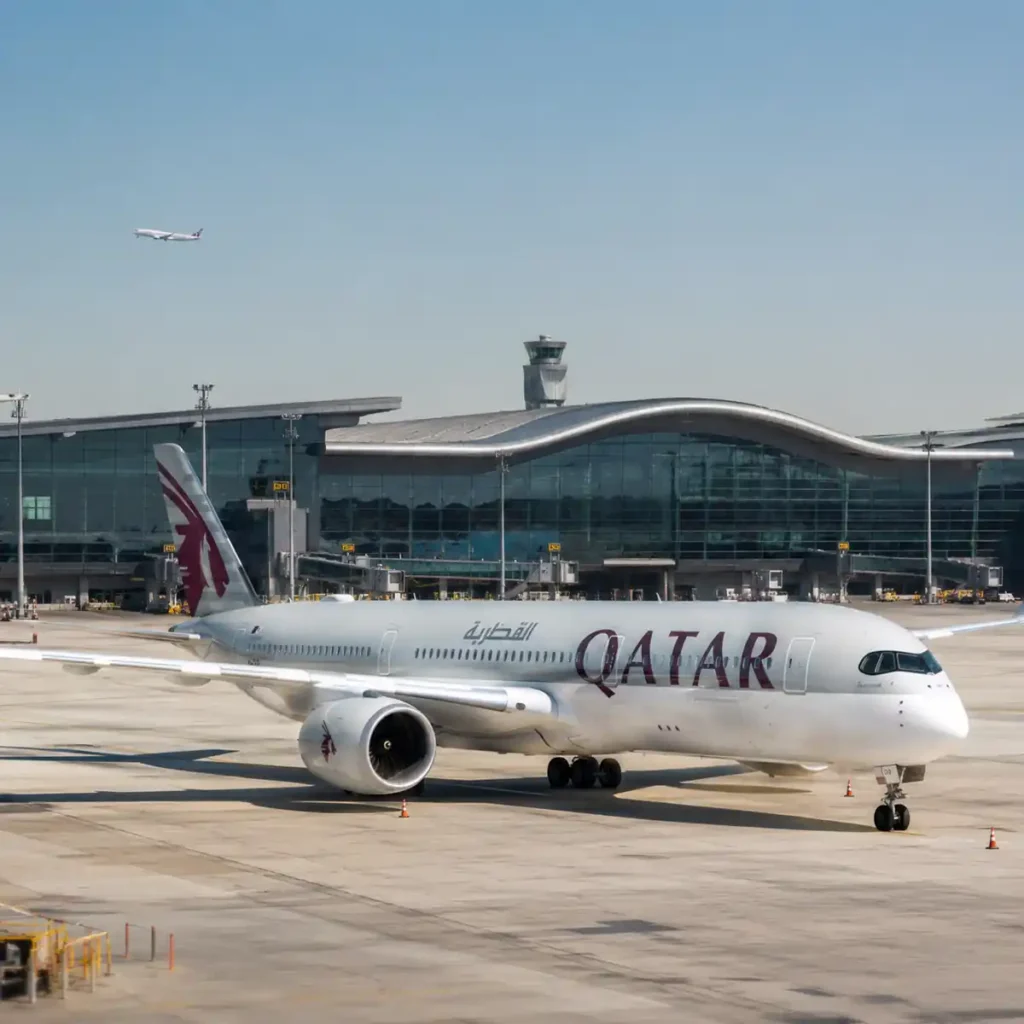

Qatar Airways is moving deeper into its post-disruption recovery phase, with the airline restoring double-daily flights between Doha and Abu Dhabi as regional aviation conditions across the Middle East continue to improve.
The return of the Abu Dhabi service gives Qatar Airways a stronger presence in the United Arab Emirates again, adding the UAE capital back alongside Dubai and Sharjah. For passengers, the restart means more choice for travel between Qatar and the UAE, while also improving connections through Doha’s Hamad International Airport for long-haul journeys to Europe, Asia, Africa and North America.
The airline confirmed that the Doha-Abu Dhabi route is already operating twice daily. While Qatar Airways has not released a detailed public timetable for the restored Abu Dhabi service in the latest update, the double-daily frequency shows that the carrier is not treating the route as a limited restart. Instead, it is bringing Abu Dhabi back as a regular part of its regional schedule.
The move follows months of operational pressure across Middle East aviation after the conflict involving Iran, Israel and U.S. forces disrupted airspace across the region. Missile and drone exchanges, military strikes and temporary flight restrictions forced several airlines to reroute aircraft, suspend services and adjust schedules at short notice.
For Gulf carriers, the impact was especially serious because the region sits at the centre of some of the world’s busiest international flight corridors. Flights between Europe, Asia, Africa and Australia often pass through or near Middle Eastern airspace, making any disruption in the region a global aviation issue rather than a local one.
Qatar Airways was among the airlines affected by the instability. The Abu Dhabi route, along with several other regional services, faced operational disruption during the crisis. Its restoration now suggests that airspace conditions and airline planning confidence have improved enough for the carrier to rebuild more of its original network.
The Abu Dhabi restart is only one part of a wider recovery push. Qatar Airways has also resumed flights to Baghdad, Basra and Erbil in Iraq. These Iraqi routes are important not only for regional travel but also for passengers connecting through Doha to international destinations.
The airline has also brought back daily services to Bahrain, Damascus and Kozhikode. Bahrain adds another important Gulf market to the restored network, while Damascus marks a notable regional return. Kozhikode, in India’s Kerala state, is a key route for expatriate and family travel between the Gulf and southern India.
The latest update also includes two important long-haul route returns. Qatar Airways has confirmed that flights to Helsinki and Tokyo Haneda will restart from July 15, 2026, giving the airline added reach in both Europe and East Asia during the northern summer travel season.
The Helsinki service will begin with four weekly flights. Flight QR301 will depart Doha every Monday, Wednesday, Friday and Sunday at 08:40 and arrive in Helsinki at 15:30 local time. Qatar Airways plans to increase the route to daily service from August 1.
Tokyo Haneda flights will also resume on July 15 with four weekly services before moving to daily operations in August. Flight QR812 will leave Doha at 07:50 and arrive at Tokyo Haneda at 00:05 the following day. Haneda is one of Tokyo’s most convenient airports for business and leisure travellers because of its proximity to the city centre.
These route restorations are important for Qatar Airways because the airline’s business model depends heavily on connecting traffic. A passenger flying from Abu Dhabi to London, Helsinki to Bangkok, or Tokyo to Africa may all use Doha as a transfer point. When regional routes are suspended, the impact spreads across the wider network.
Qatar Airways said it expects to operate flights to more than 160 destinations during the northern summer season. That target shows how quickly the airline is trying to return to a broad global schedule after months of uncertainty caused by regional conflict.
For travellers, the biggest benefit is improved flexibility. The return of Abu Dhabi flights means more departure options in the UAE, while restored services to Iraq, Bahrain, Syria, India, Finland and Japan give passengers more ways to connect through Doha.
Read More
The recovery also comes at an important time for summer travel demand. Airlines usually increase capacity during the northern summer season as families, business travellers and tourists move across Europe, the Middle East and Asia. Restoring routes before peak summer traffic allows Qatar Airways to capture demand that may have been delayed or redirected during the disruption period.
However, passengers should still remain alert. Middle East airspace can change quickly during periods of geopolitical tension, and airlines may adjust schedules based on security assessments, government restrictions or route availability. Travellers flying through Doha or across the Gulf should check flight status directly with the airline before leaving for the airport.
Qatar Airways’ official newsroom has also confirmed the broader restoration of services to the United Arab Emirates and Syria. The airline’s official update can be read here: Qatar Airways Resumes Daily Services to the United Arab Emirates and Syria.
The latest Abu Dhabi restart also fits into the wider story of how the Iran conflict affected global aviation. Swikblog previously reported how Middle East airspace disruption contributed to widespread airline cancellations and passenger uncertainty during the crisis. Read the related coverage here: Global Flight Cancellations Top 23,000 as Iran War Disrupts Airlines.
Qatar Airways’ return to Abu Dhabi is therefore more than a simple route update. It is a sign that one of the Gulf’s largest carriers is rebuilding confidence in regional operations, restoring key travel links and preparing for a bigger summer schedule after one of the most disruptive periods for Middle East aviation in recent years.
With Abu Dhabi back in the network, Iraq services restored, Bahrain and Damascus operating again, Kozhikode reconnected and Helsinki and Tokyo Haneda scheduled for July, Qatar Airways is clearly trying to move from disruption recovery to full network expansion. For passengers, that means more routes, more connections and a stronger Doha hub heading into the rest of 2026.

Make Swikblog your go-to source on Google for reliable updates, smart insights, and daily trends.