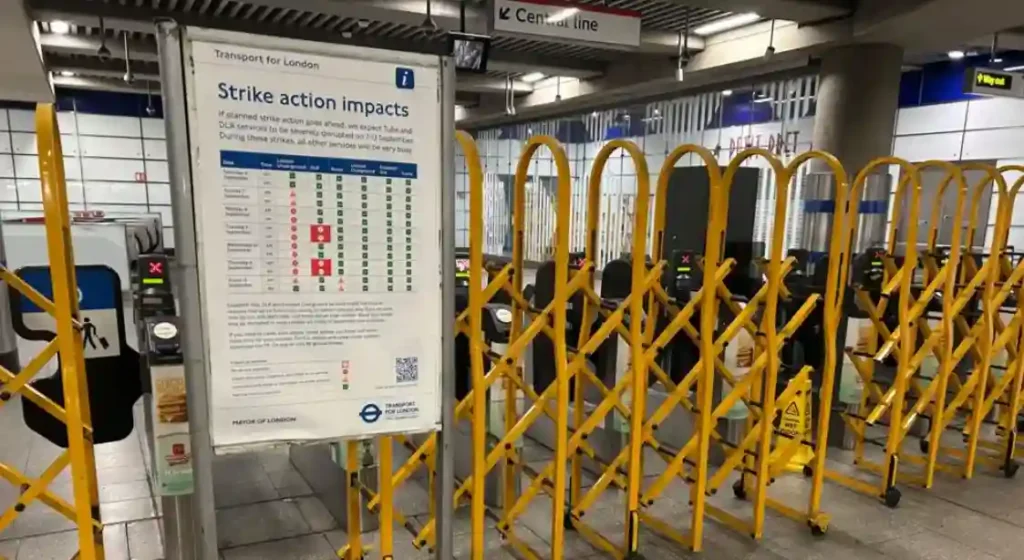

London Underground strikes planned for this week were dramatically cancelled just hours before drivers were due to walk out, giving millions of commuters across the capital a last-minute reprieve.
The Rail, Maritime and Transport (RMT) union confirmed that two planned 24-hour stoppages scheduled from midday on Tuesday had been suspended after fresh negotiations with Transport for London (TfL). The industrial action was expected to trigger major disruption across four days, with several Tube lines facing reduced or no service.
The strikes were part of an ongoing dispute over TfL’s proposal to introduce a voluntary four-day working week for Tube drivers using compressed hours. While TfL says the proposal could improve work-life balance and reliability for passengers, the RMT argues the changes could increase fatigue, affect safety and reduce flexibility for workers.
In a statement released on Monday, the RMT said the employer had shifted its position “at the 11th hour”, allowing further discussions around key concerns linked to new rosters and working patterns.
However, the union warned that the dispute remains unresolved. Although strikes planned for this week have been suspended, further industrial action could still take place if negotiations fail to deliver enough progress.
Why London Tube drivers were preparing to strike
The dispute centres around TfL’s proposed four-day week arrangement. Under the plan, drivers who volunteer would work compressed hours across four days instead of traditional schedules. TfL has argued that the move could improve staffing efficiency while also giving participating drivers more days off each year.
But the RMT has strongly criticised the proposal, describing it as a “fake four-day week” that effectively squeezes five days’ work into four longer shifts. The union says longer hours could create fatigue risks for drivers and potentially impact passenger safety.
The disagreement has also highlighted divisions between Tube unions. Aslef, which represents many London Underground drivers, has backed the TfL proposal and described it as one of the biggest improvements in working conditions in decades. According to Aslef, drivers who choose the scheme could receive an additional 35 days off annually in exchange for relatively small changes to working arrangements.
Transport for London insists the scheme would remain entirely voluntary. TfL officials believe that clarification helped create enough movement in talks for the RMT to suspend strike action and continue negotiations instead.
Nick Dent, director of customer operations for London Underground, welcomed the suspension and said the decision was “good news for London”. TfL has stated that it wants to continue discussions with unions on how the voluntary four-day week could be implemented across the network.
Read More
What the cancelled Tube strikes mean for passengers
The suspension avoids what would likely have been one of the biggest transport disruptions in London this month. TfL had already warned commuters to prepare for severe delays, overcrowding and possible station closures. Some lines, including the Circle and Piccadilly lines, were expected to face little or no service during the industrial action.
Business travellers, tourists and airport passengers had also been advised to avoid unnecessary journeys and work from home where possible. Instead, most Underground services are now expected to operate normally this week.
Passengers should still continue checking live travel updates because the dispute has not officially ended. Fresh strike dates linked to the same dispute have already been proposed for early June after previous June dates were suspended during negotiations.
Readers can monitor official service updates through the Transport for London Tube status page.
The latest industrial action follows previous Tube disruption earlier this year, which affected several London Underground lines and caused widespread travel delays across the city. Swikblog recently explained the wider impact of the dispute, affected services and commuter advice in its London Underground strike update.
For now, commuters have avoided immediate disruption, but uncertainty around future strike action remains. Whether TfL and the RMT can reach a longer-term agreement over the proposed four-day week will likely determine whether London faces another round of Underground walkouts in the coming weeks.

Make Swikblog your go-to source on Google for reliable updates, smart insights, and daily trends.