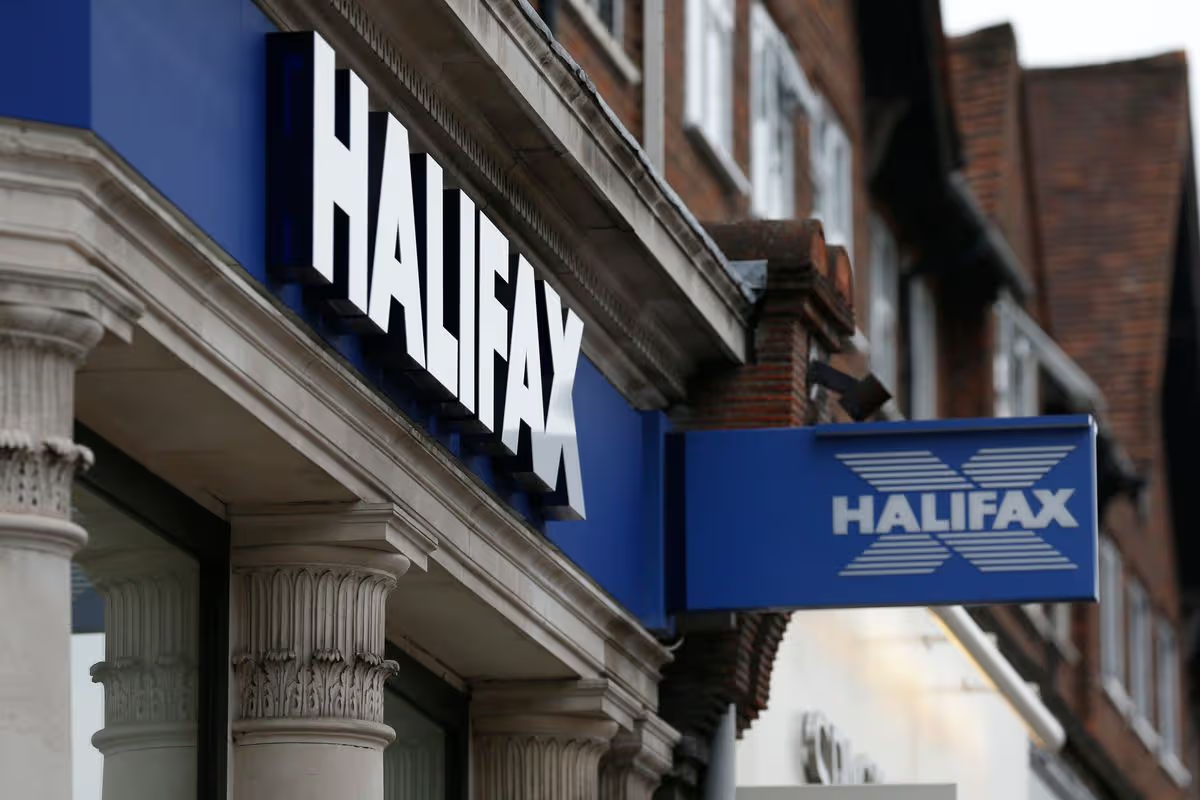

Halifax could disappear from UK high streets after 173 years in one of the biggest brand changes to hit British banking in decades, as Lloyds Banking Group reviews the future of one of the country’s best-known financial names.
The reported move would mark a striking moment for millions of customers who still associate Halifax with savings accounts, mortgages, blue high street signs and one of Britain’s most recognisable banking identities. Lloyds Banking Group, which owns Lloyds Bank, Halifax, Bank of Scotland and Scottish Widows, has not confirmed a final decision, but it has not dismissed the reports either.
A Lloyds spokesperson said the group “regularly” reviews the role its brands play for customers, while adding that banking customers can already use Lloyds, Halifax or Bank of Scotland branches and access products and services across apps. The key point for customers is that there are no changes today, meaning existing Halifax account holders are not facing an immediate disruption.
Still, the reports have landed at a sensitive time for UK banking. Physical branches have been closing steadily across the sector, digital banking has become the default for many households, and long-standing financial brands are under pressure to prove they still need separate identities.
A 173-year-old banking name faces its biggest test
Halifax traces its roots back to 1852, when it was founded as the Halifax Permanent Benefit Building Society in West Yorkshire. It grew out of Britain’s industrial era, helping workers save and borrow for housing at a time when home ownership was far harder to access.
By 1928, Halifax had become the world’s largest building society, with assets reported at £47 million. Its later demutualisation in 1997 created around 7.5 million shareholders, making it one of the largest stock market flotations in UK history. The brand later became part of HBOS after the Bank of Scotland merger in 2001, before Lloyds acquired HBOS during the 2009 financial crisis.
That history is why the possible disappearance of the Halifax name is more than a routine rebrand. For many UK households, Halifax was not just another bank. It was a first savings account, a first mortgage, a local branch visit, or a familiar name on the high street long before mobile apps changed everyday banking.
The timing also matters. Lloyds Banking Group previously confirmed plans to close 95 branches across Lloyds, Halifax and Bank of Scotland, including 31 Halifax branches. That would leave the group with about 610 branches nationwide. Swikblog previously covered the wider branch reduction in this related report on Lloyds closing 95 more UK branches.
Customers may see a brand change, not an immediate account shock
The most important practical point is that the reported change does not currently mean Halifax branches are shutting overnight or that customers must urgently move money. Reports suggest existing Halifax customers would be moved gradually under a phased process, while account numbers are expected to remain unchanged.
Bank of Scotland is not expected to be affected in the same way, largely because it remains Lloyds Banking Group’s main banking brand in Scotland. Halifax and Lloyds, however, have long operated in overlapping markets across England and Wales, making them easier to consolidate from a corporate perspective.
For Lloyds Banking Group, the logic appears to be efficiency. Maintaining separate brands, apps, products, marketing campaigns and customer acquisition channels becomes harder to justify when customers can already use shared services. Lloyds Banking Group’s official brand page still lists Halifax as one of its customer-facing banking brands, but the latest reports suggest the long-term direction may be moving toward a simpler Lloyds-led identity.
The risk for Lloyds is emotional as much as operational. Halifax carries heritage, trust and recognition that cannot be rebuilt quickly once removed. In a banking market where many customers already feel branch access is shrinking, losing another familiar high street name could deepen the sense that personal banking is becoming more remote.
For customers, the near-term message is caution rather than panic. Cards, accounts and services remain active, and Lloyds has said there are no customer changes today. But if the reported brand retirement moves ahead, it would close a major chapter in British banking history — turning Halifax from a living high street name into a legacy brand remembered for mortgages, savings books and 173 years of financial life in the UK.
Read More
- Visit Swikblog Homepage
- Kmart, Target Anko Walkie Talkie Recall
- Alpine Helicopters Chief Pilot Tim Brown Crash
- Live Frog Found Inside Woolworths Lettuce Bag
- Property Manager Raised Rent Without Permission
- Cake Decorating Powder Recall Toddler ICU Horror

Make Swikblog your go-to source on Google for reliable updates, smart insights, and daily trends.