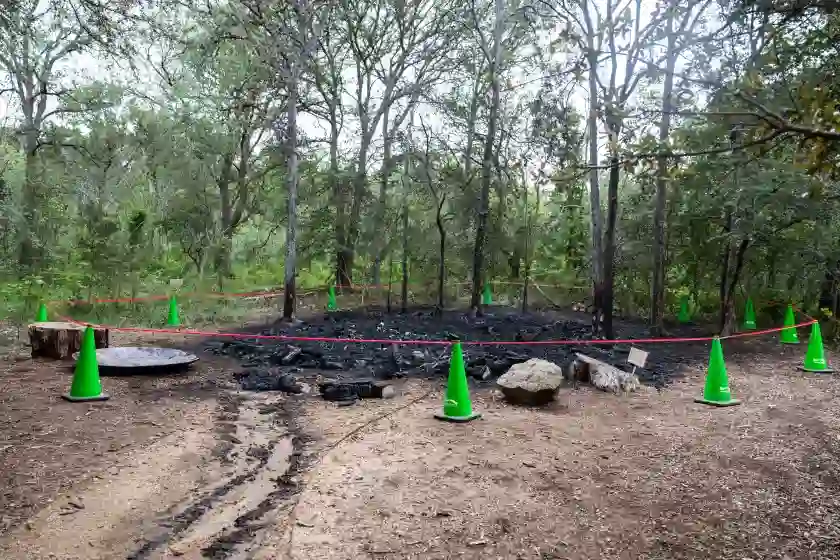

Austin has lost one of its most unusual and loved public art landmarks after Malin, the giant troll sculpture in Pease Park, burned to the ground in an early morning fire on Thursday.
The Austin Fire Department received a report of flames in the park shortly before 5:30 a.m. on May 21. The fire was first spotted from the Lamar Boulevard side, but crews had difficulty reaching the sculpture from that location. After moving to a better access point, firefighters put out the blaze, though the wooden structure was already destroyed.
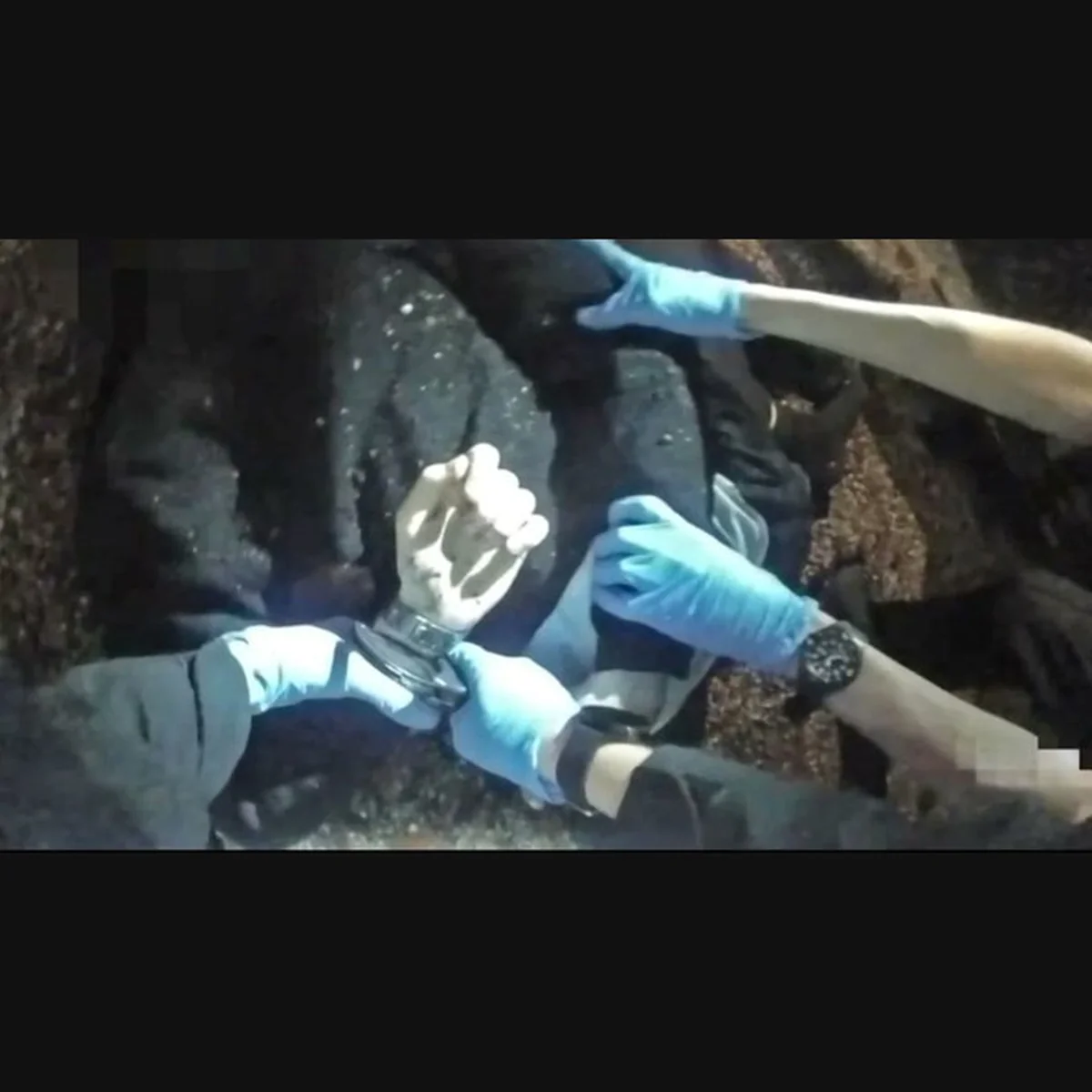
By morning, the site where Malin once sat was reduced to ash, charred remains and safety cones. Investigators were seen working through the debris, and an arson dog was also present at the scene. Officials have not yet announced a cause, and the case remains under investigation.
For Austin, the loss is not just about a damaged sculpture. Malin had become a familiar stop for families, walkers, tourists and photographers since its unveiling in March 2024. Hidden along the Shoal Creek Trail, the 18-foot figure gave Pease Park a storybook quality while carrying a serious environmental message.
Malin, officially known as Malin’s Fountain, was created by Danish artist Thomas Dambo, whose large-scale troll sculptures are built from reclaimed materials and placed in outdoor spaces around the world. The Pease Park installation was his first troll in Texas and part of his wider mission to turn discarded materials into art that encourages people to think differently about nature and waste.
According to the Pease Park Conservancy, Malin was located about 1,200 feet up the Shoal Creek Trail from Kingsbury Commons. The sculpture was made mostly from local, recycled and repurposed wood, including old pallets and material tied to a decommissioned water tower from the J.J. Pickle Research Campus in North Austin.
The project was built with help from about 150 Austin volunteers and reportedly cost around $300,000. That community involvement helped make Malin feel less like an imported art piece and more like something Austin had built with its own hands.
The sculpture’s meaning was tied closely to water. Malin was designed as a female troll holding a bowl, a symbol meant to remind visitors that people must share water and natural resources with animals living in the same environment. In a city often shaped by heat, drought and rapid growth, that message gave the artwork a local relevance beyond its striking appearance.
KUT News reported that only ashes remained after the fire and that the cause had not yet been determined. The Pease Park Conservancy said it was heartbroken alongside the community that cherished the sculpture.
The fire has also drawn attention because another one of Dambo’s troll sculptures was previously destroyed overseas. In 2022, a troll at the Giants of Mandurah exhibit in Australia was burned by vandals. Dambo later replaced that work with a new sculpture in 2023. It is not yet known whether Malin will be rebuilt in Austin.
Malin’s destruction comes at a time when Austin is already wrestling with questions about growth, public space and the preservation of local identity. Public art in parks is often vulnerable because it is designed to be open, accessible and part of daily life. That openness is what made Malin special, but it also left the sculpture exposed.
The loss will be felt most by the people who treated the troll as part of their routine: parents who brought children to see it, visitors who used it as a landmark, and locals who saw it as a rare piece of whimsical art in the middle of a busy city.
Swikblog recently covered another Austin story tied to local memory and community identity, including the closure of historic Texas candy maker Lammes Candies after 141 years.
For now, Pease Park is left with an empty patch of ground where one of Austin’s most photographed outdoor artworks once stood. The investigation may explain how the fire started, but the larger loss is already clear: a community-built symbol of creativity, conservation and shared space is gone.

Make Swikblog your go-to source on Google for reliable updates, smart insights, and daily trends.