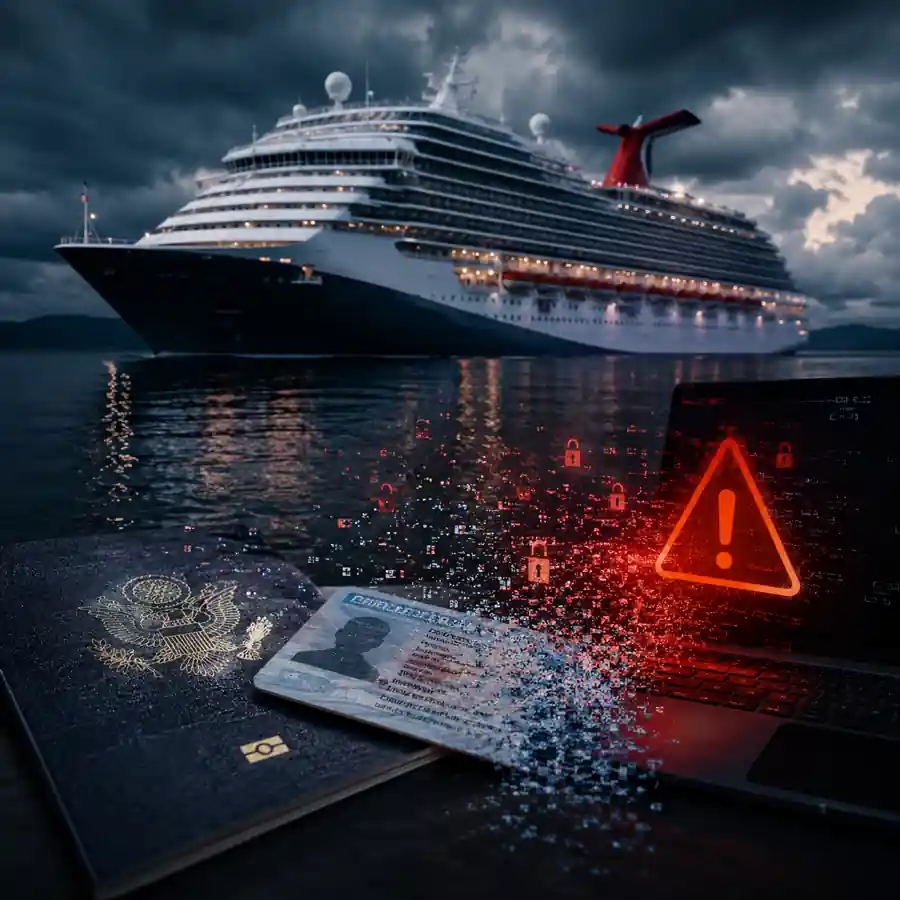

Carnival Corporation is under fresh pressure after a cybersecurity incident exposed personal information linked to nearly 6 million customers, adding another major consumer privacy case to the travel industry’s growing list of data security challenges.
The company said its security team detected suspicious activity on April 14, 2026, inside a limited section of its IT network. Carnival later said the breach began with a social engineering attack, where an employee was deceived and an unauthorized person gained access through a single user account.
The timeline matters. Carnival said it blocked the unauthorized activity, brought in outside cybersecurity experts and contacted law enforcement. By April 22, the company had determined that customer data had been accessed. Public notification followed on May 27, when Carnival began sending emails and letters to affected individuals.
Why this breach is more serious than a basic data leak
The information involved may include names, addresses, email addresses, phone numbers, dates of birth and government-issued identification numbers, including passport numbers and driver’s license numbers. Carnival said the exact data exposed differs by person.
A filing with the Maine Attorney General’s Office shows nearly 6 million people were affected. That scale makes the incident especially significant because travel companies often hold identity documents needed for cruise bookings, border checks and international travel.
Carnival’s official security incident notice said the company deeply regrets the breach and has taken steps to strengthen security and monitoring controls.
The risk for customers is not limited to the immediate aftermath. Stolen passport or driver’s license details can be used in targeted scams, fake identity checks, phishing emails or attempts to open accounts using another person’s information. That is why breaches involving government ID data often create longer-term concerns than incidents involving only email addresses.
For more on how personal information can remain exposed after privacy incidents, Swikblog has also covered California’s data deletion tool, which focuses on removing consumer data from broker networks.
What Carnival customers should know
Carnival is offering two years of free TransUnion credit monitoring to eligible people affected by the breach. The company has also set up a dedicated support line at 1-844-593-8310, available from 8 a.m. to 8 p.m. ET, Monday through Friday, excluding major U.S. holidays.
Customers who receive a notice should read it carefully, enroll in the offered monitoring service if eligible and watch for unusual activity on bank accounts, credit reports and travel-related accounts. They should also be cautious of emails or calls claiming to verify booking details, passport numbers or payment information.
Read More
The breach also highlights a broader problem for large companies: attackers do not always need to break complex systems if they can manipulate one employee into opening a door. Social engineering attacks are difficult to stop because they target human trust, not just software defenses.
For Carnival, the immediate task is helping affected customers limit risk. The longer-term challenge is rebuilding confidence among travelers who share sensitive personal information when booking cruises. As cyberattacks become more sophisticated, companies handling passports, licenses and other identity records will face increasing pressure to prove that customer data is protected before and after a breach occurs.

Make Swikblog your go-to source on Google for reliable updates, smart insights, and daily trends.