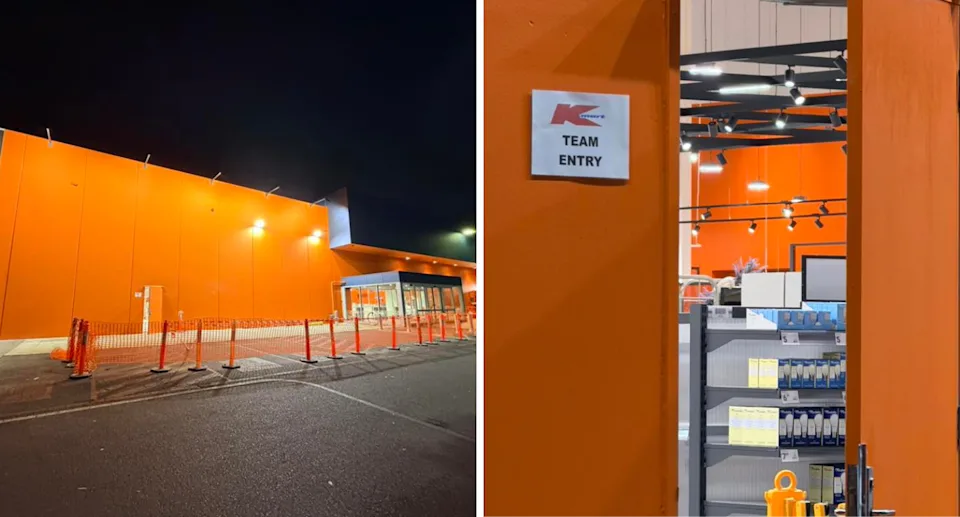

Kmart is making one of its boldest homewares moves yet, with a new standalone K Home store preparing to open in Box Hill as the Wesfarmers-owned retailer pushes deeper into Australia’s $19 billion furniture and homewares sector.
The new concept store marks a clear shift from Kmart’s traditional big-box model. Instead of selling everything from school supplies to toys, clothing and kitchenware under one roof, K Home narrows the focus to furniture, storage and home styling. That smaller, more targeted format gives Kmart a chance to compete more directly with IKEA, Freedom, Amart and Harvey Norman without needing the full footprint of a standard department store.
The Box Hill site has already caught attention for its noticeably different look. The familiar red and blue Kmart branding has been replaced by a warmer orange design, giving the store a more modern home-focused identity. It is also expected to be a fraction of the size of a regular Kmart, making it easier to place in shopping centres or former large-format retail sites.
Kmart’s Mini-IKEA Strategy Targets Budget-Conscious Shoppers
The strongest angle behind K Home is not just that Kmart is opening another store. It is that the retailer appears to be building a more affordable, smaller-scale version of the IKEA shopping experience for customers who want stylish furniture without the higher price tag or warehouse-style trip.
QUT consumer behaviour and retail marketing professor Gary Mortimer described the move as a smart extension of one of Kmart’s strongest categories, noting that homewares and furnishings have become a major success area for the retailer. The logic is simple: shoppers who already trust Kmart for low-cost decor, storage and home basics may now have a dedicated destination for bigger home purchases.
Kmart’s own-brand Anko range sits at the centre of that strategy. Anko reportedly accounts for more than 85% of Kmart sales, with more than one billion items sold across Australia each year. That gives Kmart a powerful private-label engine at a time when shoppers are still trying to stretch household budgets.
The company already sells a wide range of home and living products online, including bedding, furniture, storage and seasonal home items through its official home and living range. K Home brings that same value-led appeal into a more focused physical format, where customers can see, touch and compare items before buying.
The $19 Billion Homewares Battle Is Getting More Competitive
Australia’s furniture and homewares market is estimated to be worth about $19 billion, making it a valuable battleground for retailers that can combine price, convenience and style. Harvey Norman currently leads the sector with around 10.8% market share, followed by IKEA at 5.8%, while Amart and Freedom each hold about 4.8%.
Kmart’s advantage is different from those rivals. It does not need to convince customers that it is a premium interiors brand. Its strength is scale, affordability and high-frequency shopping. A customer may visit Kmart for everyday items and leave with storage baskets, bedding or decor. K Home takes that habit and turns it into a dedicated homewares proposition.
The timing is also important. Even during a cost-of-living squeeze, many households still want to refresh their living spaces without committing to expensive furniture purchases. That creates room for a retailer that can make a lounge room, bedroom or rental apartment feel updated at a lower cost.
The broader sector is already showing signs of pressure and opportunity. IKEA Australia’s profit nearly doubled in the past year, while Harvey Norman reported a 15.2% rise in first-half net profit to $321.9 million. Nick Scali’s first-half net profit rose 36% to $41 million, while Temple & Webster posted a 36% fall in half-year net profit to $5.76 million.
Those numbers show why Kmart’s move matters. The homewares category is large, but it is not easy. Retailers are competing on price, delivery speed, style, online convenience and showroom experience at the same time.
Smaller Stores Could Help Kmart Scale Faster
The Box Hill K Home store is expected to serve as a test case. Kmart has indicated it wants to learn more about how customers prefer to shop home products under one roof, and the smaller format could give it flexibility that full-size Kmart stores do not have.
That may be the most important part of the strategy. A full department store needs significant space, parking and long-term retail planning. A standalone K Home store could fit into more available locations, including shopping centres and former large-format sites. If the model works, Kmart may be able to expand faster than it could with traditional stores.
The launch also lands shortly after Kmart introduced Joy, its AI shopping assistant, which allows customers to virtually try on outfits and visualise home products in their own space. That digital layer could support the physical K Home experience by helping shoppers picture furniture and homewares before making a purchase.
For Kmart, the bigger opportunity is not simply selling more cushions, cabinets or storage boxes. It is turning a popular category into a standalone growth engine. If K Home succeeds in Box Hill, the retailer could have a new format capable of challenging established homewares players at the value end of the market, where Australian households are still spending carefully but unwilling to give up on style.

Make Swikblog your go-to source on Google for reliable updates, smart insights, and daily trends.