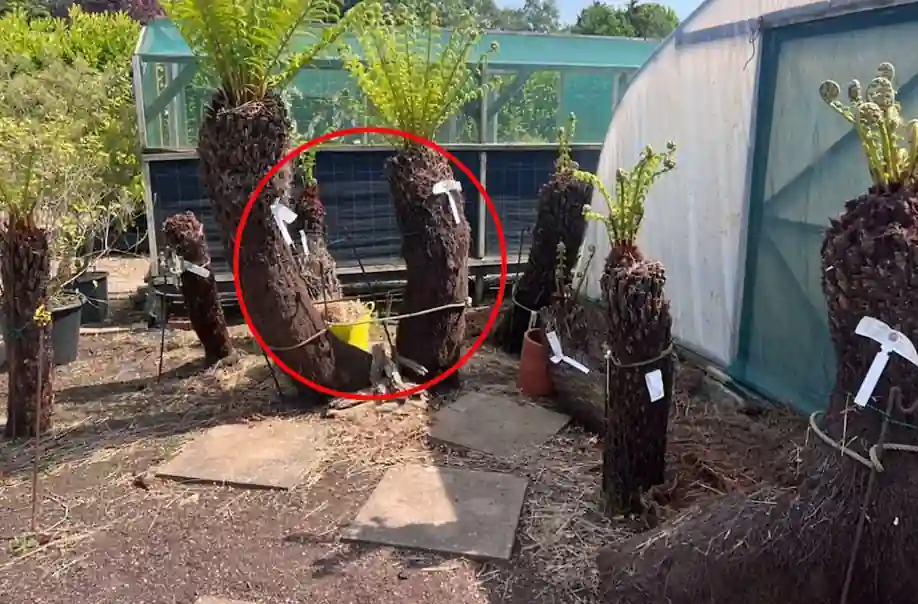

Ancient Tasmanian tree ferns, some believed to be as much as 500 years old, have been found for sale in garden centres and nurseries across the United Kingdom, nearly 17,000 kilometres from the forests where they originally grew.
The discovery has reignited a long-running debate over native forest harvesting in Tasmania, with environmental campaigners arguing that ecologically significant plants are being removed from wild forests and sold as landscaping products around the world.
The Bob Brown Foundation says supporters have documented Tasmanian tree ferns being sold in locations across the UK, including Coventry, East Sussex, Durham, Kent, Banstead, Bampton and Lower Dicker. The organisation describes the plants as “ancient forest relics” that belong in native ecosystems rather than commercial garden displays.
More Than 530,000 Ferns Removed Since 2002
According to the foundation, more than 530,000 tree ferns have been removed from Tasmania’s native forests since 2002. Campaigners claim many are harvested from intact forest ecosystems before logging and regeneration burns take place.
Case studies published by the group trace harvested ferns to native forest coupes in areas including the Florentine Valley, Russell River, Pruana and Wentworth Hills. Individual harvesting sites reportedly span dozens of hectares and account for thousands of ferns.
Environmental advocates argue that tree ferns play an important role in maintaining moisture-rich forest environments and providing habitat for smaller plants and wildlife. Because the species grows extremely slowly, mature specimens can take centuries to reach their size.
Read More
Government Defends Regulated Harvesting System
The Tasmanian Government and Sustainable Timber Tasmania maintain that tree fern harvesting is legal and tightly regulated under the state’s forest practices framework. Officials say harvesting only occurs within approved forest coupes and must comply with forest practices plans, environmental codes and oversight requirements.
Authorities also point to traceability measures that require harvested ferns to carry tags and documentation linking them to registered harvesting sites. Details of Tasmania’s management framework can be found through the Australian Government’s Tree Fern Management Plan.
The debate over tree fern harvesting comes as Tasmania faces wider environmental pressures. Conservation groups have also raised concerns about the invasive sea urchin spread on Tasmania’s west coast, highlighting ongoing challenges for both the state’s forests and marine ecosystems.
The Bob Brown Foundation has launched a public awareness campaign encouraging Australians to report tree ferns being sold in hardware stores, nurseries and landscape supply businesses. The group is also distributing stickers that shoppers can place on fern displays to highlight their origins and encourage discussion about the trade.
As the debate grows, the future of Tasmania’s ancient tree ferns remains at the centre of a wider conversation about conservation, forestry practices and consumer transparency.

Make Swikblog your go-to source on Google for reliable updates, smart insights, and daily trends.