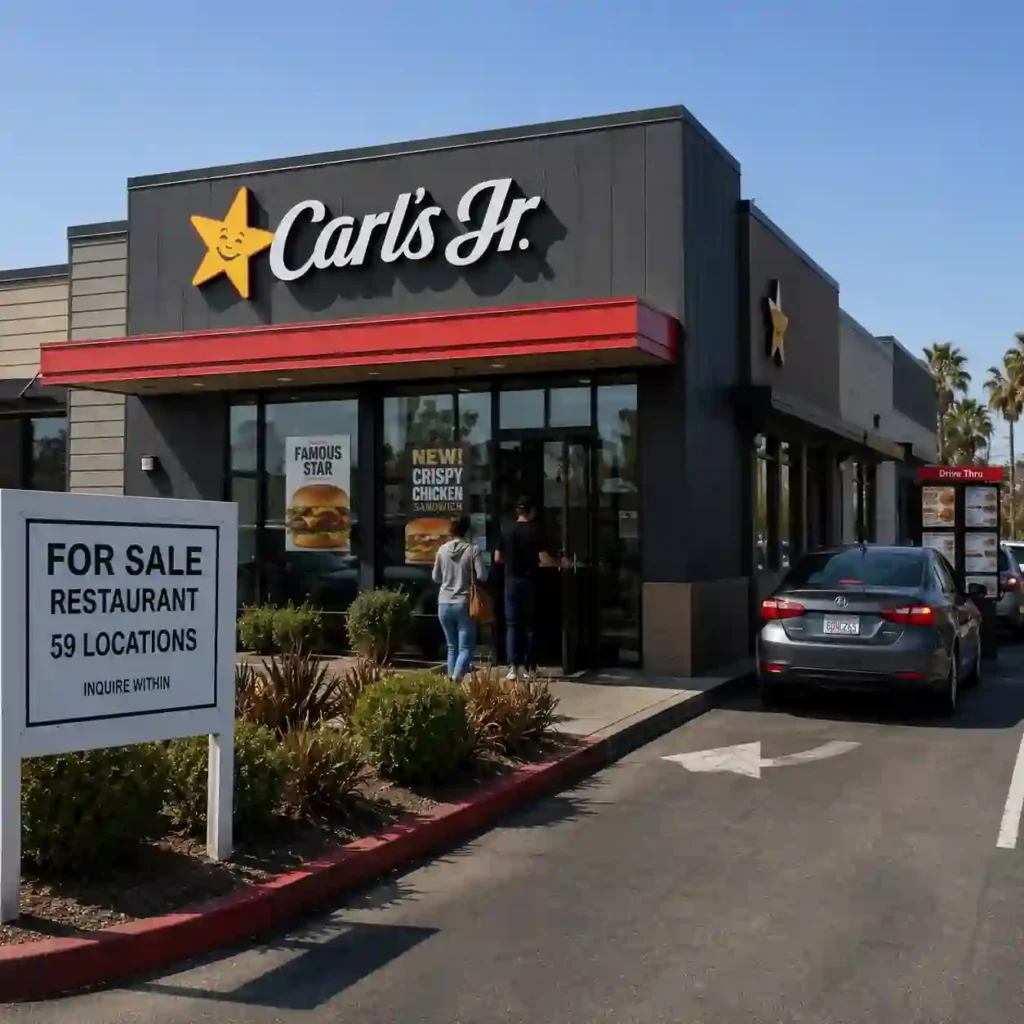

One of California’s largest Carl’s Jr. franchise operators is attempting to close 10 restaurants and sell dozens more after filing for Chapter 11 bankruptcy protection, raising uncertainty for nearly 60 locations across the state.
Friendly Franchisees Corporation, along with affiliated entities linked to founder Harshad Dharod, filed for bankruptcy protection in April. The companies operate 59 Carl’s Jr. restaurants in California and employ roughly 1,000 workers. Court documents show the business has been hit by rising labor costs, increased competition and weakening sales, even as the restaurants collectively generate more than $6 million in monthly revenue.
The restaurant group has reportedly been losing more than $600,000 per month in 2026. One Arcadia location alone lost more than $400,000 over a two-year period, pointing to the store-level pressure behind the bankruptcy case.
10 California Carl’s Jr. Restaurants Could Close
Court filings show the company is seeking to reject leases at 10 underperforming restaurants:
- 19400 Ventura Blvd, Tarzana
- 165 E. Duarte Road, Arcadia
- 573 N. Azusa Ave, Covina
- 140 E. Foothill Blvd, Pomona
- 16815 Devonshire St, Granada Hills
- 18756 Sherman Way, Reseda
- 1000 Farmers Lane, Santa Rosa
- 141 S. Diamond Bar Blvd, Diamond Bar
- 485 Rosemead Blvd, Pasadena
- 505 W. Las Tunas Dr, San Gabriel
Dharod is also seeking a buyer for the remaining Carl’s Jr. restaurants. The sale process is being overseen by National Franchise Sales, which has reportedly received interest from potential buyers. That means some locations could continue operating under new ownership, while others may still close depending on leases, buyer interest and individual restaurant performance.
Carl’s Jr. has said the situation is specific to this franchisee’s financial and business circumstances and does not affect other Carl’s Jr. locations.
Read More
Why The Bankruptcy Matters
In bankruptcy filings, the franchisee cited California’s $20 minimum wage for fast-food workers, which took effect in April 2024, as one factor adding pressure to restaurant costs. The company also pointed to rising operating expenses, stronger competition and softer sales.
The case comes as Carl’s Jr. has already been shrinking in California. The chain operated 613 locations in the state in 2023, but that number declined to 588 by 2025. Consumer spending at the chain also reportedly dropped 4% last year, reflecting broader pressure across the fast-food market.
The pressure on restaurant operators is not limited to Carl’s Jr. Several major chains have been reducing their footprints as costs rise and consumer spending patterns shift. Recent industry data shows that Subway closed 729 U.S. restaurants while competition among major fast-food brands intensified, underscoring the broader challenges facing franchise operators across the country.
Additional details about the bankruptcy proceedings can be found through industry coverage published by Restaurant Dive. The outcome of the sale process will determine whether many of the affected California Carl’s Jr. locations continue operating under new ownership or ultimately close.

Make Swikblog your go-to source on Google for reliable updates, smart insights, and daily trends.