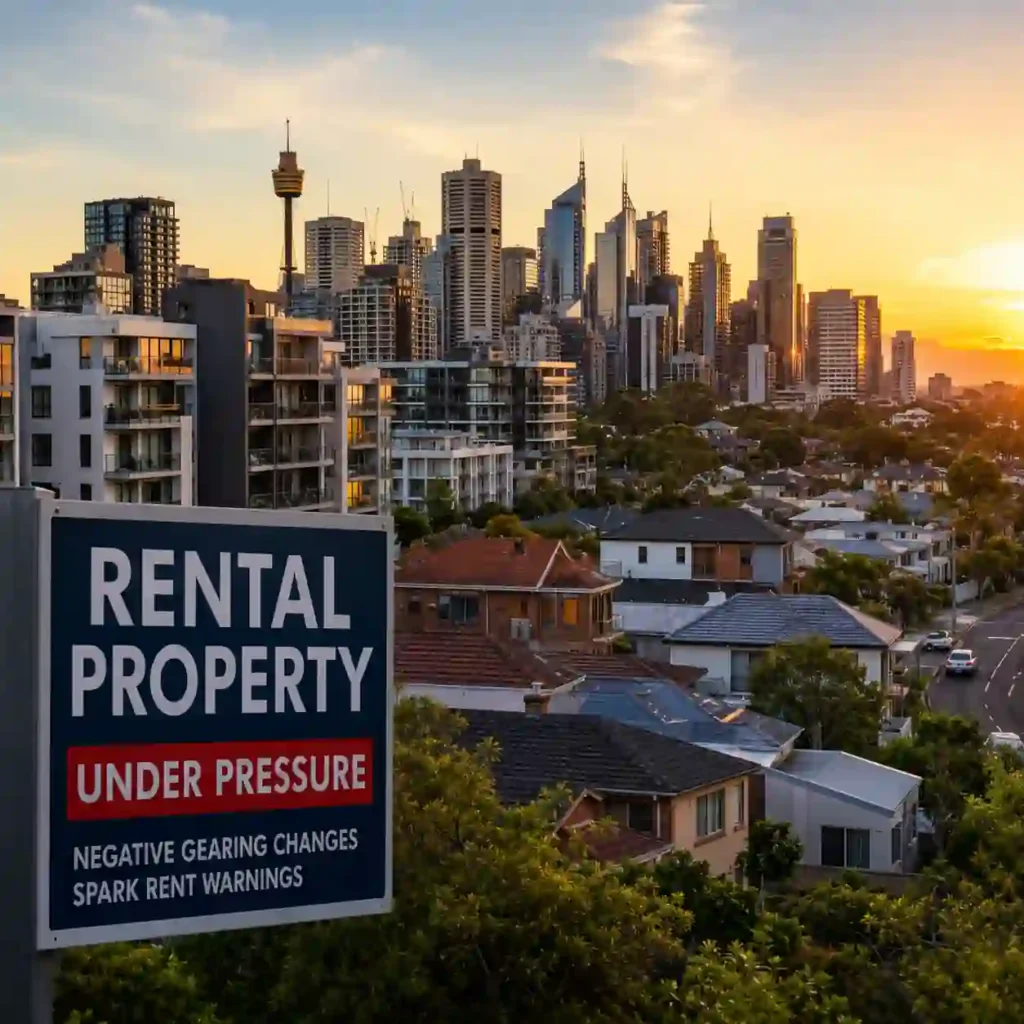

Sydney’s rental market is showing early signs of tightening after the federal government’s proposed negative gearing and capital gains tax reforms, with new figures indicating more rental homes are leaving the market than being replaced.
Exclusive data from property analytics group FoundIt found that approximately 2,159 rental bedrooms were added across Sydney during May, while around 3,744 rental bedrooms were removed through investor property sales. The result was a net decline in available rental accommodation during the first month following the federal budget announcement.
The findings have raised concerns among housing analysts who warn that already low vacancy rates could become even tighter if investor activity continues to slow. Rental demand remains strong across Sydney, and a reduction in available homes could leave tenants facing increased competition for fewer properties.
The proposed reforms would restrict negative gearing benefits to newly built homes from mid-2027 and replace the existing capital gains tax discount with an inflation-linked indexation system. More information on Australia’s tax framework for property investors is available through the Australian Taxation Office.
Inner Sydney and Parramatta among hardest-hit areas
FoundIt’s analysis showed Sydney Inner City recorded the largest reduction in rental accommodation during May, with an estimated loss of 244 rental bedrooms. Parramatta followed with 169 bedrooms removed from the rental market.
Other areas experiencing notable losses included North Sydney-Mosman, Blacktown, Blacktown North, Eastern Suburbs North, Gosford, Ryde-Hunters Hill, Penrith, Strathfield-Burwood-Ashfield and Ku-ring-gai.
The decline comes as rents have already been moving higher in many of these locations. Sydney Inner City apartment rents increased by approximately $50 per week over the past year, while Parramatta unit rents increased by around $30 weekly. North Sydney-Mosman recorded some of the largest annual rental increases, with house rents up about $175 per week and unit rents up around $70.
FoundIt head of research Kent Lardner said rental supply had already been shrinking in many parts of Australia before the Budget announcement. He noted that while investor property sales remain below historical averages, the replacement rate is slowing because fewer new investors are entering the market.
According to Mr Lardner, many established suburbs are now seeing rental homes sold without equivalent replacement stock returning to the market. He warned that if this trend continues, some tenants may be forced to leave their preferred suburbs simply because there are not enough rental properties available.
Read More
Borrowing power concerns emerge for investors
Sydney property investor Victor Kumar said lenders have already begun factoring the proposed loss of negative gearing benefits into borrowing assessments. According to Mr Kumar, many banks have reduced investor borrowing capacity by around 20 per cent, while some major lenders are reportedly reducing available borrowing by close to 40 per cent.
Mortgage broker Aidan Hartley said even a 20 per cent reduction in borrowing power could prevent many prospective investors from entering the property market. Fewer investors purchasing rental properties could further limit the supply of new rental housing.
Buyer’s agent Nathan Birch said rental demand continues to be supported by strong migration and population growth. If demand remains elevated while the supply of rental homes contracts, competition among tenants is likely to intensify.
The reforms are intended to improve housing affordability for first-home buyers, but property analysts question whether many renters currently have the deposits and borrowing capacity required to purchase homes. Critics argue that if rental supply continues shrinking while demand remains strong, affordability challenges could simply shift from home buyers to renters. The debate comes as landlords and tenants are already adapting to new NSW rental rules and re-leasing restrictions that are changing the state’s housing market.
Mr Lardner also suggested the full impact of the reforms may not yet be visible because many investment property purchases completed during May were likely arranged before the federal budget announcement. He argued that investor activity in the months ahead will provide a clearer indication of how the market is responding to the proposed changes.
With rental vacancies already tight across much of Sydney and demand remaining strong, housing experts say the balance between investor participation, rental supply and housing affordability will remain a key issue to watch throughout the remainder of 2026.

Make Swikblog your go-to source on Google for reliable updates, smart insights, and daily trends.