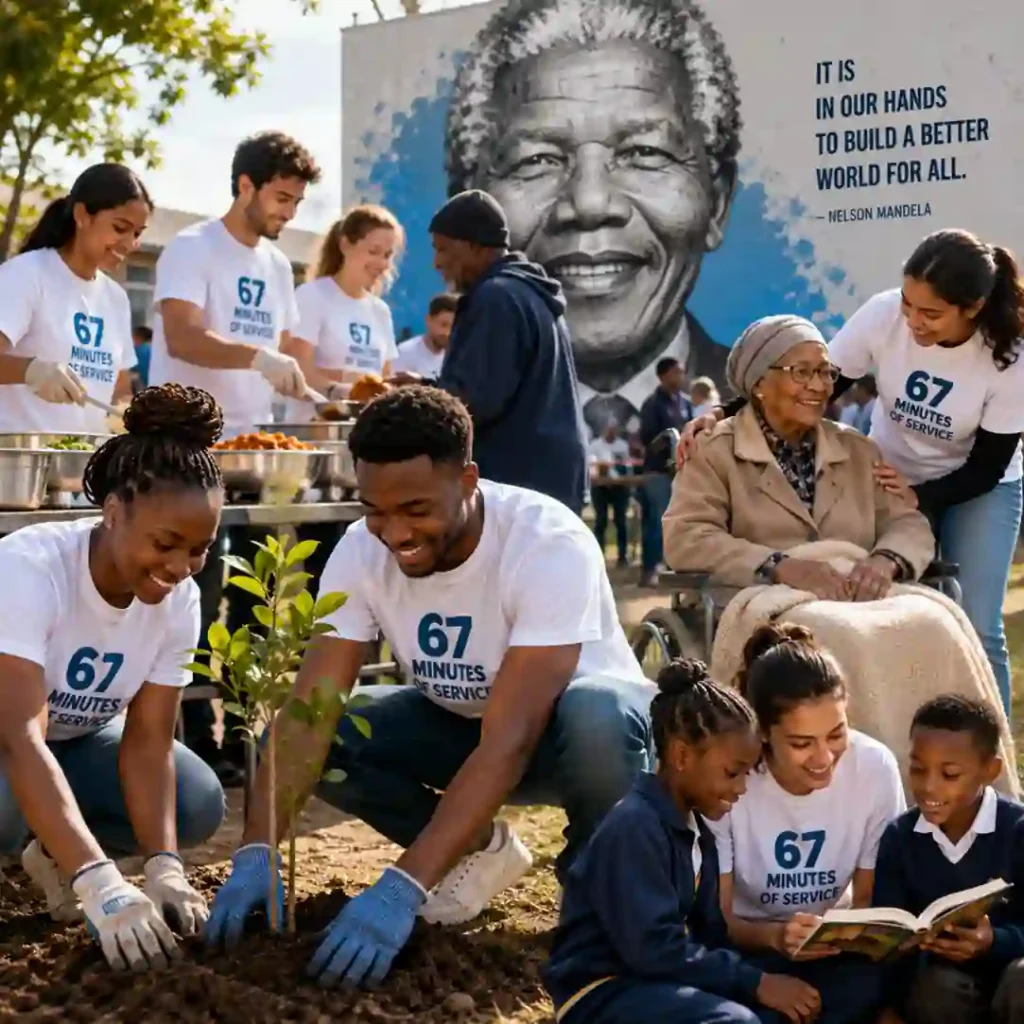

Nelson Mandela International Day 2026 will be observed on Saturday, 18 July, reminding people across the world that one person’s actions can inspire lasting change. Celebrated every year on Nelson Mandela’s birthday, the United Nations observance encourages individuals, communities and organisations to honour his legacy through meaningful acts of service rather than symbolic celebrations alone.
The official Nelson Mandela International Day 2026 theme is “It is still in our hands to combat poverty and inequity.” The message highlights a simple but powerful idea: everyone has a role to play in reducing poverty, supporting vulnerable people and creating a fairer society. Whether through volunteering, donating or mentoring, every action contributes to Mandela’s vision of justice, equality and human dignity.
People searching for Nelson Mandela International Day 2026 are often looking for the official theme, the meaning behind the 67-minute campaign, the history of Mandela Day and practical ways to participate. Here is everything to know before the global observance on 18 July.
Nelson Mandela International Day 2026 theme and why it matters
This year’s theme reflects Mandela’s lifelong belief that poverty is a challenge created by society rather than an unavoidable reality. The United Nations presents the observance as an opportunity for people everywhere to help build stronger and more inclusive societies through practical action.
Instead of focusing only on ceremonies, Mandela Day encourages people to dedicate 67 minutes to serving others. The number represents the 67 years Nelson Mandela spent working in public service, defending human rights and opposing apartheid.
Simple actions can make a meaningful difference. Volunteers may serve meals at food banks, mentor young people, donate books or clothing, plant trees, clean public spaces, visit elderly neighbours or support local charities. Schools, businesses and local organisations can also arrange projects promoting education, environmental responsibility and social inclusion.
The United Nations will commemorate Mandela Day with an informal plenary meeting of the General Assembly at UN Headquarters in New York on 20 July 2026. Other official activities include the ActNow climate challenge, volunteer projects across New York City, an online Chamber Music Society concert and an interactive digital experience titled “The Long Walk: Choose the Legacy”, which explores important moments and decisions from Mandela’s life.
Official information, educational resources and event updates are available through the United Nations Nelson Mandela International Day page.
Read More
History, significance and key facts about Mandela Day
Nelson Rolihlahla Mandela was born on 18 July 1918 in Mvezo, South Africa. As a lawyer and anti-apartheid activist, he became one of the world’s most prominent voices against racial segregation. After spending 27 years in prison, Mandela was released in February 1990 and helped guide South Africa through a peaceful democratic transition.
In 1994, he became South Africa’s first Black president following the country’s first fully representative democratic election. Rather than pursuing revenge after apartheid, Mandela championed reconciliation, equality and peaceful nation-building—principles that continue to shape the meaning of Mandela Day.
His leadership during South Africa’s democratic transition remains one of modern history’s defining moments. That milestone is closely connected to how South Africa’s Freedom Day reflects the country’s journey from apartheid to democracy.
Recognising Mandela’s contribution to peace, democracy and human rights, the United Nations General Assembly officially declared 18 July as Nelson Mandela International Day in November 2009 through Resolution A/RES/64/13. The first official UN observance took place in 2010, and the day is now marked in countries around the world.
Key facts about Nelson Mandela International Day 2026:
- Date: Saturday, 18 July 2026
- Official theme: “It is still in our hands to combat poverty and inequity.”
- Declared by: United Nations General Assembly in 2009
- First UN observance: 18 July 2010
- 67 minutes: Symbolises Mandela’s 67 years of public service
- Main purpose: To encourage service, equality, reconciliation and social justice
“It is in your hands to create a better world for all who live in it.” — Nelson Mandela
More than a decade after Mandela’s death, his message remains relevant. Nelson Mandela International Day 2026 reminds the world that lasting change begins when ordinary people turn compassion into action. Whether through 67 minutes of volunteering or a long-term commitment to a worthy cause, each contribution helps preserve Mandela’s legacy and supports a more just, inclusive and humane future.

Make Swikblog your go-to source on Google for reliable updates, smart insights, and daily trends.