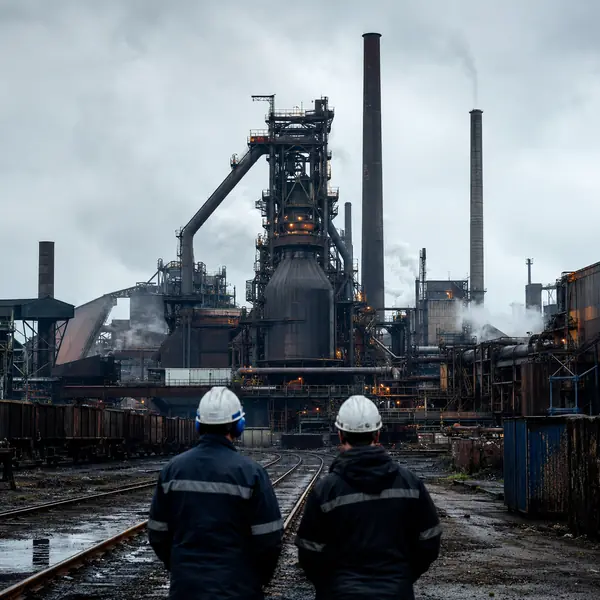

The UK government brought British Steel into public ownership on July 16, 2026, protecting the country’s remaining primary steelmaking capacity and providing immediate security for approximately 2,700 workers at Scunthorpe.
The takeover followed Royal Assent for the Steel Industry (Nationalisation) Act. It ends Chinese industrial group Jingye’s ownership more than a year after ministers assumed operational control of the company.
Why was British Steel nationalised?
Scunthorpe operates Britain’s last two blast furnaces capable of producing primary, or “virgin,” steel from iron ore. Their closure would have made the UK the only G7 economy unable to manufacture virgin steel domestically.
Ministers considered that a risk to national security, infrastructure and supply chains. Virgin steel is used in railway tracks, construction, machinery, energy projects and some defence applications.
British Steel supplies approximately 80% of Network Rail’s steel requirement under a £500 million contract. Its importance to rail infrastructure comes as Britain is also moving towards public ownership through Great British Railways.
What led to the takeover?
Jingye bought British Steel from the Official Receiver in 2020 and committed to investing £1.2 billion. It later sought government support to replace the blast furnaces with lower-carbon electric arc furnaces.
The government offered up to £500 million in March 2025. Jingye rejected the package, saying the funding was insufficient and its conditions were too demanding.
Jingye, which said British Steel was losing approximately £700,000 a day, then announced plans to close both furnaces and began a redundancy consultation.
Officials also discovered that orders for essential raw materials were being cancelled or redirected. If the furnaces ran out of fuel and cooled, restarting them would have been extremely difficult and expensive.
Parliament passed emergency legislation on April 12, 2025, allowing ministers to direct operations and secure raw materials. Jingye remained the legal owner until the 2026 nationalisation.
Are British Steel jobs safe?
No immediate redundancies were announced with the ownership transfer. Around 2,700 people work at Scunthorpe, while British Steel employs approximately 4,000 people across its wider operations, including Teesside and Skinningrove.
Thousands more depend on the company through suppliers, transport businesses and contractors. Protecting skilled industrial employment also connects with the government’s wider apprenticeship and youth skills expansion.
No immediate changes to wages, contracts or pensions have been announced. Future restructuring or new technology could affect staffing, but separate consultation would be required.
How much has British Steel cost taxpayers?
A National Audit Office investigation recorded £376.9 million of spending between April 2025 and January 2026.
Approximately £208.9 million paid for raw materials, £60.7 million covered other operating costs, £56.8 million went towards employees and £31.7 million covered energy bills. Advisory and legal expenses added millions more.
The watchdog projected that intervention costs could reach approximately £641.5 million by June 2026. No specific tax increase has been announced, but the support is funded through public spending.
British Steel’s plan also forecast £343 million in operating losses by June 2026. Its liabilities were expected to exceed its assets by approximately £866 million, raising doubts about whether government loans can be repaid.
Will Jingye receive compensation?
Jingye is seeking compensation and has opened consultations under the UK-China bilateral investment treaty. However, a payment is not automatic.
An independent valuer will consider British Steel’s assets, debts, losses and public support before deciding whether compensation is payable. Regulations establishing the process are expected in autumn 2026. An unresolved dispute could proceed to international arbitration.
Read More:
- England flag rules explained: Where you can display the St George’s Cross without risking a fine
- State Pension age rises to 67: What it means for Universal Credit and 66-year-olds
- Visit the Swikblog homepage for more latest news
What happens to the blast furnaces?
The government has not announced an immediate closure date. However, the ageing coal-dependent furnaces are unlikely to provide a permanent solution.
Electric arc furnaces, which use electricity to melt recycled scrap, are the leading lower-carbon option. British Steel previously proposed a £1.25 billion programme involving new furnaces at Scunthorpe and Teesside, but the final design, funding and timetable remain undecided.
Who will run British Steel?
Interim chief executive Allan Bell remains a leading figure, supported by newly appointed non-executive directors. Their priorities include maintaining safe production, reassuring customers and developing a commercially sustainable, lower-carbon business plan.
The government’s wider steel strategy is backed by up to £2.5 billion and aims for as much as 50% of steel used in Britain to be made domestically. Ministers have also reduced tariff-free import quotas by 51% and committed £500 million to Tata Steel’s transition at Port Talbot.
Public ownership may not be permanent. Once British Steel is stabilised, the government could seek private investment or a future buyer. Any investor would first need clarity about losses, energy costs, modernisation funding and Jingye’s compensation claim.

Make Swikblog your go-to source on Google for reliable updates, smart insights, and daily trends.