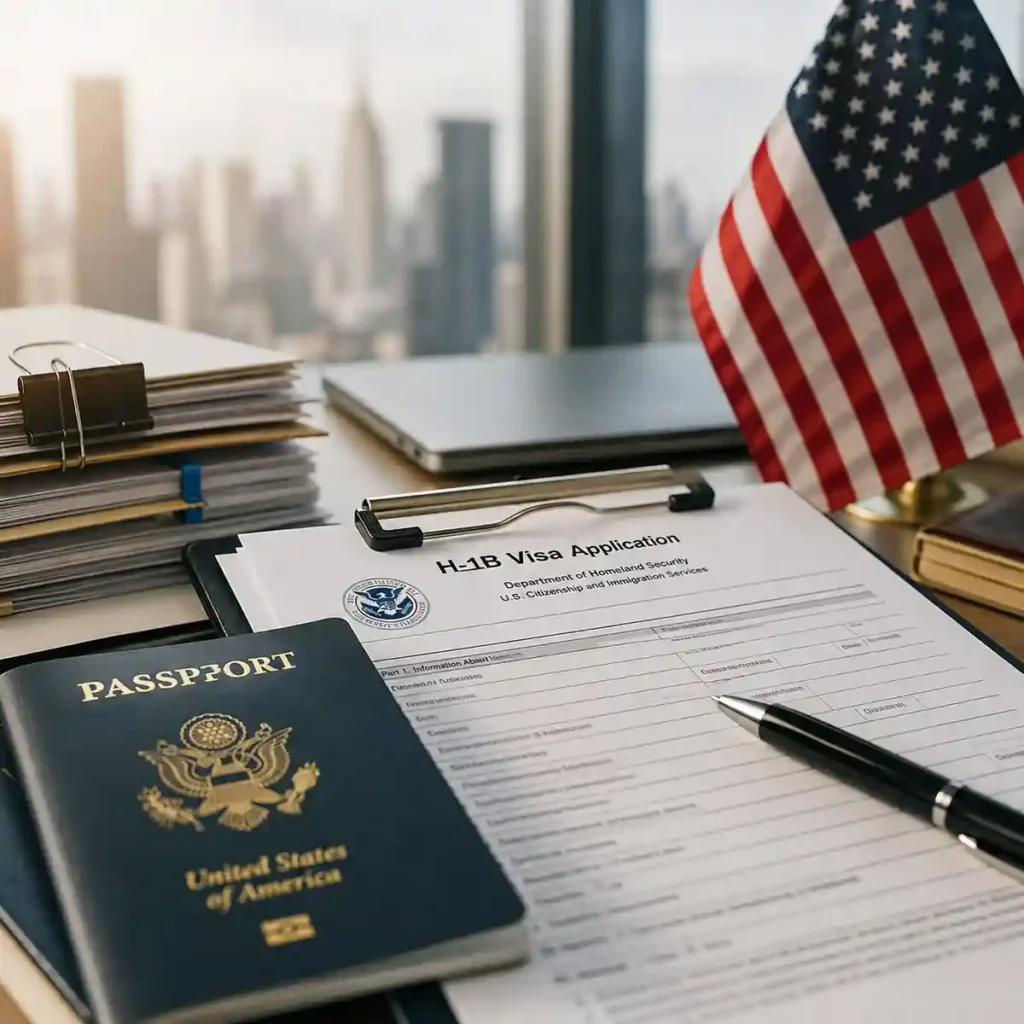

The United States is proposing a new $103,265 fee on certain H-1B petitions, potentially adding a six-figure cost for employers hiring foreign professionals through the annual visa cap. The proposal could have an outsized impact on Indian workers, international graduates and U.S. companies that sponsor skilled foreign employees.
The Department of Homeland Security (DHS) proposal does not mean every H-1B visa will cost $103,265. The amount would be a separate, additional fee for cap-subject H-1B petitions, including qualifying U.S. advanced-degree cases. Crucially, it is only a proposal and is not currently in effect.
Who would pay the $103,265 H-1B fee?
The proposed charge would apply when an employer files a covered cap-subject H-1B petition. The annual program generally provides 65,000 regular-cap places plus 20,000 under the advanced-degree exemption for qualifying workers with master’s degrees or higher from U.S. institutions.
The DHS proposed rule says the $103,265 amount would be a standalone fee, meaning it would be charged in addition to other applicable H-1B filing costs rather than replacing them.
Why is the proposed fee exactly $103,265?
DHS calculated the figure using approximately $8.777 billion in costs it proposes to recover and an estimated 85,000 annual fee-paying petitions. Dividing those amounts produces $103,264.57, which DHS rounded to $103,265.
The government says the revenue would support immigration-related operations across federal agencies, including adjudication, systems modernization, fraud detection and national-security vetting, consular activities, immigration courts, labor enforcement and inspections.
Would F-1 students moving to H-1B be affected?
Potentially. The proposal would cover cap-subject petitions whether an employer seeks consular processing or a change of status for someone already in the United States.
That means an F-1 graduate working under Optional Practical Training could be affected when an employer sponsors that person for a first cap-subject H-1B. Students following broader immigration changes can also track the separate F-1 visa September 3 hearing and what it could mean for international students.
Who would be exempt?
Cap-exempt H-1B petitions would not face this particular $103,265 fee. That can include qualifying petitions involving institutions of higher education, affiliated nonprofits and certain nonprofit or government research organizations.
Many extensions and other petitions involving workers previously counted against the cap can also be cap-exempt. Existing H-1B workers therefore should not assume that an extension or employer change automatically creates a $103,265 charge.
Does it affect H-1B workers already in America?
Location alone does not determine whether the fee applies. A first cap-subject petition requesting a change of status could be covered even if the worker is already in the United States. A qualifying cap-exempt petition would not.
The key distinction is therefore whether a petition is subject to the H-1B numerical cap, not simply whether the worker is inside or outside America.
U.S. Visa Revocation 2026: Trump Administration Revokes 175,000 Visas
H-1B Visa Fee To Surge Past $100,000 As Indians Face Major US Immigration Blowhttps://t.co/XHnQw8jShw
— TIMES NOW (@TimesNow) August 24, 2026
Why could Indians face the biggest impact?
Indian nationals are the largest group of H-1B beneficiaries. USCIS approved 399,402 H-1B petitions in fiscal 2024, with Indian-born beneficiaries accounting for about 71% according to figures cited in reporting on the proposal.
A six-figure additional sponsorship cost could make employers more selective about new H-1B hires, potentially affecting Indian technology professionals and U.S.-educated graduates. Startups and smaller businesses could face particular pressure because the proposed fee may be substantial relative to the salary of an early-career employee.
The development comes amid wider changes and litigation over U.S. immigration policy, including a recent court decision striking down visa restrictions affecting 75 countries.
What about the separate $100,000 H-1B payment?
The $103,265 proposal is separate from the Trump administration’s earlier $100,000 H-1B payment created through a presidential proclamation, which has faced court challenges.
DHS says its proposed regulatory fee would be additional to other applicable charges. The proposal even contemplates circumstances where separate payment requirements could overlap if the earlier $100,000 requirement is legally operative. That does not mean employers currently owe $203,265.
The Trump administration is proposing a new six-figure fee for H-1B visas that would apply to most new applicants, not just those applying from abroad, replacing an earlier plan to charge $100,000 for the visa that was struck down by the courts https://t.co/S8e0Ptwl3x
— The Wall Street Journal (@WSJ) August 24, 2026
When could the new H-1B fee start?
Not immediately. The proposal was placed on Federal Register public inspection on August 24 and is scheduled for publication on August 25, 2026, followed by a 30-day public-comment period.
DHS would need to consider comments and issue a final rule with an effective date before the $103,265 charge could begin. The final policy could change and could also face legal challenges.
The timing will be closely watched ahead of the next H-1B cap cycle. For workers and students, the key fact today is simple: $103,265 is a proposed additional fee for covered cap-subject petitions, not a fee that every H-1B holder must pay now.

Make Swikblog your go-to source on Google for reliable updates, smart insights, and daily trends.