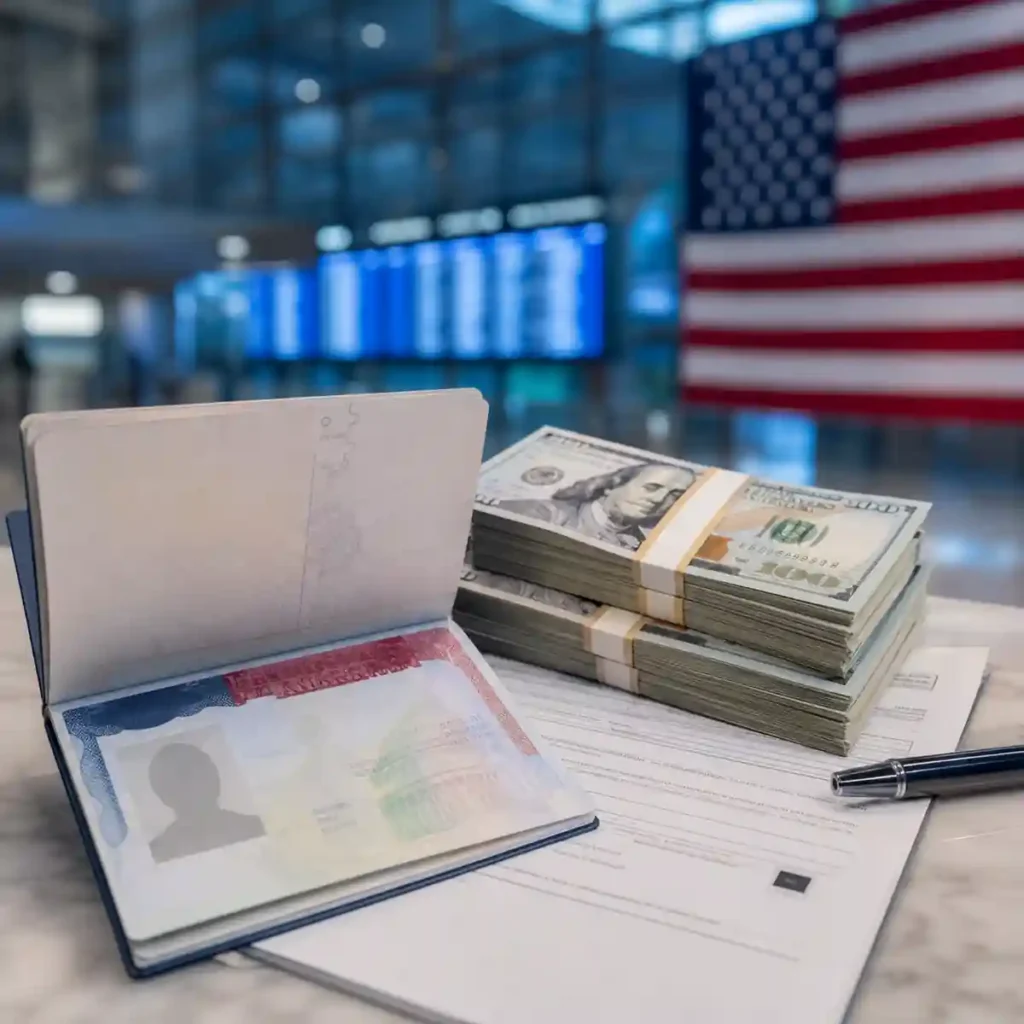

A refundable deposit of up to $20,000 is now part of the US visitor-visa process for nationals of 50 designated countries. The State Department made its B-1/B-2 visa bond program permanent on August 3, 2026, after testing it for one year.
The policy does not affect every tourist or business traveller. India is not currently included, and people from affected countries should not pay anything unless a US consular officer provides direct instructions after their interview.
What changed: The available bonds are now $10,000, $15,000 or $20,000, replacing the pilot amounts of $5,000, $10,000 and $15,000.
Who is covered: Certain B-1, B-2 and combined B-1/B-2 applicants travelling on passports from designated countries.
Is it refundable? Yes, if the traveller follows the bond conditions and immigration rules.
Does payment guarantee a visa? No. The officer completes a final eligibility review after the bond is posted.
What happens at the visa interview?
Applicants begin normally by completing the nonimmigrant visa application, paying the standard fee and attending a consular interview. The bond is not an additional charge that everyone pays while booking an appointment.
If an officer finds the applicant otherwise eligible, the application is temporarily refused while the bond is arranged. The expected amount is $15,000, but the officer may select $10,000 or $20,000 after assessing the individual case.
Applicants interested in shorter appointment waits should treat the separate US B-1/B-2 fast-track interview pilot as a different policy. Paying for an earlier interview does not replace or reduce a visa bond.
Pay only through the official process
The applicant must use Form I-352 and the Pay.gov link supplied by the consular officer. Money should never be sent through an unofficial website, travel agent or unsolicited payment link.
A friend, relative, employer or another third party can pay. The name of the bond provider must match the payer, and that person generally receives the refund. Both payment and repayment are in US dollars, so exchange-rate losses are not covered.
Is your country on the list?
The 50 countries are Algeria, Angola, Antigua and Barbuda, Bangladesh, Benin, Bhutan, Botswana, Burundi, Cabo Verde, Cambodia, Central African Republic, Côte d’Ivoire, Cuba, Djibouti, Dominica, Ethiopia, Fiji, Gabon, The Gambia, Georgia, Grenada, Guinea, Guinea-Bissau, Kyrgyz Republic, Lesotho, Malawi, Mauritania, Mauritius, Mongolia, Mozambique, Namibia, Nepal, Nicaragua, Nigeria, Papua New Guinea, São Tomé and Príncipe, Senegal, Seychelles, Tajikistan, Tanzania, Togo, Tonga, Tunisia, Turkmenistan, Tuvalu, Uganda, Vanuatu, Venezuela, Zambia and Zimbabwe.
A new country must generally receive at least 15 days’ notice before the requirement begins, while removal can be immediate. This bond program is separate from the wider US visa-processing restrictions involving 75 countries.
Three ways the bond may be returned
Travel completed correctly: The traveller follows B-visa conditions, avoids unauthorized work and leaves by the end of the authorized stay.
Visa not used: The visa expires without the person travelling to the United States.
Entry refused: The traveller applies for admission but is turned away at a US port of entry.
The principal is returned without interest. Visa validity, which may range from three to 12 months and allow one or multiple entries, is not the same as the authorized stay granted at the border.
Extensions do not automatically cancel the bond
A timely and properly filed extension-of-stay or change-of-status request can preserve compliance. If approved, the person must follow the new status and leave by the revised deadline. If denied, departure is required within 10 days.
The State Department has said USCIS may consider the existence of a bond as a negative discretionary factor when reviewing such applications. Travellers may therefore need evidence supporting the positive circumstances of their request.
Four actions that put the deposit at risk
- Remaining in the United States beyond the authorized stay.
- Working without authorization or violating another status condition.
- Filing an extension or change-of-status request late.
- Failing to leave within 10 days after a timely request is denied.
Filing Form I-589 for asylum or withholding of removal is also identified as a potential breach. The State Department refers suspected violations to the Department of Homeland Security, which makes the final decision. The traveller must receive notice and can pursue an administrative appeal.
Southwest Airlines Reverses Plus-Size Passenger Policy: New Extra-Seat Rules Explained
UK Airport Drop-Off Fees 2026: Full List of Charges and How to Avoid Paying
Visit the homepage for the latest travel news, airline updates and consumer guides
Airport-only entry and departure rule
Bonded visitors must enter and leave through commercial airports, including CBP preclearance locations. They cannot satisfy the condition through land borders, seaports, charter flights or general aviation.
Applicants cannot directly apply for a waiver. An authorized State Department official may grant one for a significant national or humanitarian interest. Separate exemptions may cover certain eligible FIFA World Cup 2026 participants and qualifying ticket holders.
Why the pilot became permanent
The government expected about 2,000 applications to trigger bonds during the pilot, but the final figure was approximately 20,000. Close to half resulted in payment, while B-visa issuance among participating countries reportedly fell 83% during the first 10 months.
The State Department says the policy supports timely departure and addresses concerns involving overstays, identity checks, criminal-record sharing and document security. Travellers should verify the latest details through the official visa bond country list before applying.

Make Swikblog your go-to source on Google for reliable updates, smart insights, and daily trends.