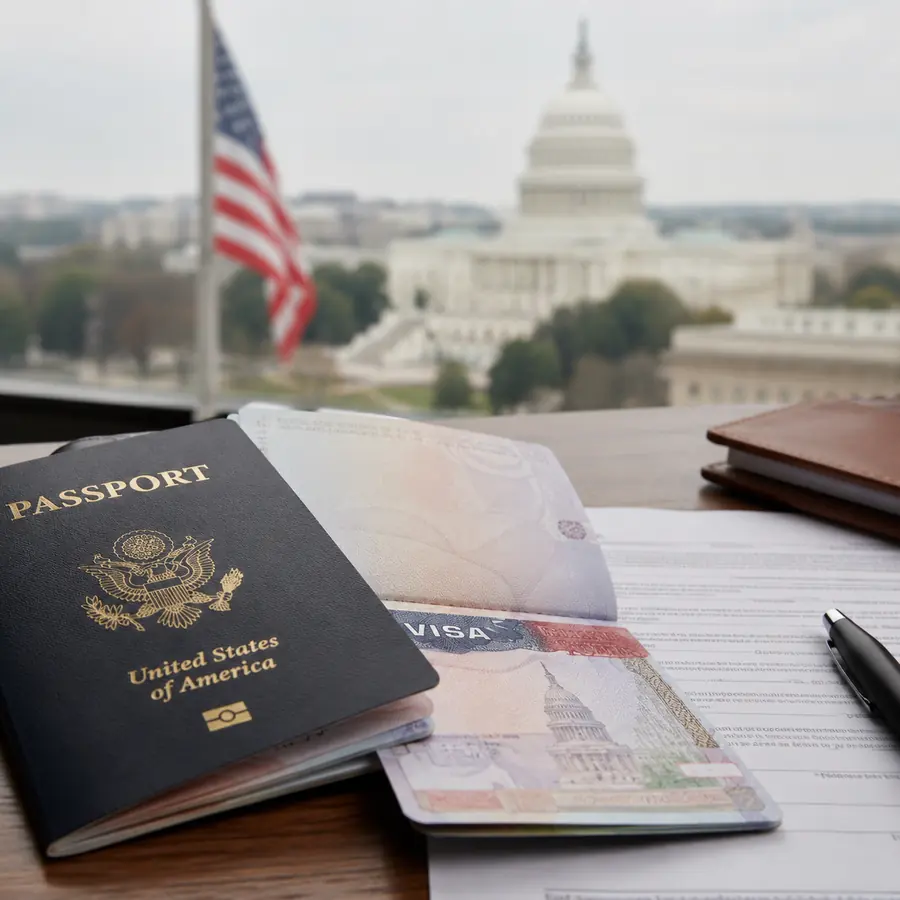

The Trump administration says it has revoked more than 175,000 U.S. visas, marking a major expansion of immigration and security enforcement in 2026. The State Department says the cancellations involved foreign nationals accused of violating visa terms, committing crimes, defrauding Americans, abusing the immigration system, calling for violence or raising national-security concerns.
The department says the majority of revocations followed law-enforcement encounters, with assault, driving under the influence, theft and drug crimes among the leading reasons. It also cited reckless driving, sexual assault, child abuse, fraud and embezzlement.
Why were more than 175,000 visas revoked?
According to the State Department, the crackdown is part of its continuous-vetting operations. That means visa holders can face fresh scrutiny even after a visa has been issued if new information emerges.
Officials said cases included criminal activity, fraud, immigration-system abuse, threats or support for violence, and national-security or foreign-policy concerns. The department also highlighted allegations involving kidnapping, human trafficking, sexual exploitation of minors and other serious offenses.
One important detail is that the government refers broadly to “law-enforcement encounters.” That does not necessarily mean every person included in the 175,000-plus total was convicted of a crime. The State Department has not published a full breakdown showing how many cases involved arrests, charges or convictions.
Are H-1B, F-1 and tourist visa holders affected?
The 175,000-plus figure covers visa revocations overall. The government has not released a complete public breakdown by visa category, so it is not accurate to claim that 175,000 H-1B, student or tourist visas were canceled.
However, the announcement comes as temporary visa holders face tighter screening more broadly. H-1B workers and their dependants are already dealing with expanded social-media vetting for H-1B and H-4 visa applicants, while travelers have also faced proposals involving five years of social-media history for U.S.-bound visitors.
For Indian workers and students, the key point is that the State Department has not released a nationality-level breakdown. There is currently no verified figure showing how many Indians are included in the 175,000-plus total.
Can a DUI or arrest put a U.S. visa at risk?
DUI is one of the most notable reasons specifically mentioned by the State Department. That matters because many visa holders may assume immigration consequences arise only from serious convictions or direct visa violations.
A law-enforcement encounter can potentially trigger a review, but the outcome will depend on the person’s visa class, the facts of the case, criminal history and government action. A traffic or criminal allegation should not automatically be treated as producing the same immigration result in every case.
Birth tourism and foreign-policy cases were also targeted
The State Department said a U.S. embassy in North Africa revoked more than 100 visas involving parents it described as “birth tourists” who came to the United States primarily to give birth so their children would gain U.S. citizenship.
Officials also cited foreign-policy cases involving Cuban nationals linked to the communist government, Iranians allegedly tied to the Iranian regime, and a Kuwaiti national accused of wishing violence against the U.S. president and Americans.
The department also pointed to visa actions involving foreign nationals who celebrated the assassination of conservative activist Charlie Kirk, who was killed in September 2025.
Read More
Does visa revocation automatically mean deportation?
No. A visa, immigration status and deportation are related but separate legal issues.
A visa generally allows a foreign national to travel to a U.S. port of entry and seek admission. Someone whose visa is revoked while outside the country may no longer be able to use it for travel. A person already inside the United States may face a different legal situation depending on their status and the reason for the revocation.
Visa holders should rely on official notices and case-specific legal advice rather than social-media claims suggesting that revocation automatically means immediate deportation.
What is still unclear about the 175,000 figure?
The State Department has not published a comprehensive table showing the revocations by nationality, visa class, offense, arrest versus conviction, or whether the affected person was inside or outside the United States.
Those missing details are important because they determine which groups are actually experiencing the biggest impact.
The official State Department announcement on the 175,000-plus revocations makes one broader trend clear: visa compliance is increasingly being treated as an ongoing process rather than a one-time check completed when a visa is approved.

Make Swikblog your go-to source on Google for reliable updates, smart insights, and daily trends.