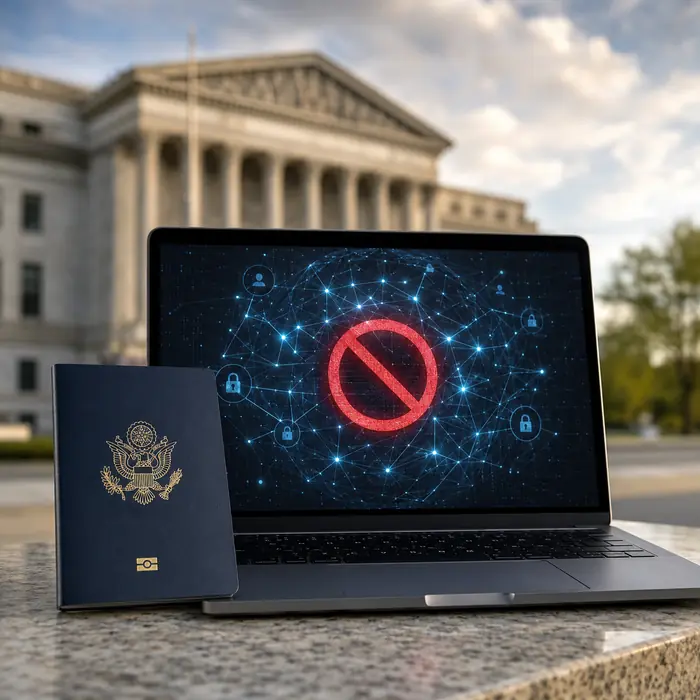

The United States introduced a global visa restriction policy on July 23, 2026, targeting foreign nationals responsible for or complicit in cybercrime, online scams and sextortion. Secretary of State Marco Rubio said immediate family members connected to these criminal enterprises may also face restrictions.
The measure is intended to prevent overseas offenders and their enablers from entering the United States. It applies globally and is not a general restriction on citizens of any particular country.
Who is targeted by the US cybercrime visa restrictions?
The policy covers foreign nationals involved in cybercrime or cyber-enabled offences, including organizers, facilitators and people who knowingly support criminal networks. The State Department specifically identified cyberscams, fraudulent online investment schemes and sextortion.
Sextortion involves threatening to release intimate images or videos unless a victim pays money, provides more material or meets another demand. US officials are particularly concerned about criminals operating abroad who target American minors.
Although the restrictions are global, Rubio highlighted transnational criminal organizations with Chinese connections. The administration says some of these networks are involved in large-scale fraud, corruption, money laundering and human trafficking.
Why did the United States introduce the policy?
Rubio said transnational criminal organizations stole at least $10 billion from Americans through online investment scams in 2024. The figure applies to the investment fraud cited in the announcement, not every category of cybercrime reported during the year.
Modern scam networks often combine impersonation, social engineering and stolen personal information to make fraudulent approaches appear legitimate. This background on digital scam tactics and common fraud warning signs explains how artificial intelligence, leaked data and instant payments can increase the risk.
Large data exposures can give criminals information for convincing phishing campaigns. The Carnival data breach affecting nearly six million customers shows why exposed contact details and identity documents may create long-term fraud risks.
Can family members also be denied visas?
Immediate family members of people involved in covered criminal activity may also be subjected to visa restrictions. However, the wording gives US authorities discretion and does not create an automatic ban on every relative.
The government has not released a public list of targeted individuals, defined how the measure will apply to every type of family relationship or provided a country-by-country timetable. Individual visa records are generally confidential, so some decisions may not be publicly disclosed.
Read More
What legal authority is being used?
The State Department is applying Section 212(a)(3)(C) of the Immigration and Nationality Act. This provision permits visa restrictions when officials determine that a foreign national’s entry could have potentially serious adverse foreign-policy consequences for the United States.
The official US government announcement describes the action as a visa restriction policy. It is more accurate to call it an immigration or travel measure than a financial sanction, although separate economic sanctions may be imposed against criminal networks.
How will the wider cybercrime crackdown work?
Rubio said the administration will combine visa restrictions with prosecutions, economic sanctions, asset seizures, extradition requests and international cooperation. These measures can be used to pursue offenders, confiscate criminal proceeds and disrupt networks operating outside the United States.
The policy does not replace basic online safety or criminal reporting. Suspicious investment offers, threats involving intimate material and urgent demands for payment should be preserved as evidence and reported promptly to the relevant platform and law-enforcement authority.

Make Swikblog your go-to source on Google for reliable updates, smart insights, and daily trends.