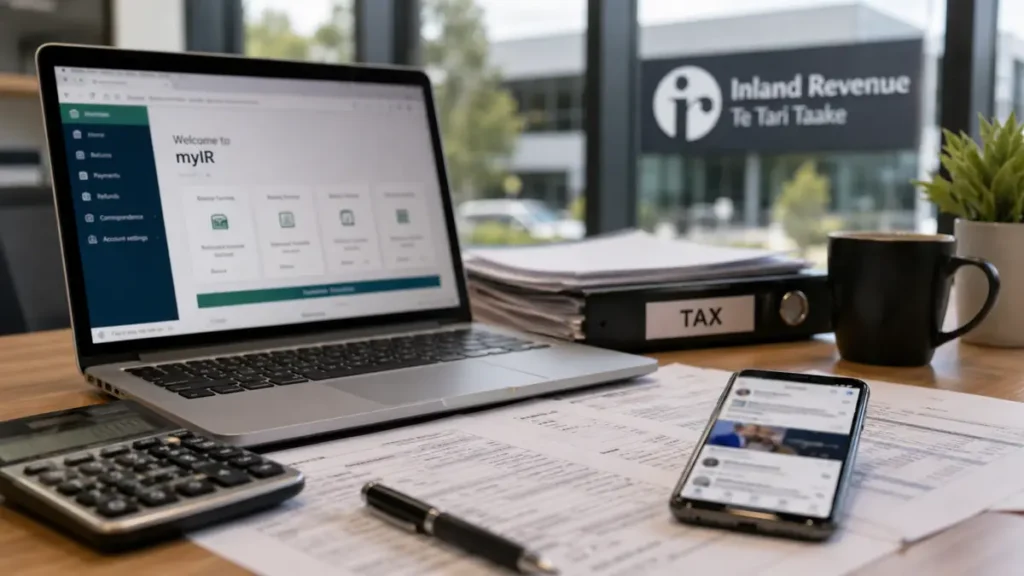

New Zealand’s Inland Revenue has stopped NZ$4.015 million in bogus tax claims after uncovering a coordinated scheme involving nearly 3,000 fraudulent amended returns, with officials saying the activity spread through social media, workplaces and community networks.
The investigation began earlier in August after a specialist Inland Revenue team noticed unusual filing patterns. Before additional controls were introduced, NZ$151,787 in refunds had already been paid, and recovery action is now underway.
542 fraudulent returns arrived in one night
The scale of the activity became clear when Inland Revenue received 542 fraudulent amended returns in a single night. What initially appeared concentrated in the transport industry later spread into other sectors and areas across New Zealand.
The case comes during a busy period for the tax system. Earlier in 2026, Inland Revenue sent around 1.4 million automatic income tax assessments, highlighting how many taxpayers rely on myIR and automated processing each year.
Social media promotion raised concerns
Several people told Inland Revenue staff that information was circulating about individuals who supposedly knew how to obtain extra money through expense claims. Some specifically mentioned someone offering assistance through social media.
Customers also visited Inland Revenue offices in Auckland and Wellington seeking to reset their myIR passwords so they could amend their returns. Officials said some referred to advice spreading within the transport industry.
The department later received anonymous information about the activity, although its investigation was already underway.
NZ$151,787 in refunds is being recovered
While Inland Revenue blocked NZ$4.015 million in bogus claims, NZ$151,787 had already been refunded. Authorities are seeking to recover that money, with one individual already under an instalment arrangement to repay funds.
The case reinforces the importance of checking information entered into myIR. In a separate incident, thousands of New Zealand taxpayers were affected by incorrect Inland Revenue tax assessments, showing why taxpayers should review return details rather than assuming every figure is correct.
False expense claims can carry a 150% penalty
People who knowingly claim expenses they are not entitled to may have to repay the money and could face a 150% evasion shortfall penalty. Prosecution is also possible in serious cases.
Amending a tax return is legitimate when genuine information needs correcting or a taxpayer has a valid deductible expense. The problem arises when fabricated or ineligible expenses are entered simply to increase a refund.
Anyone unsure about a claim should check guidance directly with New Zealand Inland Revenue or seek qualified tax advice rather than relying on refund methods promoted online.
Tax expert warns about copycat claims
Deloitte tax expert Robyn Walker told RNZ that Inland Revenue may be limiting details about how the scheme operated to avoid providing information that could help others copy it.
She said detecting the activity before substantially more money was paid showed the system was working, while stressing the need for a firm response to deliberate tax evasion.
Australia has previously faced an online tax-cheating scheme involving fake GST refund claims that reportedly cost the Australian Taxation Office nearly A$2 billion. The cases are not necessarily identical, but the comparison shows how quickly fraudulent tax methods can become costly when widely shared.
NZ Super Recipients May Be Eligible for Electricity Rebate Tax Refunds
Tax Refund Scam Warning as Fraudsters Target Taxpayers During Filing Season
Inland Revenue is tracing people behind the scheme
Officials say work is underway to identify people believed to be promoting or running the scheme. The investigation has already expanded beyond the transport-industry network where the suspicious pattern first emerged.
For taxpayers, amended returns should contain genuine, legally claimable information supported by appropriate records. Advice shared through social media, colleagues or community contacts does not change the rules governing legitimate expenses and tax refunds.

Make Swikblog your go-to source on Google for reliable updates, smart insights, and daily trends.