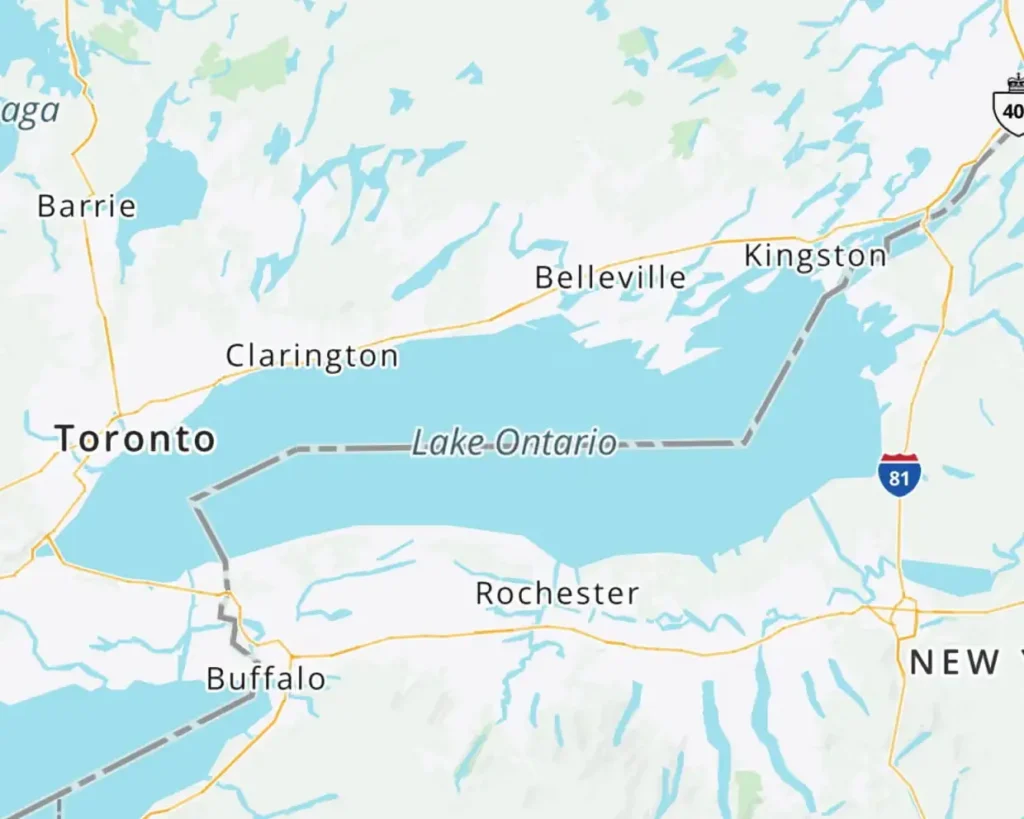

MapQuest has shot to No. 1 among free apps on Apple’s U.S. App Store after refusing to replace “Lake Ontario” with “Lake America,” delivering an unlikely comeback for one of the internet’s oldest mapping brands as a U.S.-Canada naming dispute spills into the tech world.
The surge followed President Donald Trump’s August 27 executive order directing federal agencies to adopt Lake America as the U.S. federal name for Lake Ontario. MapQuest responded the same day with a simple message: “We’re not changing it.” Within days, downloads and usage soared.
Why is MapQuest No. 1?
MapQuest first overtook major rivals to lead Apple’s U.S. Navigation category before climbing to No. 1 among free apps overall. It also reached the top of Apple’s free-app ranking in Canada by September 1.
Sensor Tower estimated MapQuest recorded about 184,000 global downloads, including 162,000 in the U.S., during the week beginning August 24. Both figures were more than 10 times their previous weekly levels.
MapQuest general manager Doug Berger said usage was running at roughly 50 times normal levels, while the company said hundreds of thousands of people had downloaded its app following the controversy.
The scale is notable for a service launched in 1996. Sensor Tower estimated MapQuest had about 687,000 worldwide downloads in 2026 during the measured period, up 29% year over year.
Can Trump force MapQuest to use Lake America?
The distinction between a federal name and what appears on a private map is important.
The White House executive order directs the Interior Department and U.S. Board on Geographic Names to implement Lake America in federal systems and communications, with steps to be taken within 30 days.
That does not automatically require Canada or private mapping services to adopt the federal label. MapQuest can therefore continue displaying Lake Ontario to its users.
The Lake Ontario “Lake America” name change has become part of a much broader dispute involving geography, technology and deteriorating U.S.-Canada relations.
Google Maps, Apple Maps and MapQuest now differ
The controversy means users can see different names for the same Great Lake depending on the service and location.
MapQuest continues to display Lake Ontario. Google Maps has adopted Lake America for U.S. users, while Canadian users continue to see Lake Ontario and the presentation can differ elsewhere.
Apple Maps was still displaying Lake Ontario on September 1. Interior Secretary Doug Burgum said Trump had contacted Apple about the issue and expressed confidence the label would change, but Apple had not publicly confirmed that step at the time.
Why MapQuest’s comeback stands out
Long before drivers carried GPS-enabled smartphones, MapQuest was one of the dominant ways Americans planned journeys online, often by printing turn-by-turn directions.
AOL bought MapQuest for about $1.1 billion in 2000. It later passed to Verizon and was sold to System1 in 2019. Google Maps and smartphone navigation had meanwhile pushed the pioneering service far from its former prominence.
That makes its sudden App Store rise unusual: this is not a new navigation app breaking through, but a 30-year-old internet brand temporarily competing at the top of a market dominated by technology giants.
Google Maps Lake America Update: What Happened to Lake Ontario?
Poll shows strong opposition to Lake Ontario rename
Public opinion helps explain why MapQuest’s stance may have resonated.
A Reuters/Ipsos poll of 1,023 U.S. adults conducted August 28-30 found 63% opposed renaming Lake Ontario, 14% supported it and 21% were unsure. Among Republicans, 43% opposed the change compared with 33% who supported it.
The dispute is unfolding alongside wider trade tensions. The same poll found 57% opposed higher tariffs on Canadian goods and 20% supported them. Canada has separately announced retaliatory tariffs covering hundreds of U.S. products.
Pushback grows in Canada and Congress
Opposition has extended beyond mapping apps. A large bilingual “Lake Ontario — Now and Always” sign appeared near Grimsby, Ontario, while Ontario Premier Doug Ford has rejected the new name and insisted Lake Ontario will remain Lake Ontario.
In Washington, Democratic representatives Tim Kennedy, Joe Morelle and Debbie Dingell introduced the Hands Off Our Great Lakes Act on August 31. The proposal seeks to prevent federal officials from renaming the five Great Lakes and block implementation of Trump’s Lake Ontario order. It has been introduced but is not law.
MapQuest has meanwhile continued leaning into the attention, including offering a tool that lets users generate alternative names for the lake.
The immediate numbers show the controversy has translated into downloads. The harder test comes next: whether people who rediscovered MapQuest because of Lake Ontario keep using it after the political attention fades.

Make Swikblog your go-to source on Google for reliable updates, smart insights, and daily trends.