
LATEST UPDATE — AUGUST 31, 2026
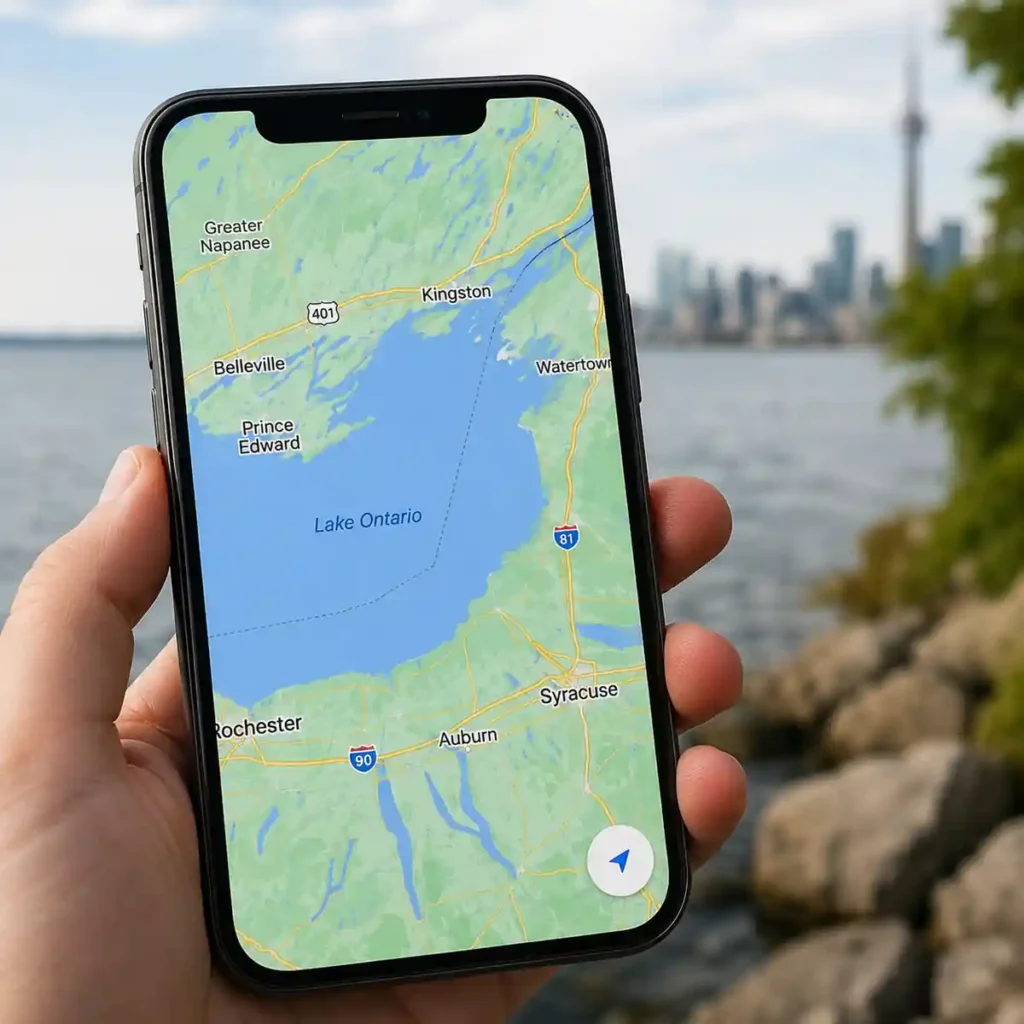
Google Maps is now displaying “Lake America” for U.S. users, while several Canadian websites and apps have also temporarily shown the new label because they rely on third-party Google mapping technology.
Canadian services including Hydro One, LCBO and GO Transit were reported to have displayed “Lake America” on embedded maps. Hydro One acknowledged that Lake Ontario had been incorrectly labeled on its outage map.
Meanwhile, Apple Maps continues to display “Lake Ontario” worldwide as of August 31, meaning the two major mapping platforms currently show different names for some U.S. users.
Google’s country-based naming remains unchanged: users in the United States see “Lake America,” Canadians see “Lake Ontario,” and users elsewhere generally see both names.
Google Maps has started showing “Lake America” instead of Lake Ontario for users in the United States, after the U.S. government formally changed the federal name of the lake following President Donald Trump’s August 27 executive order.
The update matters because millions of people now see a different name depending on where they use Google Maps. U.S. users will see “Lake America,” Canadians will continue to see “Lake Ontario,” and users elsewhere will see both names.
What Google Maps users will see
Google confirmed that the Maps label now varies by country.
In the United States, the lake is displayed as “Lake America.” In Canada, Google Maps continues to use “Lake Ontario.” Outside the U.S. and Canada, both names are shown.
Google said the change follows its longstanding policy of reflecting geographic names used by official government sources. The company explained the rollout in an official Google Maps update.
IT’S OFFICIAL: Google Maps has changed “Lake Ontario” to “Lake America” following President Trump’s executive order. pic.twitter.com/SRZ6L6GdQQ
— Fox News (@FoxNews) August 30, 2026
Why did Google Maps change the name?
Google did not independently decide to rename Lake Ontario.
The U.S. Geographic Names Information System, or GNIS, formally changed the lake’s name to “Lake America” for U.S. federal purposes. Google then began updating Maps to reflect the new government designation.
The rollout began within days of Trump signing the executive order, turning what had been a federal naming decision into a visible change for everyday Maps users.
What Trump’s executive order actually does
Trump’s August 27 order directs the Interior secretary, working with the U.S. Board on Geographic Names, to rename Lake Ontario as Lake America and update GNIS.
The order also calls for U.S. federal references to Lake Ontario — including government maps, contracts, documents and communications — to use the new designation.
The White House said the lake is important to U.S. trade, shipping, defense and the wider Great Lakes economy.
Why the name change is happening now
The decision comes during heightened tensions between the United States and Canada, including a widening trade dispute between the two neighboring countries.
Trump had threatened to rename the lake before signing the executive order, as Washington and Ottawa clashed over tariffs and trade negotiations.
The earlier dispute and the president’s original move are detailed in our report on Trump’s plan to rename Lake Ontario as Lake America.
The naming dispute has unfolded alongside new tariff measures. Canada has announced retaliatory tariffs targeting hundreds of American products, adding another layer of tension to the relationship.
More details on those measures are available in our coverage of Canada’s tariffs on more than 700 U.S. products.
Is Lake Ontario officially gone?
No. The name change applies to U.S. federal usage and does not force Canada or other countries to adopt “Lake America.”
Canada continues to recognize the body of water as Lake Ontario, which is why Google Maps still displays that name for Canadian users.
The change also does not alter the international boundary, ownership of waters or Canadian jurisdiction. The lake itself has not changed — only the name used by the U.S. federal government and services that rely on U.S. naming databases.
Canada is rejecting the new name
Canadian officials have pushed back against the change.
Prime Minister Mark Carney has defended the Lake Ontario name, while Ontario Premier Doug Ford has publicly rejected “Lake America.”
Ford unveiled a large sign near the lake carrying the message “Lake Ontario. Now and Always.” in English and French.
The reaction shows that the naming dispute is no longer just a technical issue involving government databases. It has become another symbol of the political and economic tensions between Washington and Ottawa.
New York is pushing back too
Opposition has also come from the U.S. side of the border.
New York Gov. Kathy Hochul said after Trump signed the order that New York would not use the new name.
That highlights an important distinction for readers: a federal naming decision does not automatically require state governments, foreign governments or private companies to adopt the same terminology.
Trump Plans to Revoke Up to 200,000 B1/B2 Visas: Who Is Affected?
Trump Visa Ban Struck Down: What Happens Now for 75 Countries?
Google Maps may differ from other mapping services
Google’s rollout also means users could see different names depending on which mapping platform they open.
Google has moved quickly to reflect the federal change, while other mapping services may continue to display Lake Ontario or adopt their own naming policies.
That could create short-term confusion for travelers, residents and businesses searching for locations around the lake.
What happens if someone searches Lake Ontario?
The lake remains the same geographic location regardless of the label shown.
For U.S. Google Maps users, the displayed name is now Lake America. For Canadians, it remains Lake Ontario. Users elsewhere may see both names associated with the same body of water.
This means the most important change is not geography but terminology — and how that terminology varies depending on the country and mapping service being used.
Why this matters for travelers and residents
For most people, the immediate impact is practical rather than legal.
Travelers may see “Lake America” on Google Maps while Canadian tourism websites, local businesses and government pages continue to use Lake Ontario.
U.S. federal documents will increasingly use Lake America, while Canadian authorities are expected to continue using Lake Ontario.
That split naming system is likely to remain one of the most visible consequences of the decision, especially as Google Maps continues rolling out the change across U.S. devices.

Make Swikblog your go-to source on Google for reliable updates, smart insights, and daily trends.