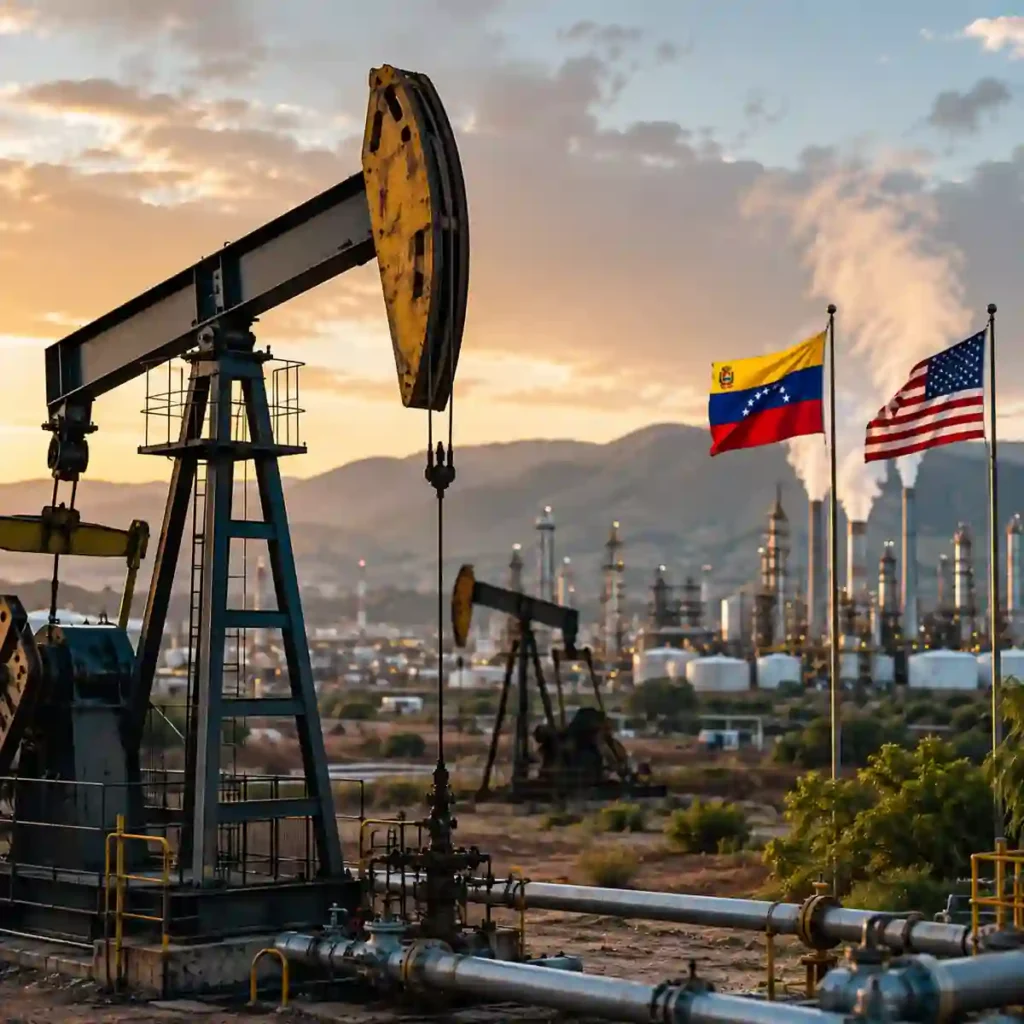

President Donald Trump has announced a sweeping US-Venezuela oil agreement covering fields with more than 65 billion barrels of proven reserves, promising the deal will eventually help lower gasoline prices for Americans.
The scale is enormous, but the impact at the pump is unlikely to be immediate. The agreement centers on 17 Venezuelan oil fields, a reported 55% US economic share in the venture and plans for more than $100 billion in investment needed to expand production.
For drivers, the key question is how quickly Venezuela can turn reserves underground into additional barrels reaching refineries and the global market.
What does the US get from the Venezuela oil deal?
Trump described the agreement as the “biggest oil deal in world history.” According to details provided by US officials, the venture covers more than 65 billion barrels of proven reserves across 17 strategic fields.
The US would receive the equivalent of a 55% share of the venture’s effective output through a combination of equity participation and rights to obtain some crude at cost.
That distinction matters: the announcement does not mean the United States simply owns 65 billion barrels of Venezuelan oil or 55% of Venezuela’s entire petroleum industry.
US officials have described development rights associated with the venture as lasting as long as 100 years. Venezuela’s interim President Delcy Rodríguez has separately described the broader bilateral energy project as a 25-year arrangement. The complete agreement has not been publicly released, leaving important details about the structure unresolved.
Venezuela targets more than 1.5 million barrels a day
Rodríguez says the 17-field project aims to produce more than 1.5 million barrels per day. Venezuela’s broader plans also include eight additional greenfield blocks in the Orinoco Oil Belt.
The scale becomes clearer when compared with the country’s existing industry. Venezuela currently produces only a fraction of what its enormous resource base might suggest.
The US Energy Information Administration estimates Venezuela holds about 303 billion barrels of proven crude reserves, the largest national total in the world.
Will Trump’s Venezuela deal lower US gas prices?
Trump says increased access to Venezuelan crude will substantially lower gasoline prices over the long term. In theory, substantially higher Venezuelan production could add supply to the global market and put downward pressure on crude prices.
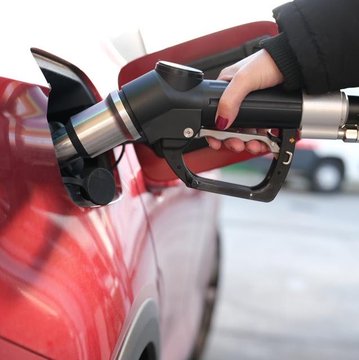
But motorists should not expect an immediate price drop simply because the agreement has been announced.
Venezuela’s petroleum infrastructure has suffered from years of underinvestment, maintenance problems and reduced capacity. Developing fields containing billions of barrels requires drilling, pipelines, processing facilities, skilled workers and substantial capital.
That means meaningful additional production could take years to develop.
Gasoline prices will meanwhile continue to respond to global crude supply, refinery conditions, consumer demand, OPEC+ decisions and geopolitical disruptions. Recent movements in Brent and WTI oil prices amid Strait of Hormuz tensions demonstrate how quickly overseas events can affect energy costs.
US could use oil for the Strategic Petroleum Reserve
The agreement has an energy-security component beyond prices at filling stations.
A US official said some crude acquired at cost could be directed toward the Strategic Petroleum Reserve and potentially meet US military requirements.
That could give Washington another long-term source of heavy crude in the Western Hemisphere while reducing exposure to supply disruptions elsewhere.
Venezuela projects $209 billion in revenue
Rodríguez says Venezuela could receive approximately $209 billion over the project’s life.
Using an assumed crude price of about $65 per barrel, she said roughly $19 from every barrel produced and sold would flow to Venezuela through government revenues.
Officials have also projected more than $100 billion in private investment. Those numbers are forecasts rather than guaranteed payments and depend heavily on production, investment and future oil prices.
Trump Threatens to Rename Lake Ontario ‘Lake America’: What We Know
Trump Plans to Revoke Up to 200,000 B1/B2 Visas: Who Is Affected?
Chevron and other oil companies could play a role
Chevron is particularly important because it is the major US oil company already operating in Venezuela. The company declined to comment on Trump’s initial announcement.
Rodríguez has also discussed a wider expansion involving international energy companies including Chevron, Eni, Repsol, Shell and BP. Exactly which companies will finance or operate different parts of the new development remains an important unanswered question.
Why the agreement is bigger than oil prices
The deal represents a dramatic shift in relations between Washington and Caracas after years of sanctions and political confrontation.
It comes after the US operation earlier in 2026 that captured former Venezuelan President Nicolás Maduro and brought him to the United States to face federal charges. Maduro has pleaded not guilty.
Rodríguez insists Venezuela retains sovereignty over its natural resources. Questions nevertheless remain over the agreement’s legal structure and how extensive foreign participation fits with Venezuela’s petroleum laws.
The development also arrives during wider economic tensions across the region, including Canada’s retaliatory tariffs on US goods, as energy security, trade and foreign policy become increasingly intertwined.
What American drivers should watch next
The biggest indicators will be actual private investment, contracts with major oil companies, rehabilitation of Venezuelan infrastructure and measurable increases in daily production.
The 65-billion-barrel figure describes oil reserves associated with the fields, not crude immediately entering the market. Until production rises substantially, Trump’s promise of lower gasoline prices remains a long-term expectation rather than an immediate effect of the agreement.

Make Swikblog your go-to source on Google for reliable updates, smart insights, and daily trends.