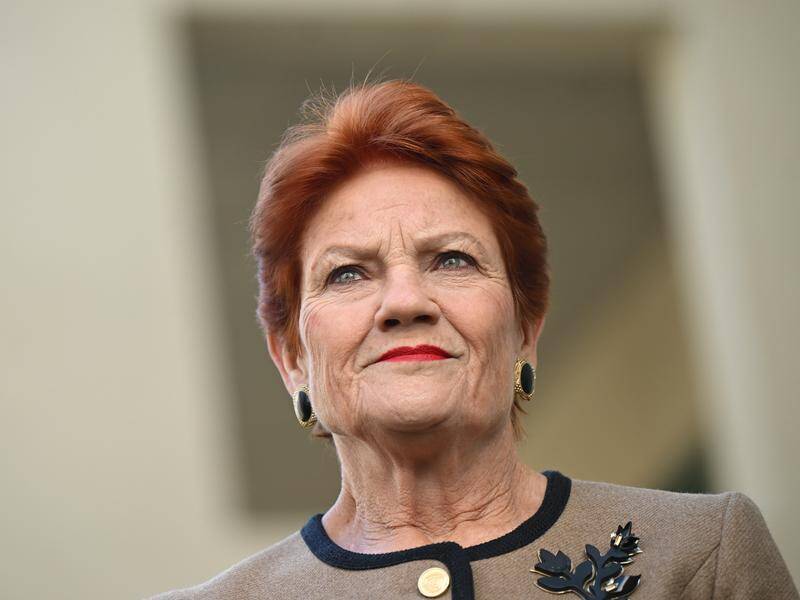

One Nation leader Pauline Hanson has unveiled a major superannuation proposal that would allow eligible Australians paying rent or a mortgage to redirect part of their future compulsory super contributions into their take-home income for up to three years.
Labor thinks superannuation is their 'national asset' to tax or use to pay off the trillion dollar debt.
— Pauline Hanson 🇦🇺 (@PaulineHansonOz) September 7, 2026
One Nation says it is your money, and if you're struggling with the cost of living you should be able to use it as a 3% pay boost.
Employers will keep paying the full 12% on… pic.twitter.com/JxMEivFU0b
The plan would allow participating workers to receive the equivalent of 3 per cent of their wages from future superannuation contributions, potentially putting thousands of dollars back into household budgets as Australians deal with housing costs and broader cost-of-living pressures.
The announcement comes as renters and homeowners continue to face affordability pressure. Australia has been dealing with a widening housing supply gap, with rents and property costs putting increasing pressure on household budgets. Swikblog previously examined the factors behind the Australia housing crisis and growing supply shortage.
One Nation will give Australians paying rent or a mortgage the choice to take one quarter of their future super contributions as a tax-advantaged 3% pay boost for up to three years.
— Pauline Hanson 🇦🇺 (@PaulineHansonOz) September 6, 2026
Australians are being smashed by Labor’s cost-of-living crisis. This gives them the choice to… pic.twitter.com/EXA1ABkm4I
Employers would continue making the full 12 per cent compulsory superannuation contribution. Under the proposal, 9 per cent would remain directed towards retirement savings, while the equivalent of the remaining 3 per cent could be paid to eligible workers through their super fund.
The proposal is not currently law. It is a One Nation policy proposal and Australians cannot currently opt into the arrangement.
How Pauline Hanson’s 3% superannuation plan would work
Under One Nation’s proposal, Australians paying rent or a mortgage could choose to redirect one quarter of their future compulsory super contributions into additional take-home income for a maximum of three years.
The proposal concerns future super contributions, rather than allowing workers to withdraw money already accumulated in their existing superannuation balances.
Hanson has said the policy could potentially be available to around 7 million Australians, arguing that households facing immediate financial pressure should have greater flexibility over their money.
According to figures released by One Nation, a full-time worker earning approximately $90,500 a year could receive about $2,300 extra annually, or roughly $44 a week, under the proposal.
For a working couple earning a combined $168,000, One Nation estimates the additional amount could reach approximately $4,300 a year, or $82 a week.
| Current compulsory super rate | 12% |
| Amount remaining in super | 9% |
| Amount redirected to worker | 3% |
| Maximum period | Up to 3 years |
| Worker earning $90,500 | About $44 a week* |
| Couple earning $168,000 combined | About $82 a week* |
*Figures are estimates released by One Nation and should not be interpreted as amounts currently available to workers.
According to ABC News, the redirected payments would retain concessional tax treatment under One Nation’s proposal rather than being taxed at a worker’s ordinary income-tax rate.
Hanson has presented the proposal as a way of providing immediate financial relief to households rather than withdrawing money already saved for retirement.
She argues that even an additional $44 a week could help households dealing with expenses such as groceries, electricity bills, insurance, rent and mortgage repayments.
The pressure on mortgage holders has become particularly significant as borrowing costs have risen. Earlier this year, CBA increased home loan rates as mortgage costs climbed, adding to the financial pressure facing Australian borrowers.
Hanson has also rejected suggestions that One Nation wants to abolish Australia’s compulsory superannuation system.
Labor attacks plan as retirement savings warning emerges
The announcement has quickly developed into a political fight in Canberra, with Treasurer Jim Chalmers strongly criticising One Nation’s approach to superannuation.
Chalmers argues that redirecting contributions would leave participating Australians with less money in retirement because those funds would no longer benefit from decades of potential investment returns and compounding.
The Treasurer has accused One Nation of threatening Australia’s superannuation system, while Hanson has rejected Labor’s characterisation of the policy.
Chalmers’ comments on the superannuation debate can be found through the Australian Treasury ministers website.
Analysis cited by ABC from the Super Members Council estimates that a typical 30-year-old full-time worker earning around $90,500 who used the proposed arrangement for the full three years could have approximately $25,000 less at retirement.
That estimate reflects not only the contributions redirected during those three years but also the potential investment earnings and compound growth that money could otherwise generate over subsequent decades.
By comparison, One Nation estimates the same worker could receive around $2,300 a year in additional disposable income, or approximately $6,900 over three years.
The competing figures have become central to the debate: supporters are focusing on the financial assistance workers could receive today, while critics are highlighting the potential long-term impact on retirement savings.
The Association of Superannuation Funds of Australia has also raised concerns about the proposal, including its possible effect on retirement balances and the broader economy.
Hanson has defended the policy, arguing that Australians struggling to pay their rent, mortgage and household bills should have greater control over money being contributed on their behalf.
Cost-of-living relief has already become a major political issue in Canberra. Household assistance, housing affordability and financial pressure were also central themes surrounding the Australia 2026 federal budget and its key changes.
Australia already allows people to access superannuation early in limited circumstances, including certain cases involving severe financial hardship or compassionate grounds.
One Nation’s proposal would be substantially different because it would allow eligible renters and mortgage holders to redirect a portion of future contributions rather than relying on the existing early-access framework.
The proposal has consequently opened a wider debate over the purpose of compulsory superannuation — whether contributions should remain preserved primarily for retirement or whether Australians should have greater flexibility during periods of financial pressure.
For workers wondering whether they can access the proposed 3 per cent boost now, the answer is no. Australia’s existing superannuation rules remain in place, and One Nation’s plan would need to become law before the arrangement could be introduced.
This article covers a developing Australian political and economic story. Details may change as One Nation releases further information and political parties, superannuation groups and other stakeholders respond.

Make Swikblog your go-to source on Google for reliable updates, smart insights, and daily trends.