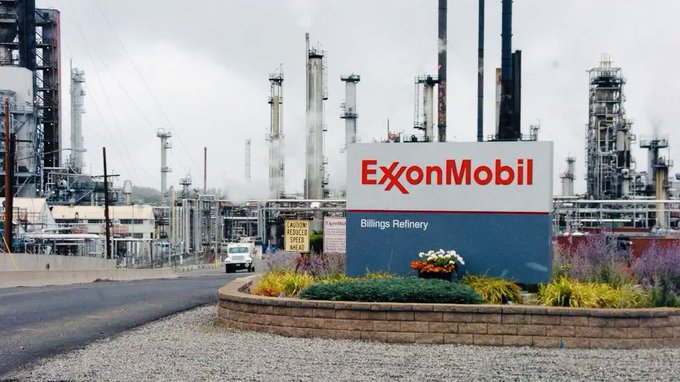

ExxonMobil’s Joliet refinery in Illinois remained offline in the latest confirmed update after floodwater overwhelmed a pump, extending a disruption that began with a power failure and keeping a major source of Midwest gasoline and diesel out of service.
BREAKING: 🇺🇸 Exxon Mobil has shut down one of the largest diesel refineries in the US,
— Megatron (@Megatron_ron) September 18, 2026
The refinery produces ~11 million gallons of gasoline and diesel fuel per day,
The company announces that the reason is an outage issues. pic.twitter.com/IB5QR0xLww
The 275,000-barrel-per-day refinery shut down on Sunday, September 13, after losing power at about 3:30 p.m. CT. Electricity returned later that day, but the facility had not resumed normal operations by Thursday, September 17, and ExxonMobil had not announced a firm restart time.
Power failure triggered the shutdown
The outage activated safety flaring and forced the refinery offline. ExxonMobil later said the problem had been traced to ComEd primary and secondary power lines supplying the facility.
Power was restored by around 7 p.m. Sunday, but refineries cannot simply switch back on after an unplanned shutdown. Processing units must be checked, stabilized and restarted in stages.
The company said full electrical service had been restored while teams continued recovery work.
Floodwater added a second problem
The shutdown became more complicated when ExxonMobil disclosed that floodwater overwhelmed a pump at the Joliet site.
A containment boom was deployed during cleanup. ExxonMobil did not confirm that the flooding problem was caused by the earlier electrical outage, so the two incidents should be treated separately unless the company provides further details.
Another flare was observed at the refinery on Wednesday. Flaring can occur during shutdown, stabilization or restart procedures and does not by itself indicate a new fire.
Industry monitor IIR Energy had earlier expected normal operations could return by the end of the week, while Wood Mackenzie still considered the plant offline on Thursday.
Joliet is a major Midwest fuel supplier
According to ExxonMobil’s 2026 Joliet facility profile, the refinery can process 275,000 barrels of crude per day and represents roughly 6% of Midwest refinery capacity.
The site normally produces around 11 million gallons of gasoline and diesel every day, enough for about 550,000 car and semi-truck fill-ups. The refinery also makes LPG, asphalt, sulfur and petroleum coke.
The facility covers about 1,400 acres in Will County, began operating in 1972 and employs roughly 580 workers plus contractors. It is designed to process Canadian crude delivered by pipeline.
ExxonMobil (XOM) Stock in Focus After £267,000 Fine Over Five Gas Leaks
Saudi Oil Crisis: Yanbu Refinery and Pipeline Disruption in Focus
Diesel market was already tight before Joliet went offline
The shutdown comes as U.S. fuel markets are already under pressure. Diesel prices recently moved above $6 a gallon nationally, while crude prices and global supply disruptions have added further strain.
The wider effect on transport and household costs is examined in our report on U.S. diesel prices reaching $6 a gallon.
Crude prices have also become a major factor, with oil prices above $100 raising concerns over gasoline, diesel and freight costs.
The Joliet outage did not cause the entire rise in diesel prices. Fuel costs were already elevated before the refinery lost power, so any direct price impact should be separated from broader market pressures.
Inventories can cushion a short outage
U.S. Energy Information Administration data showed national distillate inventories at about 107.9 million barrels for the week ending September 11, while Midwest stocks stood at roughly 28.79 million barrels.
Those inventories can help absorb a short disruption. The risk increases if Joliet remains offline for longer while other refineries undergo maintenance or regional stocks fall.
Restart timing is now the key issue
Electricity is no longer the main uncertainty because ExxonMobil says power has been restored. The focus has shifted to equipment checks, flood cleanup and the safe restart of processing units.
If Joliet returns quickly, the broader regional impact could remain limited. If the outage extends, removing a refinery that accounts for around 6% of Midwest capacity could become increasingly important for trucking companies, farms and consumers already facing elevated fuel costs.

Make Swikblog your go-to source on Google for reliable updates, smart insights, and daily trends.