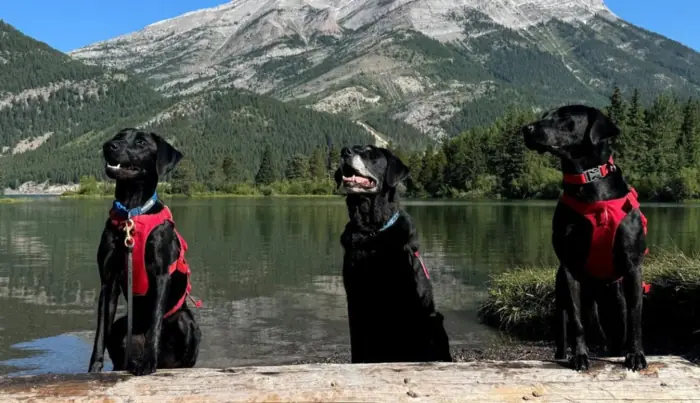

Alberta has added two specially trained detection dogs to its fight against invasive mussels as contaminated boats continue to approach the province’s borders. Jane and Winnie will join veteran conservation canine Hilo, giving inspectors more scent-detection capacity at a time when Alberta is working to keep its lakes, rivers and reservoirs mussel-free.
Six watercraft carrying invasive mussels had already been intercepted in 2026 when the expanded canine team was announced. Provincial officials say no established population has been detected in Alberta, making border inspections and early detection central to preventing long-term environmental and economic damage.
Meet Alberta’s mussel-detection dogs
Hilo has worked in environmental protection for more than a decade. Officials describe him as methodical and careful while searching, but playful when off duty. The experienced canine will now help mentor Jane and Winnie.
Jane is a black Labrador retriever known for maintaining focus around distractions. Winnie was found in a Kansas animal shelter as a puppy before her energy and work drive led to a detection career.
The three canine teams completed several months of specialized training in the United States. They learned to recognize the scent of zebra, quagga and golden mussels.
How dogs strengthen boat inspections
The dogs will work alongside watercraft inspectors rather than replace them. Their sense of smell can reveal mussel contamination in motors, storage areas, trailers and damp compartments that may be difficult to assess visually.
Adult mussels can attach to boats and equipment, while microscopic larvae may survive in standing water inside bilges, bait containers and other spaces. A contaminated boat entering a lake could therefore create a risk even when no mussels are immediately visible.
Alberta Environment and Protected Areas Minister Grant Hunter said the expanded team would reinforce the province’s prevention work and help protect waterways for future generations. The Alberta Invasive Species Council has similarly stressed that preventing arrival is the most effective option because damage can become difficult to reverse after mussels establish themselves.
Why invasive mussels are costly
Invasive mussels reproduce quickly and attach in dense colonies to hard surfaces. They can block water-intake pipes, interfere with irrigation networks and increase maintenance costs for municipalities, farmers and power operators.
They also filter plankton from the water, potentially disrupting food available to native aquatic species. Large accumulations of sharp shells can affect shorelines, beaches and recreational activities.
Complete eradication from a large lake or reservoir is extremely difficult. That makes prevention more practical than years of cleaning, monitoring and infrastructure treatment. Alberta has taken a similar prevention-led approach to controlling destructive wild boar populations, another invasive threat capable of damaging agriculture and natural habitats.
Record inspection network operating in 2026
Alberta is operating a record 12 watercraft inspection stations in 2026. During 2025, inspectors examined 21,995 boats, which was 8,495 more than in 2024. They intercepted 13 mussel-contaminated watercraft arriving from eastern Canada or the United States.
From May 1 through September 30, inspections are mandatory for people bringing motorized or non-motorized watercraft across Alberta’s eastern and southern borders. If the nearest station is closed, the boat must be inspected within seven days and before entering provincial waters.
Failing to stop at an open station can result in a $4,200 fine. Transporting a watercraft without removing its drain plug may bring a $600 penalty. Locations, operating information and requirements are available on the official Alberta watercraft inspection page.
Why early action matters
Keeping Alberta mussel-free depends on detecting contamination before launch, not after damage appears. This focus on prevention reflects the broader importance of protecting biological diversity through local action and responding quickly when ecosystems face a new threat.
Read More
Great White Shark Bella Returns to the Gulf of St. Lawrence
Jellyfish Invasion and Its Growing Impact on Marine Ecosystems
What boat owners should do
Officials advise boaters to follow the “Clean, Drain, Dry” method whenever moving between waterbodies. Plants, mud and debris should be removed from the boat, trailer and equipment. Water must be emptied from motors, bilges, bait containers and internal compartments, with drain plugs removed during transport.
Boats and equipment should then be allowed to dry completely before entering another lake or river. Jane, Winnie and Hilo provide an additional detection layer, but careful preparation and compliance by boat owners remain essential to keeping invasive mussels out of Alberta.

Make Swikblog your go-to source on Google for reliable updates, smart insights, and daily trends.