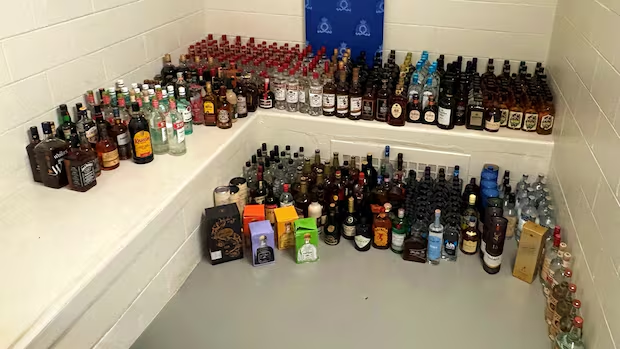

What began as routine retail theft has escalated into something far more organized and alarming in Canada’s Nova Scotia. A recent police raid has uncovered a large-scale alcohol theft operation, offering a rare look into a growing problem that has quietly intensified since the pandemic.
Authorities seized more than 450 bottles of hard liquor valued at nearly $20,000 from a residential property in Dartmouth following a two-month investigation. The discovery was described by investigators as unprecedented in scale, with evidence suggesting a structured resale network rather than isolated shoplifting incidents, as detailed in this CBC News report.
Retail theft shifts toward organized operations
Police confirmed that the seized inventory included a wide range of spirits — from vodka and rum to high-end cognac — with Smirnoff vodka identified as one of the most frequently stolen items. Officers also found detailed records tracking deliveries and resale activity, pointing to a coordinated supply chain rather than opportunistic theft.
The operation is believed to involve multiple individuals, with three people already facing charges. Investigators continue to trace others linked to the network, including those responsible for transporting the stolen goods.
Pandemic-driven spike in high-volume thefts
Retail data shows that alcohol theft has surged significantly since the COVID-19 pandemic, with incidents becoming more aggressive and higher in volume. Instead of small-scale shoplifting, stores are increasingly seeing individuals entering, taking multiple bottles at once, and leaving without resistance.
This shift has had a measurable financial impact. Losses from stolen inventory now total hundreds of thousands of dollars annually, reducing revenue that would otherwise support public funding streams.
In one notable case, theft incidents at a downtown Halifax store rose by more than 160% in less than a year, contributing to its eventual closure. Across the province, overall theft incidents increased by approximately 15% over the same period.
Security measures intensify across stores
Retailers have begun implementing stricter measures to combat the surge. High-risk products are increasingly kept off open shelves, requiring staff assistance for purchase. In addition, anti-theft bottle toppers — which trigger alarms if removed improperly — are being rolled out across more locations.
Early results suggest these measures are having an effect, with some stores reporting a drop in theft incidents of around 18% after introducing enhanced security devices.
Staff training has also shifted, with employees instructed not to intervene directly during thefts but instead document incidents and report them to security teams.
Public safety concerns grow alongside theft
Beyond financial losses, authorities are increasingly concerned about the broader implications of unregulated alcohol circulation. Stolen products are often resold without oversight, raising the risk of underage access and unsafe consumption.
Law enforcement officials have warned that such operations blur the line between retail theft and organized crime, with the potential to expand into more complex distribution networks if left unchecked.
The scale of the recent seizure highlights a turning point — not just for retailers, but for how authorities approach what was once considered low-level shoplifting.

Make Swikblog your go-to source on Google for reliable updates, smart insights, and daily trends.