
After hours of road blockades and rising tensions, four major highways in Nova Scotia have fully reopened — bringing relief to commuters but leaving behind a deepening dispute between First Nations communities and law enforcement over cannabis control.
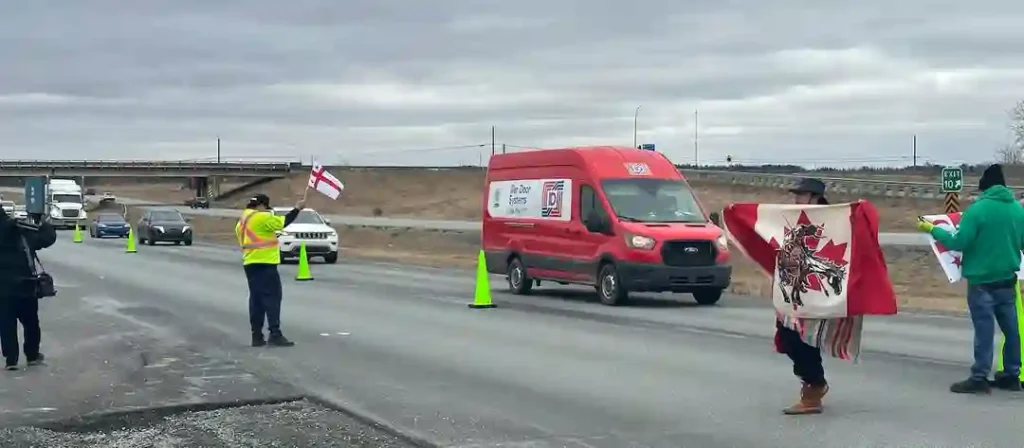
The Royal Canadian Mounted Police (RCMP) confirmed that Highway 4 in Potlotek First Nation reopened Friday morning. Earlier, three other key routes — Highway 105 near Whycocomagh, Highway 104 at Paqtnkek, and Highway 102 at Shubenacadie — were cleared late Thursday night after protests slowed or restricted traffic across parts of the province.
Coordinated protests follow cannabis raids
The highway blockades were part of a coordinated response by several Mi’kmaw communities after a string of RCMP raids on cannabis dispensaries, including a major operation at Potlotek First Nation on Thursday morning.
At the centre of the confrontation was the Sikku Shop, where employees said RCMP officers broke down the door and loaded cannabis products into a U-Haul trailer. The raid quickly escalated as community members gathered, blocking police vehicles at the scene for hours.
In one of the most visible protests, members of Sipekne’katik First Nation shut down one southbound lane of Highway 102 between Truro and Halifax, causing significant delays along a critical transportation route.
RCMP officers were eventually forced to leave the Potlotek scene in unmarked SUVs after being surrounded by protesters, highlighting the intensity of the standoff.
Indigenous leaders raise concerns over enforcement
The protests were also fueled by broader frustration over repeated enforcement actions. Millbrook First Nation released a letter signed by its chief and band council expressing “deep concern” about raids targeting cannabis stores in multiple Mi’kmaw communities across Nova Scotia.
The letter argued that government actions are attempting to “forcibly and unlawfully impose provincial control of cannabis sales” on Indigenous territories, raising serious concerns about treaty rights and self-determination.
Mi’kmaw chiefs have repeatedly called on the provincial government to work collaboratively on a framework for cannabis sales that respects Indigenous governance. According to the letter, those efforts have not been met with meaningful engagement.
The dispute reflects a wider national issue in Canada, where cannabis has been legal since 2018, but jurisdictional tensions persist over how laws apply within First Nations communities.
While all affected highways are now open and traffic has returned to normal, the underlying conflict remains unresolved. RCMP officials say further details about the raids and enforcement actions will be released later this weekend, as attention continues to build around the issue.