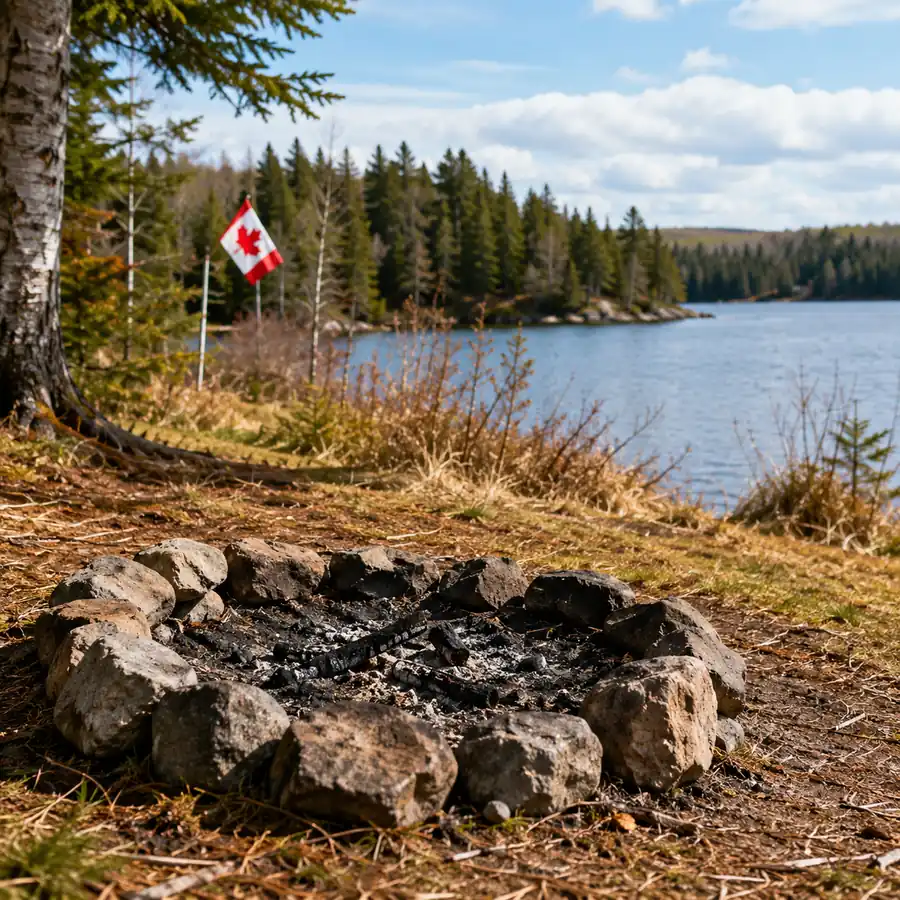

New Brunswick’s total burn ban has been lifted just as many residents prepare for the long weekend, but the change does not mean outdoor fires are automatically allowed everywhere or at any time. The province has moved back to a more local, daily fire-watch system, leaving some counties under restricted hours and putting the responsibility back on residents to check conditions before lighting a campfire, brush fire or backyard burn.
The Department of Natural Resources lifted the provincewide burn ban on Thursday afternoon, easing the strictest fire restrictions across New Brunswick. For many households, cottage owners and campers, that means small outdoor fires may again be possible. But the practical rule remains simple: burning depends on the county, the time of day and any municipal bylaw that applies in the area.
The latest update still shows restrictions in parts of the province, including Westmorland and Albert counties. In those areas, fires are permitted only during the overnight window, from 8 p.m. to 8 a.m. That makes the timing especially important for people planning evening gatherings, campsite fires or yard cleanups over the long weekend.
Key point for residents: the total ban has ended, but daily fire notices still decide when and where outdoor burning is allowed. A lifted provincewide ban is not the same as unrestricted burning.
Daily fire rules matter more after the ban is lifted
New Brunswick’s fire-watch system is designed to reflect changing weather and forest conditions. Dry grass, gusty winds and low humidity can quickly raise the risk even after rain or cooler temperatures. That is why the province updates the daily burn status at 2 p.m. during fire season, giving residents a fresh county-level notice before evening burning hours begin.
Residents can check New Brunswick’s official Fire Watch page or call the provincial burning information line before starting any fire. The province’s system uses local conditions to determine whether burning is allowed, restricted to overnight hours, or not permitted.
The difference matters because a fire that is legal in one county may still be restricted in another. A resident in a green zone may be able to burn under provincial rules, while someone a short drive away in a yellow zone may have to wait until the evening or overnight period. Municipal bylaws can add another layer, and local rules may be stricter than the provincial notice.
For families and campers, the biggest risk is assuming the end of a total ban means the weekend has returned to normal. In practice, the province has shifted from a blanket restriction to a daily decision system. That makes checking the notice part of the safety routine, much like checking the weather before heading out.
Nova Scotia continues its daily BurnSafe system
Nova Scotia is also reminding residents that outdoor burning rules can change daily during wildfire risk season. The province’s BurnSafe map is updated at 2 p.m., and domestic brush burning or campfires are not allowed between 8 a.m. and 2 p.m. during the wildfire risk period from March 15 to October 15.
The province’s map uses a colour system that is meant to be easy to understand at a glance. Red means burning is not allowed. Yellow means burning is only allowed during the evening and overnight period. Green means burning is allowed from the afternoon through the overnight period, subject to local bylaws and safe-burning conditions.
Natural Resources officials in Nova Scotia have also reminded residents to check before they burn and to know municipal bylaws. That warning is important because a provincial map does not cancel local restrictions. In some communities, local governments can limit or ban burning even when the provincial status appears less restrictive.
The long-weekend timing adds extra pressure to these systems. More people are outdoors, campsites are busier, and backyard fires become more common. Even a small campfire can become a problem if it is lit during restricted hours, left unattended, or started near dry grass, leaves, brush or wooded areas.
New Brunswick’s change is therefore best understood as a cautious reopening rather than a full return to normal burning. The province has removed the broad ban, but it has not removed the need for daily checks, local awareness and basic fire control. For residents in restricted counties, the overnight-only window remains a hard limit.
Anyone planning to burn should keep water or tools nearby, avoid burning in windy conditions, keep fires small and fully extinguish ashes before leaving the area. The safest approach is to treat every outdoor fire as conditional until the current provincial notice and local bylaw both confirm it is allowed.
Across Atlantic Canada, the message is becoming more consistent as wildfire seasons grow more closely watched: the question is no longer only whether a ban is in place, but whether the day’s conditions, the county status and the local rules all line up. For New Brunswick residents heading into the long weekend, that daily check may be the difference between a legal campfire and a preventable fire call.

Make Swikblog your go-to source on Google for reliable updates, smart insights, and daily trends.